
It is interesting that Americans are going to review the travel advisory given to Americans who even consider travelling to Jammu and Kashmir. There is a level 4 advisory to Americans who may wish to go to Jammu and Kashmir and experience the joys of the new paradise created since the abrogation of Article 370 in 2019, seven long years ago.
Level four applies to Americans travelling to exotic places designated as high risk. Jammu and Kashmir is in the same exalted company as Syria, Yemen, Afghanistan, Iraq, the Sudans, Haiti, and North Korea. Level 4 means desist from travel here.
The advisories are issued for life-threatening risks, such as active war, extreme civil unrest, rampant violent crime, terrorism, or the high threat of arbitrary arrest and wrongful detention.
As you can imagine, Americans travelling to such places can become a headache to the local missions since they stand a good chance of ending up hurt, kidnapped, or worse—mainly worse. Most of all, it is a lot of paperwork and body bags. But Kashmir is a haven now.
Travel Advisory Debate
Back in the day our security planners had a tough time convincing American (and Western) diplomats in Delhi that Pakistanis were the real bad guys in that area, which is now a union territory. There is a feeling that since the area has become smaller, the problem has not only become proportionately smaller but disappeared as well.
Yet, the Americans haven’t changed the level of travel advisory ban. Your guess is as good as mine why this remains so seven years after the new, much-heralded new normal in Jammu and Kashmir.
There is only one way to find out. Lift the advisory and let the Americans experience the joys of the new Jammu and Kashmir. Ladakh can be a side trip thrown in as incentive.
If the area is safe enough for the national security advisor to be seen consuming biriyani in the open, why not Americans who must be dying for this experience? After all, not too many Americans have experienced the downside of Pakistan’s warm ways and cross-country hospitality.
Long before Greg Maxey boarded the IC 814, John Childs and Donald Hutchins, both Americans, were among a group of foreigners kidnapped by Al Faran in July 1995. One of them escaped, and Hutchin’s body was never recovered. But Americans began to take notice only after Daniel Pearl’s killing by Omar Sheikh in January 2002, but that was in Pakistan.
It was Pakistan’s big ticket to Hollywood as well. But it was not until 2008, four years later, when Aamchi Mumbai was Shanghaied by the ISI into playing unwitting hosts to Ajmal Kasab and his nine armed fellow Pakistani tourists, that Americans began to sit up a little. But that is water under the Gateway of India.
Sergio Gor Visits Kashmir
It has taken the American ambassador, Sergio Gor, seven months, since presenting his credentials in January 2026, to finally visit the Union Territory of Jammu and Kashmir, which he has rightly termed an important part of India.
While belated, Gor is still much quicker on the uptake than the Government of India, which has been dragging its feet over restoring full statehood to the region after having famously abrogated Article 370.
In India's constitutional scheme of things, it must be made clear that among union territories there is no gradation of importance; all are equally vital, and none is more important than another. As Special Envoy to South Asia, we request the American diplomat to take serious note of this foundational federal parity.
Predictably, the visit has caused the usual restiveness in Pakistan—now a well-worn ritual for any American diplomat, ever since the intrepid Robert Blackwill visited Siachen back in 2002. Back then, it was dubbed the new normal; today, it has simply become the old normal.
Given that various ministers, especially the Defence Minister, Shri Rajnath Singh, have repeatedly cried themselves hoarse over our robust and iron intent to reclaim parts of Jammu and Kashmir inadvertently lost through the processes of history, perhaps Gor should be given a pitiless frontline tour of the Line of Control and properly briefed on the Indian position.
It will help the travel review process; that’s a guarantee. After all, he is a super envoy with a remit over Pakistan as well. And we hear he has a firm grip on Trump’s ear.
Gor’s Influence In Washington
Yet, we must ask: despite his reported closeness to President Trump, does the ambassador carry enough clout to whisper what we want whispered into the presidential ear? That ear is being relentlessly nibbled not so much by political aides, such as Natalie Harp, but more vigorously by power brokers like Field Marshal Syed Asim Munir, especially as the world has watched Gor’s boss slip comfortably into bed with the Pakistani military establishment.
Despite the Ambassador's frequent assurances that the India-US trade deal is 99 per cent done, that one per cent, that itsy-bitsy bit, remains hanging fire tantalisingly even as Trump frolics with even more tariff showboating. What good is proximity without the influence? Cherchez la proof? Trump, we know, has a notorious history of attempting to insinuate himself as a mediator, amongst other countries, between India and Pakistan. His ardour for the Nobel Peace Prize remains undiminished in much the same way as his promise to end the Iran war remains unrealised.
Moreover, New Delhi certainly went out of its way to remain extra polite while demurring with Washington over how Operation Sindoor concluded. Whatever diplomatic certificates Gor may be handing out, New Delhi would do well to swallow them with a very large and liberal sprinkling of sodium chloride, aka standard table salt.
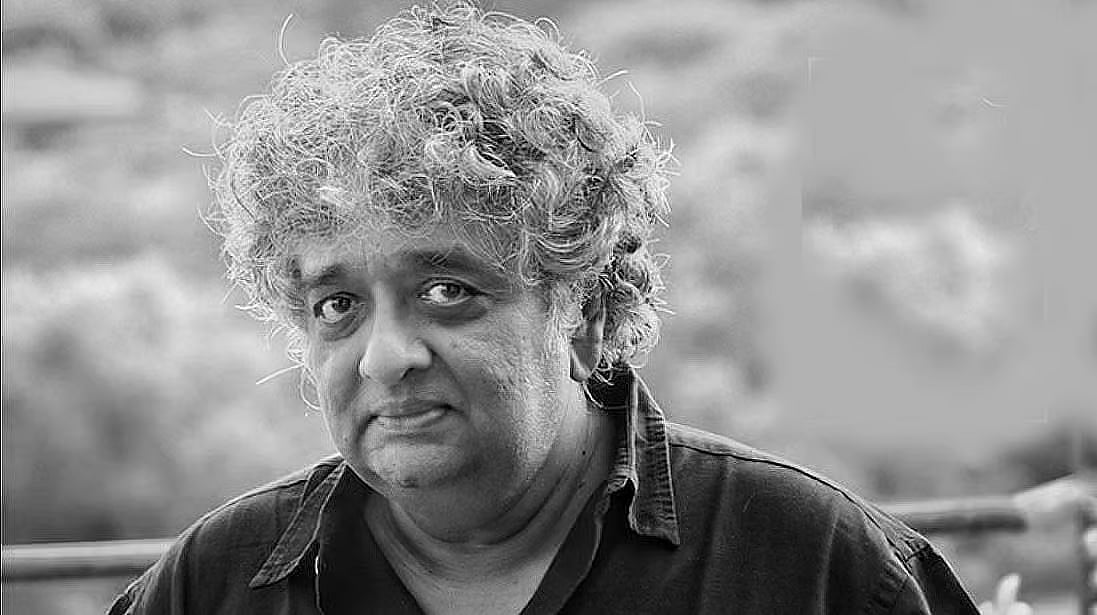
V Sudarshan |
The author is Editor, The Free Press Journal.

