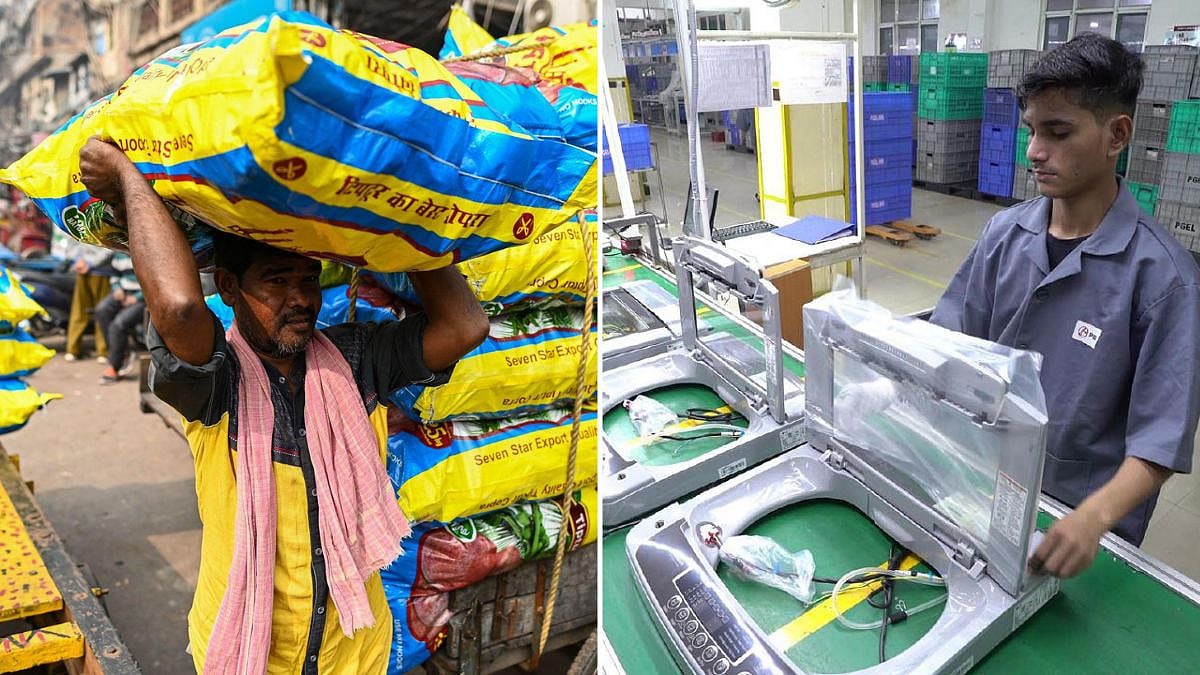
Last week, Prime Minister Modi created an unprecedented moment in his 12 years’ reign when he castigated the captains of Indian industry for not creating jobs and raising the wages of working people despite enjoying tax breaks and other concessions. It was unprecedented, as his audience could never imagine that the head of a government—which had prioritised the “Ease of Doing Business” as the overarching objective of its policy framework since 2014—could frontally question their intentions after carrying out major “reforms” that they had demanded, including the politically difficult amendments of labour laws, and had also tried to deregulate the farm sector by introducing what would have been the most far-reaching set of laws. Almost coinciding with adoption of labour codes and the introduction of farm laws that could not be implemented due to farmers’ protests, the government obliged the business yet again by meeting its another prominent demand, namely, effecting deep cuts in corporation tax. The base corporation tax rate was reduced from 30% to 22% for the existing domestic companies and fixed at 15% for new domestic manufacturing companies. The effect of this move was a significant reduction in the share of corporation tax in direct taxes from 58% in 2018-19 to 42% in 2025-26. The corporates have a much lower burden of taxes, a point that the Prime Minister had also underlined.
The government’s rationale for adopting its spate of pro-business policies was that these were necessary for incentivising private investment, which would, in turn, help realise its ambition of Viksit Bharat by 2047. But the government chose not to recognise that private sector companies invest in additional production capacities only if adequate markets for their products exist. In other words, adequate consumer demands that can be created only by putting increased incomes in the hands of wage earners provide the incentives for the private sector to invest. Putting more money in the hands of the private sector through tax breaks and/or handing out incentives through the PLI scheme, hoping that more investments would be forthcoming, was like putting the shoe in the wrong foot. The lack of enthusiasm of the private sector to invest in plant and machinery was clearly evident; its investment in machinery and equipment as a share of gross fixed capital formation, or the total investments in fixed assets, fell almost consistently from 19% in 2013-14 to 14% in 2024-25.
While it was necessary for the government to adopt proactive policies to address the uncertainties that workers faced, it adopted policies that accentuated labour market disruptions, worsening their struggles. Labour market disruptions were repeated occurrences during the NDA regime due to its policies that adversely affected the labour market. The disruptions were initially triggered by two sets of policies, namely, introduction of the GST and demonetisation, both adopted in 2017. A third set of disruptions followed soon after, caused by the pandemic-induced economic downturn.
But what affected the workers the most were the extensive changes effected in labour laws through the Labour Codes that became effective in 2025. While the government’s stated objective for introducing the labour codes was to simplify the labour laws by merging 13 central laws into a single code applicable to all establishments employing 10 or more workers, the real intent was to introduce a flexible labour market that allowed businesses the ease of hiring and firing workers. This was exactly what the Indian industry had been demanding, labelling it as the “second generation reforms”. The codes have truncated workers’ rights to demand better wages and seek improved conditions at workplaces.
Take, for instance, the Industrial Relations (IR) Code, which introduced strict procedures significantly restricting when and how workers can call a strike. Workers must now give their employer prior notice of at least 14 days before going on strike, and the strike must occur within 60 days of giving the notice. But more importantly, submitting a strike notice automatically triggers conciliation proceedings within five days of issuing notice. Workers are legally barred from going on strike while conciliation or tribunal proceedings are pending and for up to seven days after conciliation concludes. Secondly, the IR code has given legal sanctity to contractualisation by including fixed-term employment as a category of engaging a worker on the “basis of a written contract of employment with the employer for a fixed period”.
The Labour Codes have been introduced when a significant share of India’s workforce does not have “decent work”, which the International Labour Organisation (ILO) defines as “productive employment that provides a fair income, workplace safety, social protection, and respect for fundamental worker rights”. The Periodic Labour Force Survey (PLFS) captured this problem while reporting on the distribution of workers by status in employment. The majority of the workforce is “self-employed”. In 2025, over 56% of workers in “usual status”, or the activity workers were engaged in over one year, were “self-employed”. This category of the workforce increased from 52% in 2017-18. As regards their earnings, self-employed workers generally earn less than even the minimum wage rates announced by the Labour Bureau for semi-skilled workers in overall terms. “Casual labour” was the net largest category of workers in 2017-18, making up 25% of the total. However, in 2025, the share of this category of workers had declined to 20%. This implies that more than three-fourths of India’s workforce, namely, the self-employed and casual workers, did not have “decent work”. But there is a catch here. Though the PLFS showed that 24% of workers were regular wage earners, even these workers are increasingly facing inadequate incomes and job insecurity due to increased informalisation of the formal sector.
One hopes that the Prime Minister’s remarks reflect the understanding of his government that the way forward for the country’s economy looks bleak unless jobs are created and that remedial measures would be adopted.

