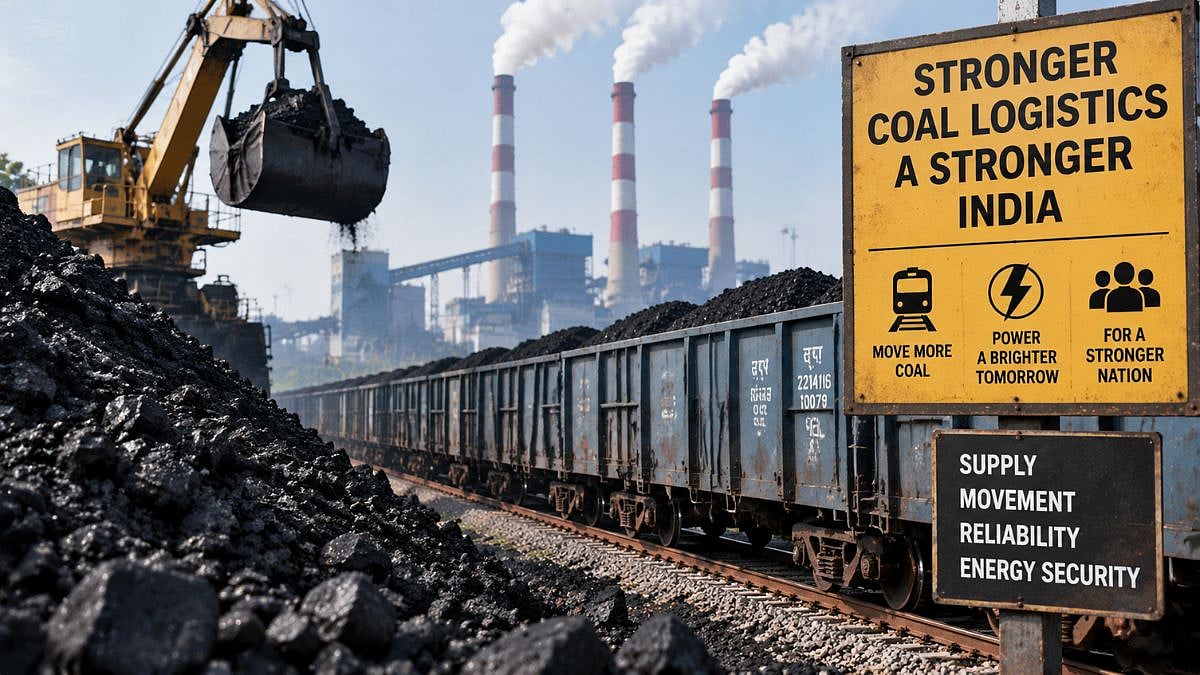
Recent reports of a coal inventory shortage affecting thermal plants, especially in Punjab, have caused enough distress. Coal stocks at thermal generators have fallen to nearly 27 million tonnes, enough for up to nine days of normal operations, below the recommended 19-day requirement. As of last week, the number of power stations facing critically low fuel reserves has grown to 58 from 46 in August.
Coal Supply Faces Logistics Issues
This requires urgent attention, but the Ministry of Coal and Coal India have assured states that pithead stocks are sufficient and that rail shipments are being increased to fill the gap. That is where lies the crux of the problem. India does not have a coal shortage, but the coal supply is riddled with logistics issues.
Coal production and inventory tell a different story. Coal India has 76 million tonnes in its pits, and production is up 6.7 per cent year on year. Supply to the power sector has risen to 4.5 per cent. Daily train loadings have climbed to 436 from 376. This shows the system is working on every production metric. But National Thermal Power Corporation plants receive only half the trains they need, which suggests the gap isn’t mining but movement. Unfortunately, this is a recurring problem. For the past five years, every time the monsoon has been blamed for the logistics issue, the case is that stocks have dwindled because there was never a buffer to absorb the disruption.
Monsoon Planning Remains Weak
Monsoons aren't surprises; they arrive on a known schedule. What has been constantly ignored is that monsoons can be severe on occasion, but no allowance has been made to handle that. What was required was to ensure that there was enough stock when the weather was good. However, stocks fell from 12 days in July to 10 days in August and below half the mandated level by early September, which clearly shows that not enough planning was done to mitigate a crisis on the horizon.
Now the Coal Ministry is offering supplies above contracted quantities and moving coal by road at a premium, which is more an improvisation than a planned operation. Other systemic problems remain unattended. In April and July, power demand jumped nearly 10 per cent, and July alone hit 171 billion units, which was a record. With rainfall 12 per cent below normal, thermal plants had to carry more of the load and work overtime. As a result, they need maintenance before becoming operational again. But the Power Ministry now wants deferment of maintenance because of the ongoing crisis. This means these plants can break down at any time, which will create a bigger problem at times like these.
Rail Capacity Needs Urgent Expansion
The Coal Ministry needs to work toward increasing rail evacuation capacity for peak monsoon despatch, and road transport should be a standing contracted option, with prices locked in advance. The situation is grim, but the government can ill-afford an emergency like a grid collapse.

