During his visit to Brazil in the late 1960s, General Charles de Gaulle said presumptuously that Brazil was “not a serious country” and that it was a “country of tomorrow”. De Gaulle forgot that in August 1944, during a White House internal meeting, the possibility of adding Brazil as the sixth permanent member of the Security Council had been discussed.
At the Dumbarton Oaks conference, US Under Secretary of State Edward Stettinius raised the Brazil question. However, the invitation never arrived despite President Vargas taking up the issue with Stettinius.
The military rule from 1964 to 1985 remains one of the most terrible periods in Brazilian history, as it was marked by state-sanctioned repression, human rights violations, censorship, and an artificial economic transformation.
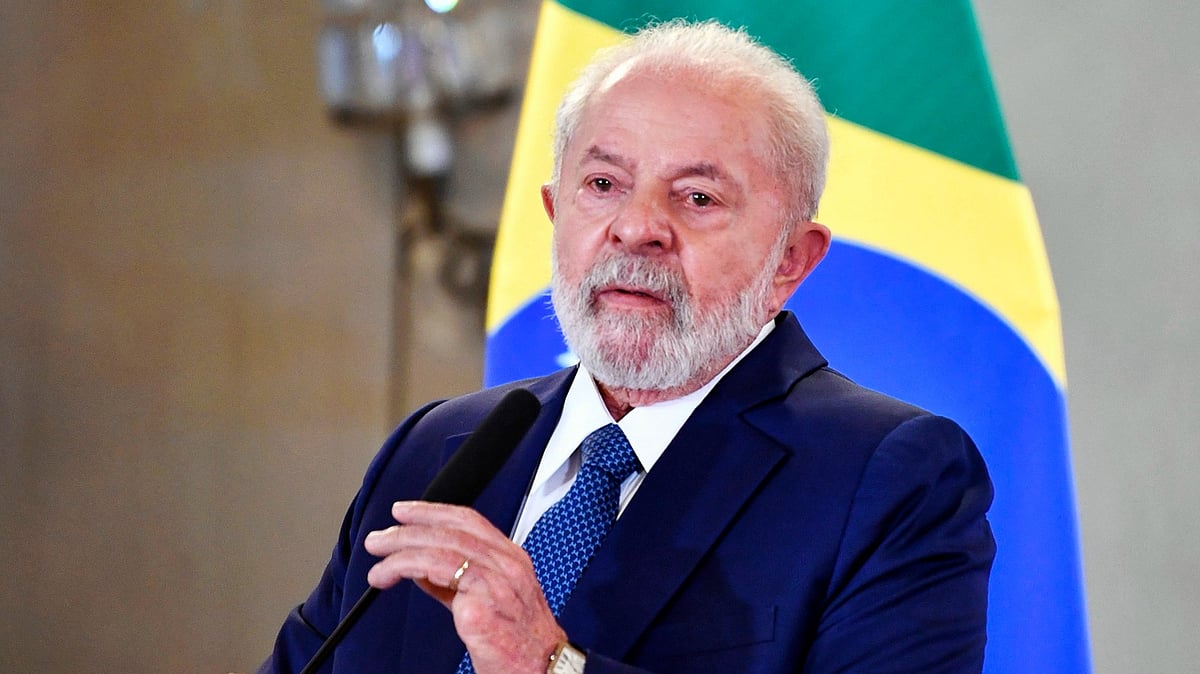
Brazil, under the leadership of Luis Inacio Lula da Silva, has remained focused on situating Brazil among the great world powers. Brazil ticks all the boxes to become a world leader.
As Brazilian diplomat and writer Sergio Franca Danese argues, Brazil under Lula has earned a well-deserved place in the comity of nations given its “assets—natural, economic, human, and diplomatic—that grant it a place at the table of global negotiations”.
Historian Andre Pagliarina, in his book, Lula: A People’s President and the Fight for Brazil’s Future, says that Lula has positioned himself “as one of the leading voices of the Global South”. Few leaders from the developing world enjoy as much goodwill from broad swathes of the population as Lula does.
Political scientist Robert D Putnam’s “two-level game theory” explains how international negotiations occur simultaneously on two levels—domestic and international. President Lula’s third presidency typifies Putnam’s theory of how he has been wrestling with permanent negotiations with internal interest groups both in the government and the opposition, as well as with other countries and international actors.
From the very beginning, Lula demonstrated that he had his own ideas and he meant business. Within months of assuming power in 2003, he said, rather bluntly, on the sidelines of the G8 Summit in Evian, France, “We will not accept any more participating in international platforms as if we were the poor little ones of Latin America…”
Lula further asserted, “What is the use of being invited for the dessert at the banquet of the powerful? We do not want to participate only to eat the dessert; we want to eat the main course, dessert and then have coffee.”
Lula is one of the founding leaders of both IBSA and BRICS. The first IBSA Summit in September 2006 in Brasilia was attended by President Lula, Prime Minister Manmohan Singh, and South African President Thabo Mbeki. President Lula and Prime Minister Manmohan Singh also attended the first BRICS Summit in Yekaterinburg in 2009.
By describing BRICS as a ‘café com leite’ (coffee with milk) alliance, Lula sought to give a new meaning to this organisation. He borrowed the term from Brazilian singer Flavia Coelho's song 'café com leite', which serves as a metaphor for a harmonious blend of two different elements coming together to create something delightful.
Since he co-founded the Workers Party in 1980, Lula has been a coalition builder, and his party consists of trade unions but also intellectuals and church leaders.
He will run the 2026 elections not as a leftist firebrand but as a unifier and a consensus builder. As Andre Vitor Singer, a political science professor at the University of Sao Paulo, says, Lula has realised that to govern, he needs a “Rooseveltian dream” for Brazil, that is, dedicating himself to the country’s democratic ideals.
In the current Lula government, his Workers’ Party holds only six of 31 cabinet positions. Two of his cabinet positions are held by those who had supported Jair Bolsonaro in the past. President Lula has had to exert his influence over his own party to keep the government running smoothly. The pragmatist Lula has followed a big-tent approach to consensus building. Jose Dirceu, who served as Lula’s chief of staff, goes thus far as to say that Lula today heads “a centre-right government”.
Lula the pragmatist has taken a forthright stand on global issues, whereas India and other BRICS members have followed a timid policy. Under Lula, Brazil is the only BRICS country to vote in favour of the UN resolution condemning the Russian invasion of Ukraine. Brazil called for withdrawing Russian troops from Ukraine.
At the same time, Lula rejected American and German requests to send military supplies to Ukraine. In his quest to resolve the Ukraine crisis, Lula came out with the suggestion that Kyiv recognise Russian sovereignty over Crimea to make way for peace.
Lula said no to Gustavo Petro’s anti-oil bloc. As a front-runner for the presidential race in Colombia, Petro had called on ideological allies across Latin America and the world to join him in forming a new bloc to lead the economy away from fossil fuels.
President Lula also vetoed Venezuela’s bid to join BRICS, as President Maduro abused Lula’s trust by failing to comply with the promise to present the official results. He has also kept a distance from Miguel Diaz-Canel of Cuba and President Daniel Ortega of Nicaragua.
President Lula believes that democracy would flounder if inequality reigns. A great champion of the fight against social exclusion and global hunger, he introduced a number of schemes, like Bolsa Familia, ProUni, and Minha Casa Minha Vida, which lifted millions out of poverty. His government has also expanded access to higher education through scholarships.
Lula’s ability to compromise and negotiate has earned him the sobriquet ‘pelego’ (accommodationist). His success can be attributed to his imaginative politics. As a seasoned statesman, Lula has prioritised balance and pragmatism over posturing and polarisation.
In younger days, Lula was certainly a radical firebrand. It will be churlish to describe him as a populist, as his Workers’ Party rejected populism from its inception. As historian John D French, in his biography of Lula, notes, he has all along been an institutionalist.
The author comments on global affairs.

