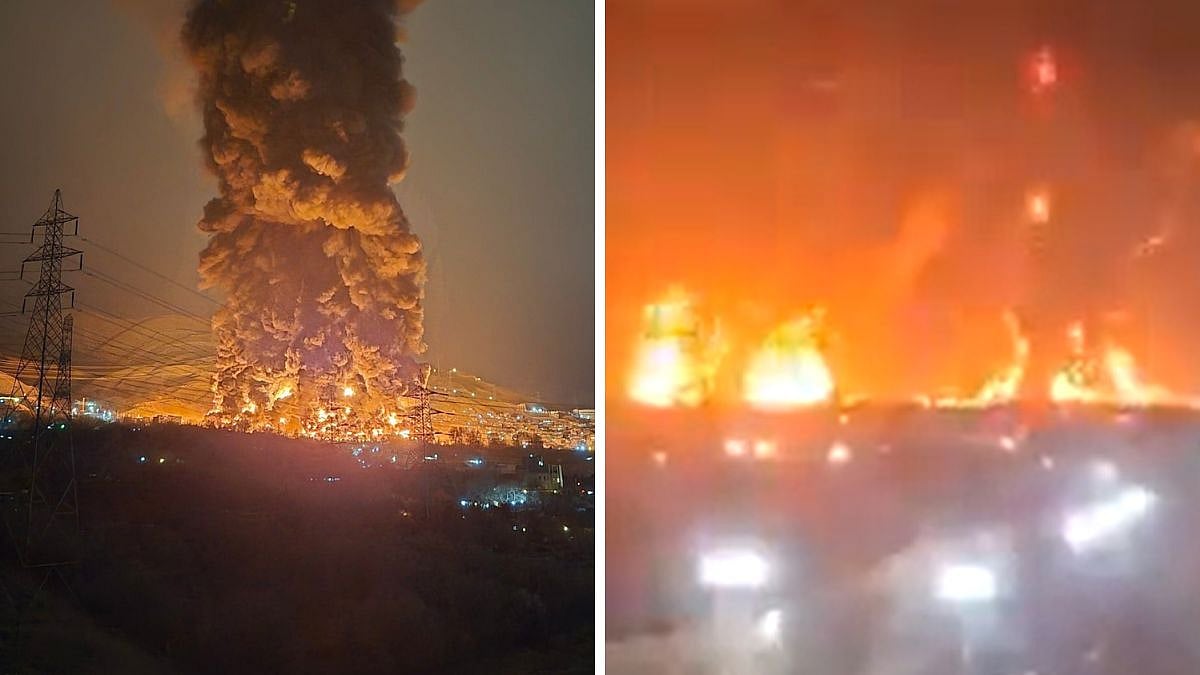
The Israeli strike on Iran’s South Pars gas field marks a dangerous escalation in a conflict that is already unsettling the global economy. With oil prices climbing past $118 a barrel, the consequences of the widening war are no longer confined to the battlefield; they are reverberating through energy markets and the daily lives of millions.
The South Pars field—shared by Iran and Qatar—is not merely a strategic asset but a lifeline for the Iranian population, supplying fuel for electricity, cooking, and basic domestic needs. Yet even as the attack drew global alarm, Donald Trump insisted that the US had not been taken into confidence before Benjamin Netanyahu authorised the strike.
The claim rings hollow. Washington and Tel Aviv have acted in concert, their military strategies complementing each other with striking precision. Few believe that such an operation could have taken place without at least tacit American approval.
Contradictions in US stance
The contradiction becomes sharper when Trump’s own statements are examined. Having triumphantly declared that the US and Israel had destroyed “100 per cent” of Iran’s military capability, he simultaneously warns that the remaining “0 per cent” still poses enough danger to justify further strikes on energy infrastructure.
If Iran has indeed been neutralised, why the need to threaten additional devastation? If it has not, then the boast collapses under its own weight. In reality, Iran retains ample capacity to retaliate against nearby energy installations in the Gulf, including those in Saudi Arabia and Qatar.
The irony is that the South Pars field primarily powers Iranian homes and industries. To destroy it would punish the very people whom Washington once claimed to be “liberating” from the rule of the Ayatollahs. It increasingly appears that the rhetoric of liberation was never the central objective; the systematic weakening of Iran was.
Echoes of past conflicts
The pattern is familiar. From Iraq to Libya, wars launched in the name of freedom have often left shattered states and suffering populations in their wake. The present conflict shows signs of following the same script. Earlier, Trump boasted that US forces had “totally obliterated” military targets on Iran’s Kharg Island, calling it one of the most powerful bombing raids, while warning that oil facilities could be next if Iran obstructed shipping through the Strait of Hormuz.
That threat alone illustrates how perilous the situation has become. Roughly one-fifth of the world’s oil supply passes through that narrow channel, and Iran needs no long-range missiles to strike energy infrastructure in the surrounding region.
Risk of wider escalation
Even if the war ends tomorrow, Tehran is unlikely to relinquish its leverage over this strategic chokepoint. Any attempt to seize Kharg Island or “liberate” the Strait of Hormuz would ignite a far bloodier conflict—one that could leave Washington humbled by a strategic wound no rhetoric can hide.

