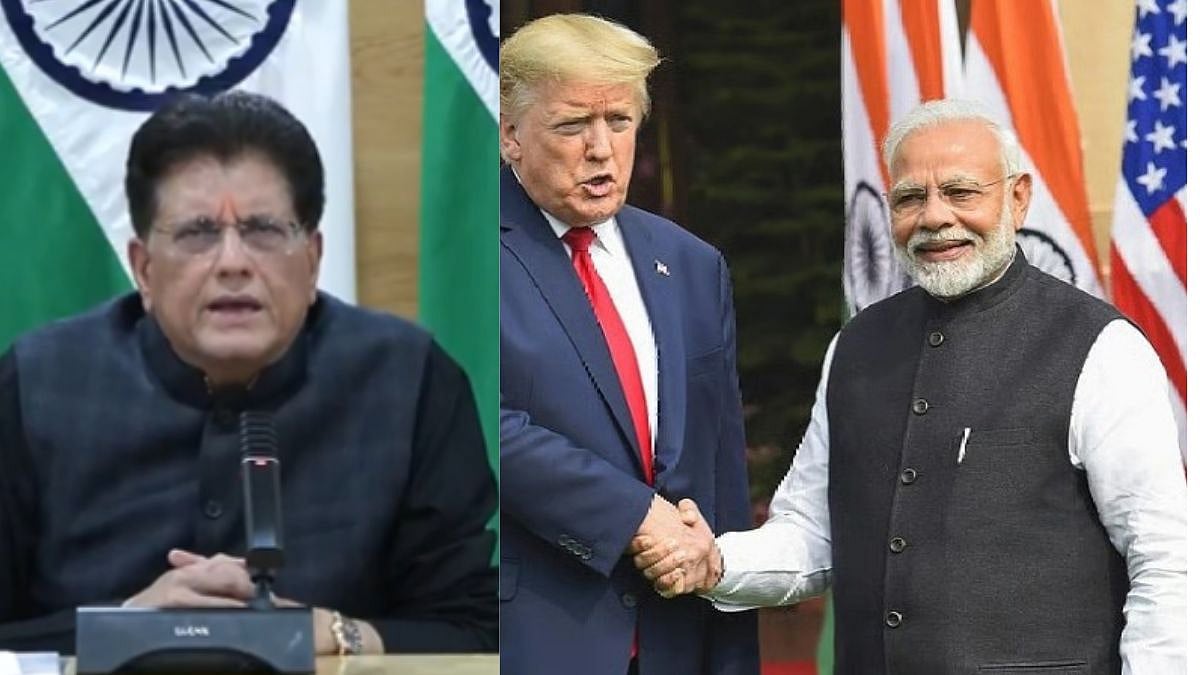
Commerce and Industry Minister Piyush Goyal’s description of the India–US trade deal as historic and forward-looking sets the tone for how New Delhi wants the agreement to be understood. The deal places India’s national interest at the centre and strengthens the country’s position in the global economy. This articulation frames the evolving trade understanding not as a concession extracted under pressure, but as the outcome of negotiations conducted with growing confidence. India had negotiated from a position of strength despite complex talks marked by challenges such as high reciprocal tariffs. The government maintains that India succeeded in protecting its core interests while ensuring fair and balanced market access. This claim carries weight in a global trading environment increasingly shaped by uncertainty, protectionist impulses, and shifting alliances.
Calibrated response to US announcement
US President Donald Trump’s announcement that tariffs on Indian exports would be reduced to 18 per cent while American goods would be allowed into India at zero tariff naturally drew widespread attention. India has, however, been careful not to formally endorse these claims, choosing instead to wait for a negotiated and signed agreement. Prime Minister Narendra Modi’s response—thanking Trump for the announcement while expressing hope that bilateral ties would reach unprecedented heights—reflected this calibrated approach.
Diversification of trade partnerships
What is significant is that India has not appeared unsettled by tariff pressures. Rather than reacting defensively, New Delhi has continued to diversify its trade engagements, pursuing bilateral and regional agreements to widen market access and sustain export growth. The recently concluded India–European Union trade agreement, which sharply reduces tariffs across a wide range of goods, underlines this strategy and signals India’s intent to reduce reliance on any single trading partner.
Domestic gains and need for caution
The government has also highlighted the expected domestic gains from the India–US trade deal. It is projected to create fresh opportunities for farmers, fishermen, MSMEs, women entrepreneurs, and the youth across rural and urban India. Official assurances that agricultural interests have been fully safeguarded and that farmers’ livelihoods remain protected are particularly important, given the political sensitivity surrounding trade and agriculture.
For Indian industry, the prospect of lower tariffs has been welcomed as a potential boost to exporters and a factor that could ease pressure on the rupee and equity markets. At the same time, prudence remains essential. Key details—ranging from the agreement’s coverage and timelines to safeguards and enforceability, especially in sensitive sectors—are yet to be made public. Until a joint statement and a detailed negotiated text emerge, the announcement should be viewed as a positive signal rather than a completed deal.
Taken together, the messaging reflects a broader shift in India’s approach to global trade: a more self-assured posture that seeks to leverage economic growth into strategic advantage while keeping national interest firmly in focus.

