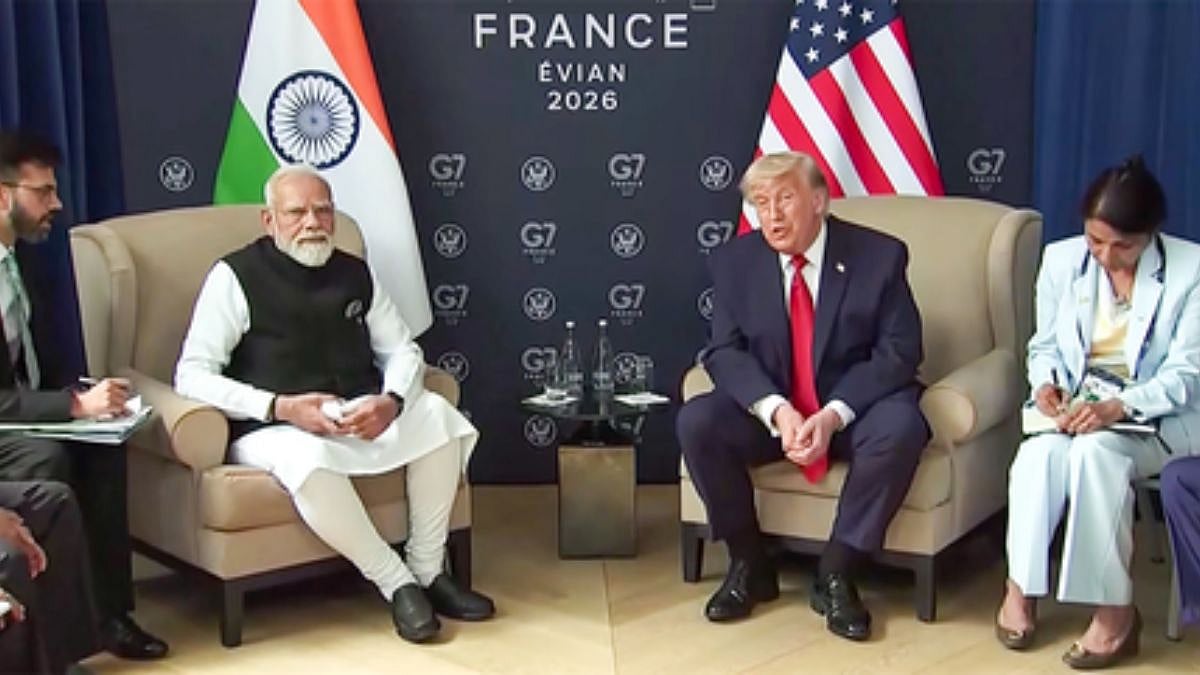
Diplomacy is ultimately governed not by personal warmth between leaders but by the enduring imperatives of national interest. Much has been written about the purported personal rapport between Prime Minister Narendra Modi and US President Donald Trump. Yet, the signals emerging from their interaction on the sidelines of the G-7 Summit at Evian in eastern France are at once confusing and largely devoid of substantive meaning. Political theatre and personal compliments may generate headlines, but they offer little clue to the future trajectory of relations between two major democracies whose engagement ought to rest on carefully defined strategic objectives. More so, when they say they are in a strategic partnership.
Some of President Trump’s remarks after meeting the Prime Minister only added to the ambiguity. His assertion that the United States would come to India’s aid in the event of an attack so long as Modi remained Prime Minister raises more questions than it answers. India faces no immediate threat of war and possesses the capability to safeguard its sovereignty whenever challenged. More significant was Modi’s raising of the killing of three Indian sailors employed on a Latin American vessel struck by American forces off the Oman coast. India had already lodged a strong protest by summoning US Charge d’Affaires Jason Meeks. Yet, Trump found no occasion even to express regret for the deaths, dismissing them instead as an occupational hazard.
Such a response is hardly satisfactory from the leader of a country that claims to value its strategic partnership with India. Equally frivolous were his observations that Modi speaks good English, is “beautiful”, and possesses a “killer instinct”. Speculation about why Trump kept his hand on Modi’s shoulder while they walked together is equally beside the point. Gestures and flattery do not constitute diplomacy. Policies and decisions do. The real test lies in how India and the United States advance their partnership in areas of mutual interest.
Despite repeated talk of a trade agreement, little certainty surrounds such an arrangement. Trade tensions have persisted, aggravated by tariff disputes and protectionist tendencies. While praising Indian talent, Trump has also made sarcastic comments about Indian professionals in the US technology sector and has shown little inclination to liberalise immigration rules for skilled Indians.
At the same time, his overtures towards China and nostalgic references to a G-2 framework have fuelled concerns that India may no longer occupy a central place in Washington’s strategic calculations. Reports about dropping the word “Indo” from the Indo-Pacific Command have only deepened such anxieties. These contradictions appear to be products of a highly personalised and often unpredictable, some say delusional, diplomacy whose consequences continue to puzzle allies and adversaries alike.

