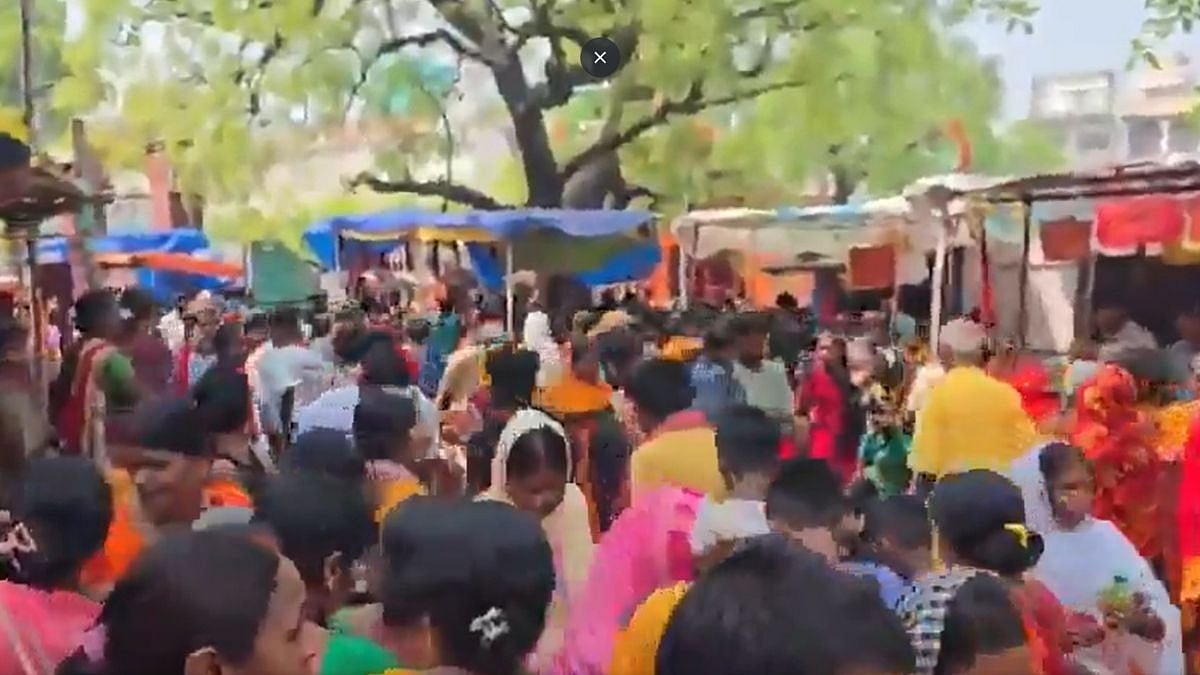
In a predictable response to the heart-rending stampede that killed at least nine people at a temple in Bihar’s Nalanda district, the state government has suspended a junior policeman, constituted a Special Investigation Team, and announced statutory monetary relief to the families of victims.
A broad-brush preliminary theory of a combination of factors — unmanageable crowds and poor security arrangements — was put out, consistent with the pattern seen after past incidents. India and stampedes are now indivisible in the literature on disasters.
During 2025, five out of seven deadly crushes involving the loss of about 70 lives took place at religious gatherings, ranging from the Maha Kumbh to a remote temple in Goa. Crowd management practices came in for scrutiny after stampedes at the New Delhi Railway Station in connection with the Kumbh, the cricketing celebration in Bengaluru, and the political rally of Tamil Nadu actor Vijay in Karur.
But problems at religious festivals such as the one in Nalanda’s Sheetla Mata temple invariably tend to fade away. The inadequacy of policing arrangements at the Bihar shrine has been attributed by some to diversion of forces for a visit by President Droupadi Murmu to a nearby university.
Yet, this can only be a partial explanation because, as the National Disaster Management Authority (NDMA) says in its manual for state governments on managing crowds at mass gatherings, policing with force is not usually the answer, and the experience with intelligent strategies should inform decision-making.
Need for structured crowd management
The protocol published by the NDMA, of using research insights and intelligent systems to assess crowding, besides making a formal venue assessment using a written questionnaire and fixing responsibility on specific officers, has not really been adopted by state governments.
It should be self-evident that the authorities, starting with the district administration, must be made legally responsible for compliance with the guidelines. Documents on event security should be published online in advance.
Insights from studies conducted globally can be deployed even now: one study done by US scientists, based on people’s behaviour in a panic situation, points to much faster evacuation of a room using multiple dispersed exits, rather than a few exits kept in close proximity.
The NDMA has advocated a pattern of regulated entry points and multiple holding areas to ensure lower risk of a sudden, deadly surge; the Railways have said they pursued a Rs 12,120 crore strategy in the Amrit Bharat station upgrade programme during 2025-26, although implementation of access control is patchy.
Failed crowd management leading to stampedes is symptomatic of the larger issue of poor appreciation of India’s large population that is now more mobile than in past decades. Mass gatherings will be the norm, and the challenge is to prepare for them.
Placing faith in violent policing would be a continuation of an outdated Victorian strategy. What India needs to avert stampedes is good on-site systems, official accountability, and public education.
