With the US and Iran blowing hot and blowing cold, it is very difficult to predict the events in the Persian Gulf and Hormuz Strait. The initial framework agreement, which seemed to be close at hand for some time, is still elusive. Even if such an agreement is signed in the next few days, the prospects of durable peace are still distant. Anytime, the Strait could be shut down again. In any case, opening the Strait for maritime traffic will not immediately restore supplies of oil, gas, fertiliser and other vital commodities. It will take months for the restoration of normalcy and cessation of the hardship and economic headwinds resulting from the current disruption. Most troublesome of all, the closure of the Hormuz Strait sets a precedent.
Earlier, oil shocks were essentially price shocks because of the cartel formation of oil-exporting countries; the current crisis is a supply disruption. Now that the unthinkable—closure of a vital sea route—has happened, it could happen again at any time in the future.
What does all this mean for India?
We import about 90% of oil and more than 50% of LPG. Our trade deficit is almost entirely because of energy import dependence. In FY 2026, our total energy imports were about $162 B, while the trade deficit was $119.3 B. If the disruption and high prices continue, in FY 2027, the energy import bill could be upwards of $240 B. If you add the higher import cost of fertilisers, it will add another $25-30 B to the import bill. On top of the trade deficit, high oil and gas prices inevitably fuel inflation, increase the subsidy bill (non-recovery of cost and fertiliser subsidies), and lead to a higher fiscal deficit. All this leads to lower economic growth as investments (public, private, domestic, and FDI) dry up. There is a real risk of a vicious cycle—higher energy prices and trade deficit, rupee depreciation, FII flight, FDI reluctance, inflation, rising fiscal deficits, lower investment, lower growth, lower revenues, and higher fiscal deficits—posing a danger to our growth momentum at a critical time.
This energy shock should be a wakeup call, spurring us into energetic and concerted action to reduce oil and gas imports substantially over the next 5-10 years. Technology and cost reduction are already driving the global and Indian economy towards reduced dependence on oil and gas. There is an estimated 10% reduction of demand on account of the switch to renewable energy and green technologies. This demand reduction cushioned the world economy, to a large extent, from the severity of the oil shock, despite 15-20% of supplies being shut down. For India, the key challenge is to reduce dependence on imported oil, gas, and LPG. Already, significant steps are being taken to increase energy resilience and reduce imports. Solar power generation, storage of power, and electric vehicles are at the heart of the transformation that is underway. Our solar power installed capacity is 154 GW (28.5% of the total installed capacity), with a potential annual generation of 300 BU (14% of total generation). Almost all this capacity has been added in the last few years. The target of 500 GW by 2030 is eminently achievable, but we need to aim higher. China has an installed solar power capacity of 1200 GW, with the potential generation of 2,400 BU.
Apart from solar power generation, we need to accelerate battery storage of electric power to make it viable. Our current battery storage (BESS) is paltry, well under 1% of daily solar generation. China has installed BESS to store 12% of daily solar generation. The union government has plans to create 346 GWh of BESS by 2032, equivalent to 63 GW of solar power generation. As per the CEA projections, we need even more. Enormous resources, coordination, infrastructure, logistics, and incentives are needed to increase solar power generation and storage to meet our growing requirements.
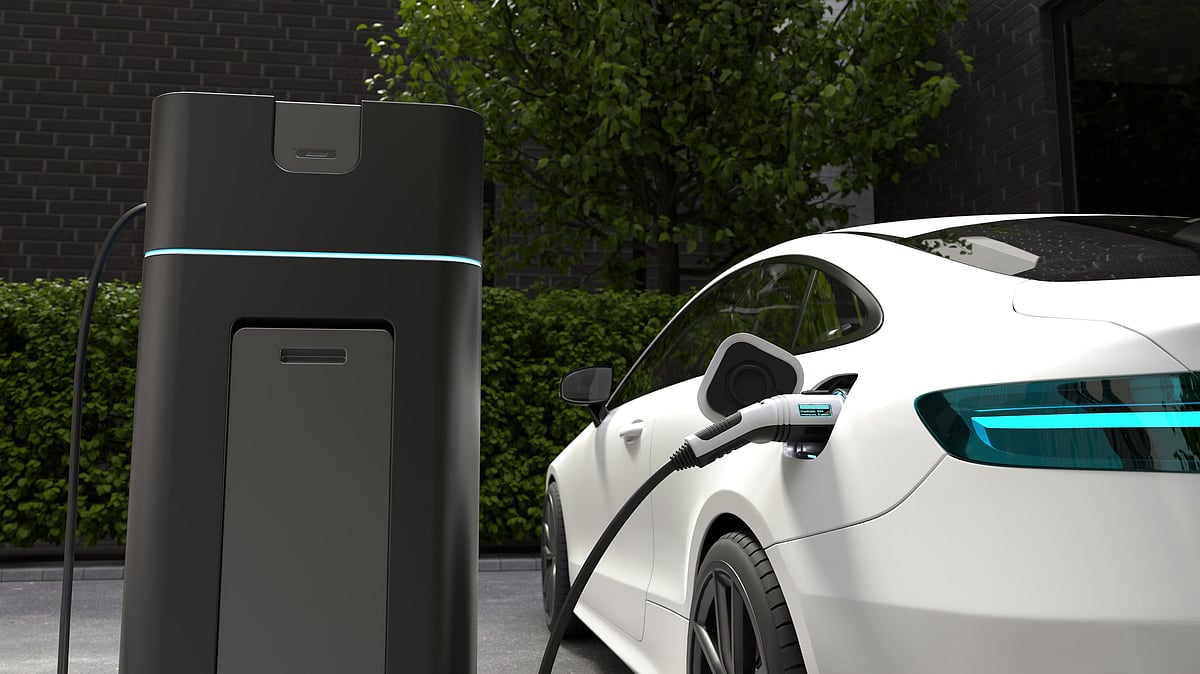
The real benefit of solar power will be derived only when we transition into the full electric mode of road transport (EVs). While we made a beginning, a lot more remains to be done. In 2025, EV sales were 1.65 lakh cars, 1.3 million 2-wheelers, and 8 lakh 3-wheelers in India, accounting for 4.4%, 6.4%, and 61% of all sales. China's EV sales, in contrast, account for 48% of all cars and 55% of 2-wheelers. We need to dramatically accelerate the electrification of road transport in the next 5-10 years, to the point that there should be no manufacturing of petrol and diesel-driven automobiles in the future. This is an ambitious goal but is well within our reach. The technology is available, the price of EVs is already comparable to diesel or petrol vehicles, and the cost of energy per km is much less than that of oil—ranging from 10 to 20%. The real challenges are solar power generation, storage, and accessible charging infrastructure.
Estimates indicate that electrification of all road transport will require about 600 billion units of power annually—or about 1.6 billion units per day, which is equivalent to 100 GW of additional continuous power generation, or 300 GW of solar power capacity. This is an achievable target by current projections. The real challenge will be promoting rapid charging of EVs during sunlight hours when solar power is produced. This will reduce the need for costly storage by ensuring maximum consumption when power is generated. Making rapid charging mandatory, building a distribution network to meet charging needs, and differential tariffs, with lower tariffs during sunny hours and higher tariffs when stored energy is tapped, are all the necessary requirements to rapidly electrify all road transport.
By transitioning all road transport into EVs, we will save over 120 billion litres of diesel and 62 billion litres of petrol annually. This in turn will reduce crude oil imports—not immediately but over time, as diesel and petrol vehicles are phased out—by about 180 million tonnes per year, or equivalent to about $180-200 billion at current prices, or $100 billion at 2025 prices. The union government announced the expansion of the public EV charging network and allocated ₹10,900 crore for installing 72,300 new public charging facilities in 2026. We need to do much more to quickly transition to EV transport. China has 2 million public charging points already, and the US has over 100,000, compared to 29,000 in India.
The current oil shock offers us a priceless opportunity to end dependence on imported oil forever and improve trade balance and fiscal health and prevent economic disruption in the future. The technology is available, and the consumers are primed to move to EVs if only government policies, infrastructure, and meaningful regulation of automobile manufacturing are in place.
We can do a lot more on the agricultural front to take advantage of the crisis and create opportunities, increase farmers' income, reduce government subsidies, create rural employment, reduce energy imports, and protect the environment. We will discuss it in these columns next fortnight.
The author is the founder of Lok Satta movement and Foundation for Democratic Reforms. Email: drjploksatta@gmail.com / Twitter@jp_loksatta

