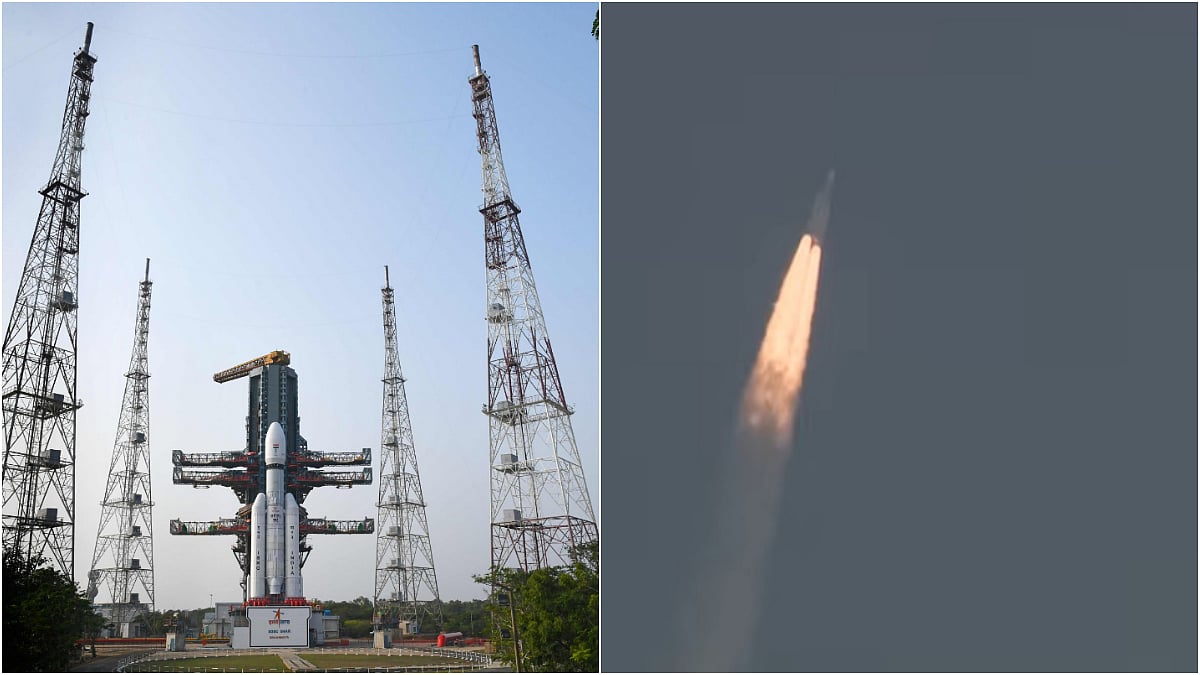
India has every reason to be elated. With the successful launch of BlueBird Block-2 (popularly referred to as BlueBird-6) aboard the LVM3-M6 rocket, the Indian Space Research Organisation (ISRO) has achieved a milestone that goes beyond national pride and firmly places India at the centre of the global commercial space market.
Weighing over 6,100 kg, BlueBird Block-2 is the heaviest payload ever lifted from Indian soil by an Indian launcher. The vehicle has a payload capacity of up to 9,000 kg. Its successful injection into low Earth orbit at an altitude of about 520 km marks not just a technical triumph but a strategic one.
Designed by US-based AST SpaceMobile, the satellite belongs to a next-generation constellation that aims to beam broadband connectivity directly from space to ordinary smartphones—no dishes, no special receivers and no additional hardware. If the promise is realised, it could redefine how the world thinks about mobile connectivity, especially in remote and underserved regions.
The launch itself was a textbook exercise in precision. The 43.5-metre-tall “Baahubali” rocket, powered by two massive S200 solid boosters, lifted off majestically from Sriharikota at 8:55 am after a cautious 90-second delay. The postponement, prompted by the risk of collision with orbital debris, underscored ISRO’s maturity and professionalism.
In an increasingly crowded orbital environment, such prudence is not a weakness but a necessity. As the saying goes, a stitch in time saves nine. What makes this mission especially significant is its commercial dimension.
The launch was executed under an agreement between NewSpace India Limited (NSIL), ISRO’s commercial arm, and AST SpaceMobile. This was the third fully commercial mission of the LVM-3 and, by all accounts, one of its finest performances. As ISRO Chairman Dr V. Narayanan noted, the vehicle’s track record now stands comparison with the best in the global arena.
The timing could not be better. The global launch services market, valued at over $18 billion in 2024, is projected to exceed $41 billion by 2030. Few countries can compete with India on the twin strengths of cost efficiency and proven technology.
Missions such as Chandrayaan-3, which achieved a soft landing near the Moon’s difficult south polar region, had already demonstrated ISRO’s scientific prowess.
The BlueBird launch now showcases its commercial credibility. Prime Minister Narendra Modi rightly described the mission as a “significant stride” that strengthens India’s heavy-lift capability and reinforces its growing role in the global launch market.
With LVM-3 also earmarked for the Gaganyaan human spaceflight programme and future deep-space missions, India’s space ambitions are clearly stepping up. From launching satellites to launching opportunities, ISRO has shown that India is no longer just a participant in space; it is a serious contender shaping its future.

