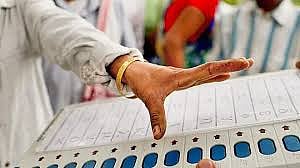
“Facts are sacred, opinion is free,” goes the old journalistic maxim. It is a reminder worth invoking when the Chief Election Commissioner, Gyanesh Kumar, described the recent high polling percentages as a “validation” of the Special Intensive Revision (SIR) of electoral rolls.
Let the facts speak first. Assam recorded an impressive 85.8 percent turnout, Puducherry an even higher 91.2 percent, and Kerala 78.2 percent. Such participation is undeniably commendable. It reflects citizens’ faith in the democratic process and their willingness to engage with it.
High voter turnout is always a healthy sign in any democracy. However, the leap from participation to “validation” of an administrative exercise is neither obvious nor justified.
Take Assam as an example. In 2016, the state had already recorded a robust turnout of 84.7 percent. The increase this time is marginal. Yet, no such sweeping claims were made then. Why now?
Shrinking electorate skews turnout
One must also account for a critical factor: the revision of electoral rolls itself. The SIR resulted in a reduction of the electorate. In Assam, around 2.4 lakh voters — about 1 percent — were removed. Puducherry saw a sharper drop of 7.6 percent, amounting to over 77,000 voters.
In Kerala, the electorate shrank by nearly 9 lakh, or roughly 3.2 percent. With fewer names on the rolls, a higher turnout percentage becomes almost inevitable. It is arithmetic, not achievement. To describe this as a “historic testimony not only for India but for the entire democratic world” is, therefore, an exercise in hyperbole.
The Commission would have been on firmer ground had it simply congratulated voters for their enthusiasm rather than attributing it to its own intervention.
Yet, the SIR has had one undeniable effect: it has alerted citizens to the importance of remaining on the electoral rolls. In a country where population continues to grow, the shrinking voter base is anomalous and contrary to demographic trends. This alone should prompt introspection.
Participation patterns reveal deeper concerns
More revealing, however, is the pattern of participation. In Assam, turnout surged unevenly. Muslim-majority constituencies recorded exceptionally high participation, with Dalgaon in Darrang district touching 94.5 percent and at least 15 similar constituencies crossing the 90 percent mark.
By contrast, the Hindu-majority belt of upper Assam recorded about 82 percent, while the hill districts of Karbi Anglong and Dima Hasao lagged at 74.2 percent. These variations suggest that the surge in turnout may have been driven less by confidence and more by concern.
The stricter revision process appears to have created a sense of urgency — if not anxiety — among sections of voters to assert their presence on the rolls. The figures, therefore, do not validate the SIR. They reveal something more complex: a mobilisation born partly of apprehension. Facts, when read carefully, tell a story quite different from the one being claimed.
