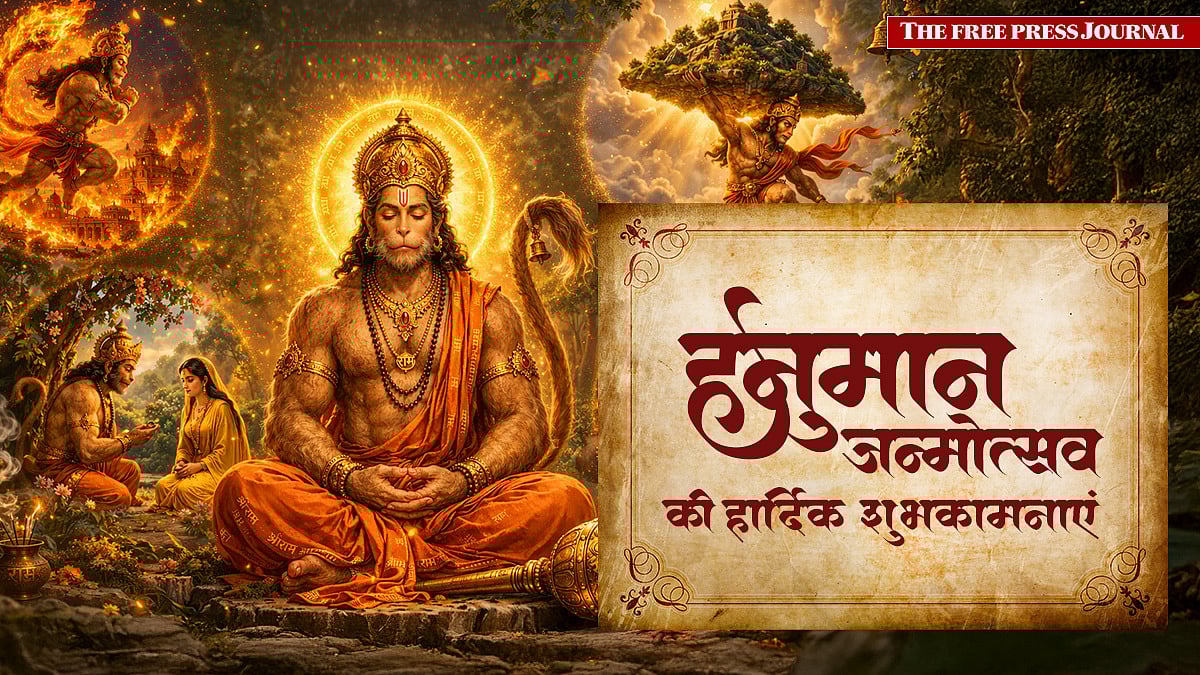
We have just celebrated Hanumān Jayantī. Popularly, Hanumānjī is called Rāma Dūta, Rāma Bhakta — as though he is merely a messenger or a simple devotee. But there is much more to Hanumān than that.
Hanuman as a master communicator and diplomat
If you look at some of his dialogues in the Vālmīki Rāmāyaṇa and his style of communication, you won't need to attend any communication workshop. He was an excellent communicator and a great diplomat — evident in the way he approaches Rāma and Lakṣmaṇa when Sugrīva sends him to find out who they are, Sugrīva fearing they may be spies sent by Bāli.
Multiple roles in Lanka mission
Consider what he did in Śrī Laṅkā before the formal war began. He had been sent simply to find Sītā. Yet he seamlessly combined that role with those of a spy, a diplomat, and a warrior — all rolled into one as he moved through Laṅkā.
He found Sītā, who was naturally low in spirits. Nearly a year had passed in captivity, with daily verbal taunting and torment. Hanumān lifted her spirits with great psychological sensitivity and awareness.
Strategic actions and message to Ravana
Then he turned his attention to the Rākṣasas. He demolished some of their mightiest warriors, surveyed Laṅkā's defences carefully, and destroyed key fortifications so they could not be rebuilt before Rāma's army arrived. He also sent an unmistakable message to Rāvaṇa — all this accomplished by someone whose sole mission had been to locate Sītā. A case of exceeding his brief by far.
Philosopher and Advaitin at heart
He was also a great philosopher, well-versed in all the schools of Vedānta — yet an Advaitin at heart. He tells Rāma directly: You and I are one and the same.
Devotion expressed through action
How, then, do you categorise him? His life was full of devotion expressed through service, for what is the worth of devotion if it does not move into action? And yet, simultaneously, a great Advaitin who knew the truth, lived by it, and could not be confined to any single category — very much like the truth itself.
To that Hanumānjī, my salutations.
(The writer is the founder of Aarsha Vidya Foundation. You can write to him at aarshavidyaf@gmail.com)

