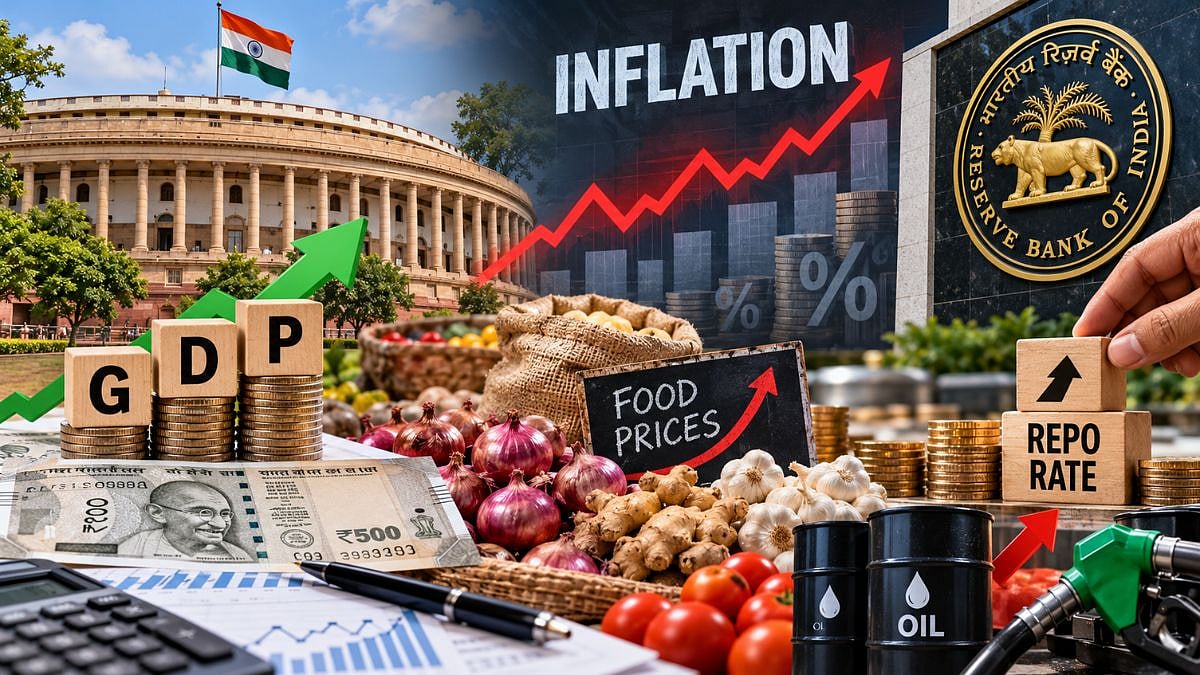
Over the past few weeks, the government has released several economic data points, including GDP, inflation and the Consumer Price Index, while the central bank has, amid all this, raised the repo rate to rein in inflation.
Taken together, these figures make it clear that our economy is not as healthy as it is made out to be and is facing a more difficult policy trade-off: how to protect growth while preventing inflation from becoming entrenched.
The challenge is to understand what these numbers reveal collectively, rather than view each of them in isolation. While GDP growth indicates the pace of economic expansion, inflation shows how rising prices affect households and businesses. The repo rate, meanwhile, reflects the central bank’s attempt to contain price pressures without unduly hurting economic activity.
Retail Inflation Rises Above RBI Target
India’s retail inflation rose to 5.54 per cent in September from 4.83 per cent in August, showing that pricing pressure is far from over. The latest reading, released on October 12, is the highest since October 2024 under the current Consumer Price Index series and is above the Reserve Bank of India’s (RBI) 4 per cent medium-term target for the fourth consecutive month. With inflation approaching the upper tolerance limit of 6 per cent, the RBI is rightly concerned, but the key question is whether supply disruptions or excessive demand drove it.
Food And Core Inflation Add To Concerns
One area that needs more focus is food inflation, which rose to 7.74 per cent in September from 5.97 per cent in August, indicating a sharp increase in the prices of essentials, including onions, ginger and garlic. Added to this were a deficient monsoon, nearly 13 per cent below average and the weakest in over a decade, and galloping crude oil prices, increasing risks for an economy that imports nearly 90 per cent of the energy it consumes.
More concerning, core inflation, which excludes fluctuating food and fuel prices, rose to 4.6 per cent in September from 4.16 per cent in August. The rise in core inflation deserves attention because it could indicate that price pressures are spreading beyond food and fuel. If businesses pass on higher input costs to consumers, inflation may become more persistent, making it harder for the RBI to bring it back towards its target.
Higher Interest Rates Have Their Limits
The RBI has already responded by raising the repo rate by 25 basis points to 5.5 per cent in October, expecting to control inflation, and is expected to increase it further. One needs to watch whether this leads to a substantial decrease in inflation, but monetary policy works through borrowing costs and spending. Higher interest rates can help manage inflation, but they cannot improve rainfall, increase vegetable supplies or reduce fuel prices.
The September inflation reading is a warning the government should take seriously and act decisively if needed and, more than that, be as transparent as possible with its citizens.

