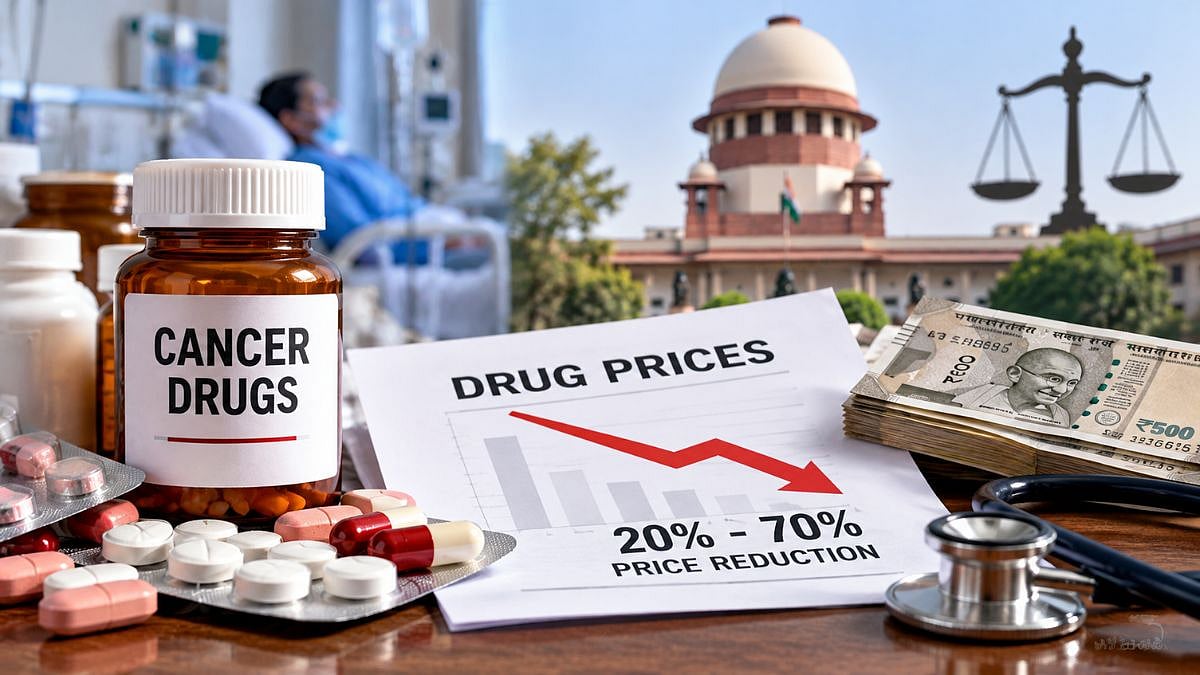
Caught in a cleft stick, the Union government has come forward to curb the shocking levels of profiteering in the sale of cancer drugs, promising a reduction in selling prices by 20% to 70% to benefit patients.
That this regulatory action had to wait for sharp comments from the Supreme Court and a virtual unmasking of usurious prices charged by retailers and hospitals—by as much as 10 times—is a telling commentary on the state of regulation in the country.
The story of greed that exposed the sector was the Rs 27,000 that a patient was charged for a drug that cost the retailer or hospital only Rs 2,700 to procure. Given the close relations between the for-profit health insurance industry and corporate hospitals, it is obvious that everyone but the patient is at the centre of the equation.
The government was always aware of what can only be termed a racket but chose to look the other way. It is to the credit of the SC that some sunlight has fallen on unbridled overcharging, done using the cover of the maximum retail price.
Even the latest offer to cap the price of cancer drugs is half-hearted, as the response of the Additional Solicitor General makes clear—price control, the ASG told the court, is only one aspect of government policy, and a balance needs to be struck, taking into consideration affordability, availability, and market factors.
This is a far cry from the days of the erstwhile Planning Commission’s High-Level Expert Group on Universal Health Coverage, which proposed the supply of all essential drugs free to all citizens, at an expenditure of only half a per cent of the GDP in a fast-growing economy.
Price Controls Must Extend Beyond Cancer Drugs
During the hearing on the drug price profiteering case, Justice Sandeep Mehta, who was on the bench, posed a valid question to the Union government on why its proposed price intervention was restricted to cancer drugs.
Obviously, if regular drugs for conditions ranging from diabetes, hypertension, and cardiac diseases are being sold at extraordinary retail prices, why could these not be aligned with similar reasonable trade margins and their prices capped?
Moreover, hospitals should invite competitive bids for drug supply to reduce prices and be compelled to adopt transparency on this expensive aspect of in-patient care over which patients have no control.
Transparency And Drug Quality Need Attention
This issue, too, has received scrutiny, and the court has correctly pointed to the staggering increase in charges levied by hospitals for consumables and medical devices, shrinking the available health insurance cover.
Inflated prices for stents and other devices create a commercial interest in unnecessary interventions and erode an already faltering ethical base.
Drug quality must be shored up across the board through enforcement, and the industry’s ‘Price to Retailer’ must be required to be published by law for patients to assess whether the MRP bears any relation to it.

