In a country where communal riots, tragically, are a recurring feature since before Independence and, more so, after it; Thursday’s court order convicting a few persons for the horrendous outbreak of violence following the burning of the Godhra train in Gujarat is a small step towards the enforcement of justice.
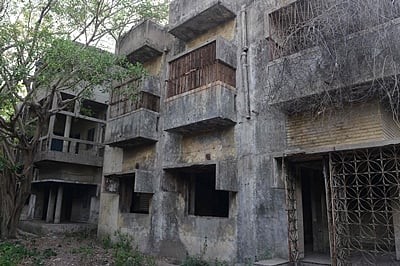
The cause of justice is advanced whenever perpetrators of violence regardless of their religious faith are brought to book. In the present case, in the post-Godhra rioting that had broken out in large parts of Gujarat, sixty-nine Muslims were killed in Ahmedabad’s Gulbarg Society. Among those killed was Ehsan Jafri, a former Congress MP. His widow Zakia Jafri was closely involved in pursuing the case all through since the 2002 murderous assault by emotionally charged mobs.
On Thursday, a special court in Ahmedabad convicted 24 persons, including eleven for murder, for their role in the Gulbarg Society killings. Thirty-six people were acquitted. No prominent person figured in the list of those convicted or acquitted, underlining the truth that it is the anonymous mobs who take to the streets when aroused emotionally following a particularly heinous incident. It is undeniable that it was the sheer enormity of the horrendous crime of burning alive more than fifty pilgrims returning from Ayodhya at the Godhra station that flared up emotions all around among the majority community.
Once the spark was lit, it became hard for the local administration to control the angry mobs until the army enforced curfew and the shoot-at-sight orders. Unfortunately, public discourse was sought to be perverted by a handful of agenda-driven critics who held the then Gujarat Chief Minister Narendra Modi personally guilty for the tragic events. In the unrelenting fusillade of abuse and diatribe directed at Modi it was forgotten that the riots were not exactly one-sided, that of the 1000-odd people killed, nearly three hundred were Hindus.
Admittedly, the Gujarat riots being the first of the television age acquired far more notoriety than even those which were decidedly much bigger conflagrations and had claimed lives in several multiples of the toll in the post-Godhra riots. In fact, the police, the central investigating agencies, and, of course, the higher courts, including the Supreme Court, have most diligently and thoroughly engaged in ensuring that the perpetrators of the Gujarat riots are brought to justice. It is due to such commendable efforts that previously a junior minister in the Gujarat Government was convicted for her role.
Despite attempts to drag Modi personally, the Supreme Court-appointed Special Investigation Team had found nothing incriminating against the then Gujarat Chief Minister. Indeed, the Special Court in its order on Thursday rejected the charge that there was a pre-planned conspiracy behind the riots. In fact, the court acquitted a few persons whom SIT had found involved in the riots, on the ground that there was insufficient evidence against them.
For fourteen years, a vicious narrative was sought to be built around the lie that Modi personally hatched the conspiracy to perpetrate anti-Muslim violence so that he could firm up his grip on the voters. He was only a few months into his job as chief minister when the Godhra train burning incident happened. It may be that his inexperience was a factor in the initial failure of the district administration to control the mobs but it was commendable that in the face of such a huge provocation the situation was brought under control within three days.
An equally inexperienced Rajiv Gandhi as prime minister in 1984 had seen more than four thousand Sikhs – and only Sikhs, none else – killed under his watch in the capital alone. The point is that mob fury everywhere is hard to contain. (Not-so-infrequent rioting by angry blacks in the US being a case in point) Yet, politics of extremism is an avoidable contributory factor in mob flare-ups, be they caste-linked or religion-linked. The conviction of a few persons in the Gulbarg Society case is a good sign that rioters cannot always go unpunished. It is important for a society based on law and justice that no law-breaker goes unpunished. To the extent a number of perpetrators have been found guilty, there will be some closure for the victims of the Gujarat riots.
