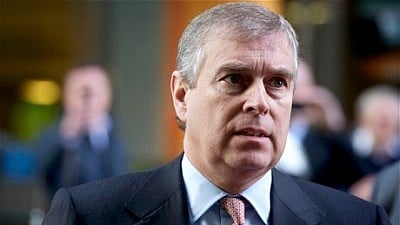
Mumbai: The fallout from the paper trail unearthed from the Jeffrey Epstein scandal currently sweeping the world of big business, politics, entertainment and more has impacted the British royal family with the arrest (and subsequent release) of Andrew Mountbatten-Windsor, formally Prince Andrew, who had been stripped of his royal title last October; this despite him continuing to deny all charges.
It has also led to the ignominious exit of Peter Mandelson, who was Britain’s ambassador to the US, due to his alleged ties to Epstein, the late financier and convicted paedophile who died by apparent suicide in his prison cell in New York in 2019. This brings to mind two scandals in Britain, one of which nearly brought down the monarchy and another which actually brought down the Conservative government of Prime Minister Harold Macmillan in 1963. In 1936, King Edward VIII abdicated the throne to marry the twice-divorced American Wallis Simpson and was replaced by his brother George VI.
If anything, the scandal that brought down the government 27 years later was an even more serious one, involving John Profumo, the Secretary of State for War and his affair with a 19-yearold model and prostitute, Christine Keeler, who was also involved with Yevgeny Ivanov, a naval attaché of the Soviet Union in London -- all this at the height of the Cold War between the Soviets and its allies on one side and the West on the other. Profumo denied the affair in the House of Commons but later admitted he had lied and was forced to step down. The serious security implications of the whole affair severely damaged Britain’s credibility at such a sensitive time in history.
The Profumo Affair, as it came to be called, had an Indian connection and one with my family as well, going back to Poona (now Pune) in the 1940s. And the man in the middle of all this was a London osteopath, Dr Stephen Ward, who moved in high circles and introduced Keeler to both Profumo and Ivanov. Ward, who was the only one who faced trial, took his own life in 1963 before the sentencing, claiming he had been made a scapegoat by the British establishment. There have been numerous books written about the scandal with one biography of Ward mentioning he had served in Poona (now Pune), then a British military base, during the second World War. Ward, according to the book, worked out of the clinic of Dr Dinshah Mehta, the founder of the Nature Cure movement in India and whose patients included Mahatma Gandhi, Jawaharlal Nehru, his daughter Indira, Sardar Vallabhai Patel and the British politician Sir Stafford Cripps (whose Cripps Mission in 1942 sought India’s co-operation in the war), among other leaders of the freedom movement. Ward’s most famous patient was Gandhi, who sought treatment for a stiff neck.
According to the book it was his day of fasting and silence but he broke his vow of silence to say to Ward: “It’s refreshing to be introduced to a British officer who has not come to arrest me.” Ward, on his return home after the war, had as one of his high-profile patients Winston Churchill (Frank Sinatra was another), who when told by Ward he had treated the Mahatma for a stiff neck is quoted in the book as telling Ward it was a pity he did not break it! Churchill had been voted out as PM in 1945 (he would return for a second term in 1951) but his animosity towards Gandhi, who he infamously dismissed as a “half-naked fakir” never left him.
The family connection is through Dr Mehta, whose wife Gool (after whom I am named) was my late mother Khorshed Wadia Ezekiel’s maasi (maternal aunt). The Mehta’s clinic-cum-home is today known as Bapu Bhavan and is part of the sprawling National Institute of Naturopathy campus which includes the OPD in the name of Dr Mehta. On a personal front, shortly after my birth in Poona in August 1959 I was brought to the Mehta home with my mother and Gool-maasi opened up Gandhiji’s room, which had been locked since his assassination in January 1948, with the words: “Bapu would have been happy to have a child in his room.” And thus I spent the first three months of my life sleeping on Mahatma Gandhi’s bed — no wonder I was given Mohan as my middle name!

