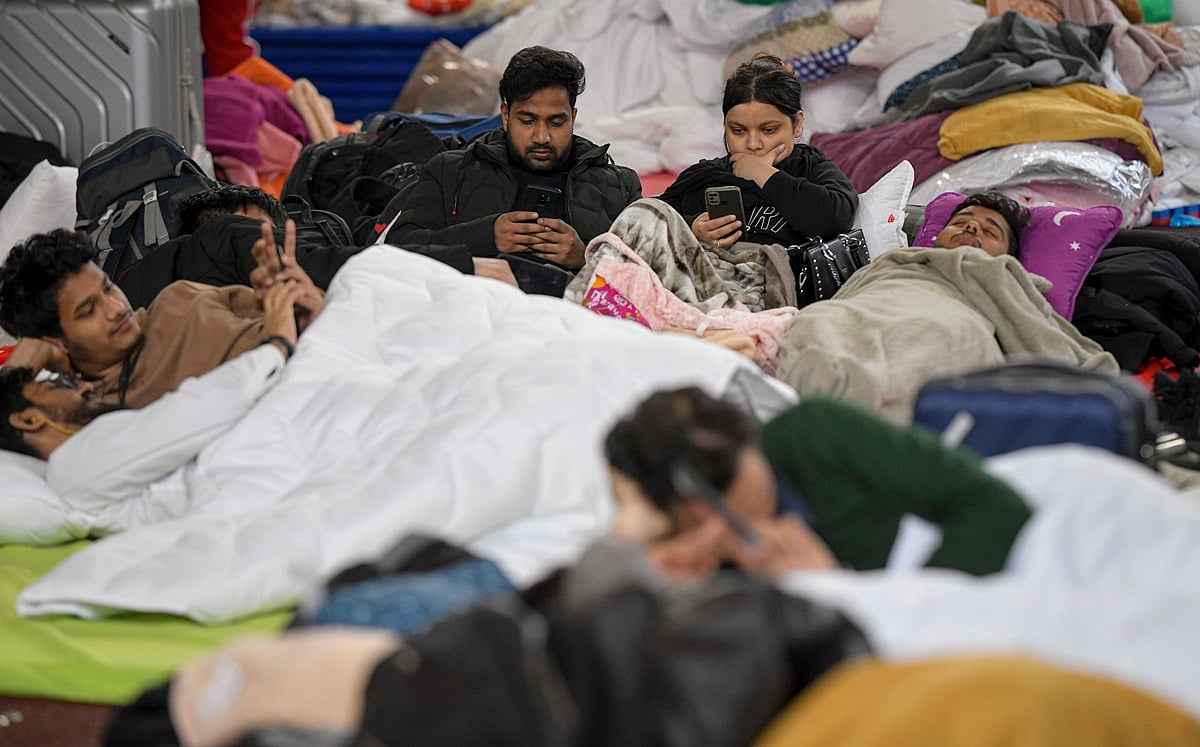
It required a war in Europe for Indians to realise that there was something fundamentally flawed in the medical education system in the country. Nobody imagined that there were so many Indian medical students in Ukraine when Russia started pounding the nation.
Union Minister Pralhad Joshi did not make matters easy when he claimed that 90 per cent of the students there could not clear the Indian medical entrance test, known as NEET.
It was tantamount to blaming the victim at a time when the government’s whole attention should have been to bring the students back home. For instance, the student from Karnataka who was killed in Ukraine, Naveen Shekarappa Gyanagouda, had obtained 605 out of 625 marks in the medical-qualifying exam in India.
The reason for his inability to study in India is not far to seek. As many as 16 lakh students appeared for the NEET exam held in 2021 to fill a total of 83,000 MBBS seats available across the nation. Out of them, not even half is in the government sector. There are different rates of fees in private medical colleges varying from Rs 50 lakh to Rs 1.50 crore.
Given the reservation and other systems in vogue, there was no guarantee that a student who scored even 90 per cent marks in NEET would get admission in a government medical college where the annual fees is in thousands, not lakhs. Another option to pursue medical education is to go to countries like Ukraine, China, Russia and the Philippines where the total cost of the five-year course, including airfare, is in the Rs 25-30 lakh range.
Of course, it is not easy for such students to practice in India or to go in for postgraduate studies, as they have to clear the foreign medical graduate examinations, which is extremely tough. India needs 1.38 million doctors to meet the WHO-prescribed norm of one doctor for 1,000 people.
This can be met only if more seats are made available to aspiring medical students. The Medical Council of India should be able to find ways to double the intake of students in the existing medical colleges without compromising the quality of medical education.
Medical colleges in Ukraine or Russia do not have the kind of infrastructure, patient strength and faculty Indian institutions have. In other words, reforms in this sector are urgent to prevent the migration of Indian students.
There is also the question of integrating the students who have returned to the Indian education system.