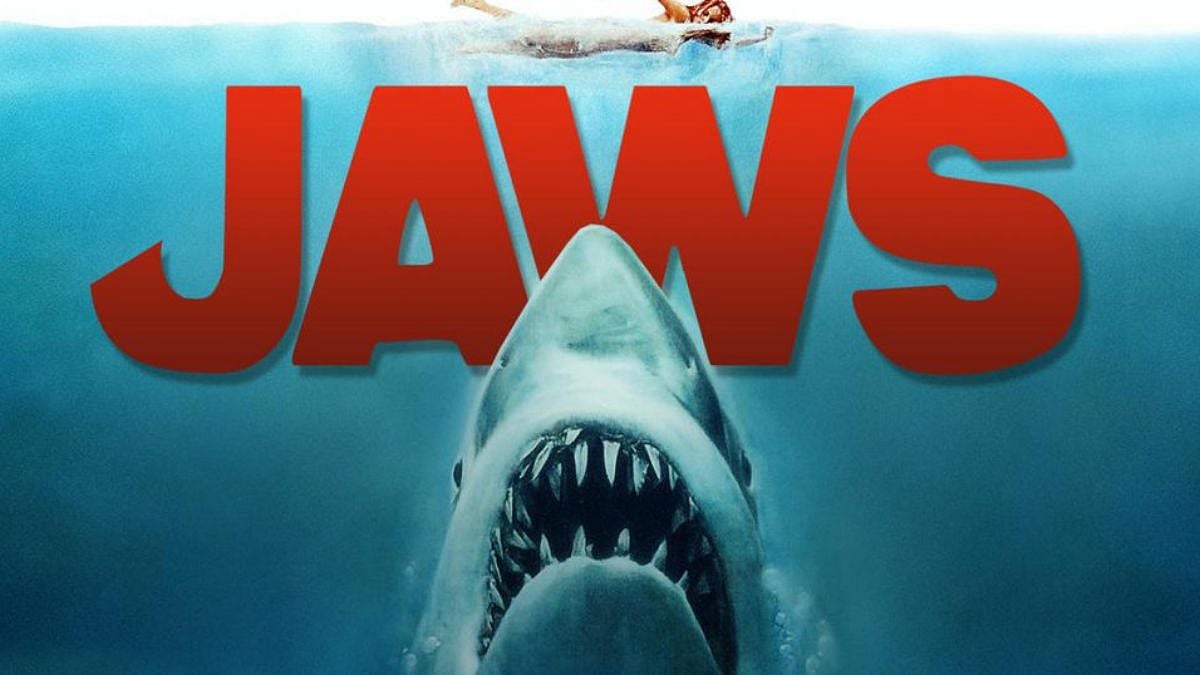
Steven Spielberg's Jaws, which first hit the cinemas a little over 50 years ago, was unique in the genre of horror films. Unlike so many others, the movie did not use the jump-scare formula to create terror among its viewers. It relied on silent suspense—at least mostly—to cause a kind of uneasy fear and panic that kept many beach-goers from stepping into the waters. Audiences, tired of watching eerie works like The Exorcist and His House, lapped up Jaws with its huge man-eating shark that ripped off body parts of unsuspecting swimmers. In fact, Spielberg followed Alfred Hitchcock's style of keeping the bomb under the table till it exploded. That was the suspense which slowly worked into a frightening pitch. The American helmer kept his “protagonist” under wraps for most of the runtime, and we merely see the gruesome harm it does. A limb here or a limb there floating in water and blood flowing all over.
The opening shot sets the tone and tenor of the narrative. A little girl who goes swimming at night is attacked by the shark and dragged away—much like the man-eating tigers in India that spring on the unsuspecting and take them away. Based on a book by Peter Benchley, Jaws happens on the Fourth of July weekend, with the beach insanely crowded with people—all out to have a good time. And they brought dollars which the town's administrator is not inclined to lose.
Mayor Vaughn (Murray Hamilton) refuses to warn the holiday tourists about the lurking danger—deadly and disastrous—though all evidence points to the presence of a deadly shark. “If people cannot swim here, they will be glad to swim on the beaches of Cape Cod or the Hamptons,” he tells the police chief, Brody (Roy Scheider). Suited and booted, the mayor struts on the sand, egging people to go out into the sea. Into this frame appears Quint (Robert Shaw as a World War II veteran-turned-fisherman in his most memorable role), who offers to kill the shark but for a huge price. We also have an oceanographer, Hooper (Richard Dreyfuss), who is also willing to chip in.
Thrillers those days—like The Exorcist, His House, and Bees Saal Baad—used the jump-scare formula to get our hearts thumping. Jaws frightened us all right, but in a very mysterious kind of way. The ocean suddenly lost its tranquillity when the killer shark tore through the waves. Not surprisingly, it encouraged several similar themes, but nothing came close to the original. This Spielberg masterpiece remains as exciting today as it was half a century ago.
