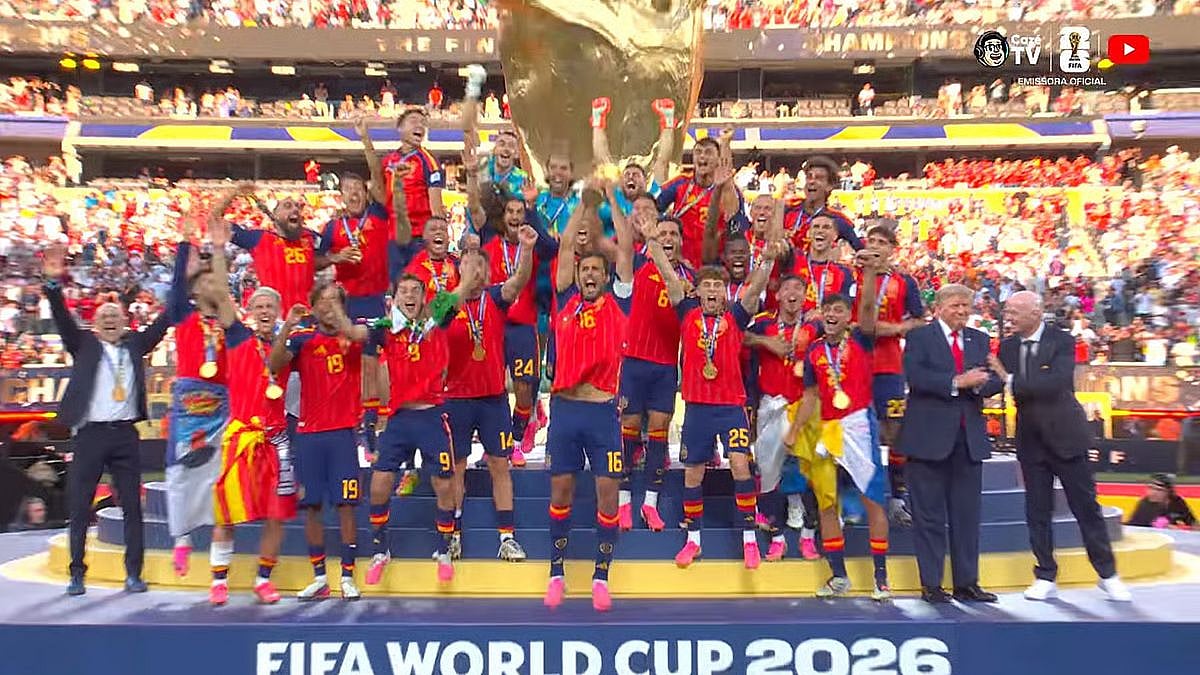
A FIFA World Cup, shrouded in numerous controversies as well as many magical moments, ended in a blaze of glory for Spain, who beat defending champions Argentina in a woefully one-sided final on Sunday. Though the scoreline shows only one goal, it appeared throughout that there was just one team on the field. How and why Argentina and its superstar Lionel Messi failed to turn up for the match will no doubt be analysed for years to come.
The final score would have been much more lopsided if not for the valiant efforts of Argentine goalkeeper Emiliano Martinez, as Spain’s dynamic forward line tore holes in the rival defence. Finally, it was Ferran Torres’ 106th-minute goal that settled the issue. Spain even had a clear goal in extra time disallowed for no discernible reason.
Controversies Overshadow Tournament
This was a pattern throughout the championship, in which the officiating appeared to favour Argentina and Messi in particular, who, like Portugal’s Cristiano Ronaldo, was playing in his final World Cup. The 3-2 victory over Egypt in the round-of-16 match, after falling 2-0 behind with minutes to spare, will forever be tainted by these allegations.
In the stormy 2-1 semi-final against bitter rivals England, the Argentines got away with one vicious foul after another, and it was only in the closing stages of regulation time in the final that one of their players was finally shown the red card.
Spain’s Dominance On Display
If Argentina’s brutal methods tainted the Beautiful Game, as football is called, it was Spain who delighted with their tiki-taka style of short passing as perfected by their front line of attacking forwards. However, it was their goalkeeper, Unai Simon, who was the real hero of their winning campaign, letting in just one goal in eight games.
There were some unpleasant incidents, none more so than US President Donald Trump forcing FIFA to rescind the red card handed to the USA’s forward, Folarin Balogun. This set a dangerous precedent. One also hopes the ridiculous ‘hydration breaks’ and the execrable half-time entertainment show in the final will not be repeated.
Tournament Leaves Lasting Impact
The decision to expand the championship to 48 teams was a resounding success, with tiny Cape Verde being the toast of the football world as they made it to the knockout stage.
The normally reticent American fans also took to the World Cup in splendid fashion, with full houses at every match, while the public welcomed fans from around the world with open arms, and the latter reciprocated. So, in the final analysis, this twenty-third edition of the FIFA World Cup can be termed a success.

