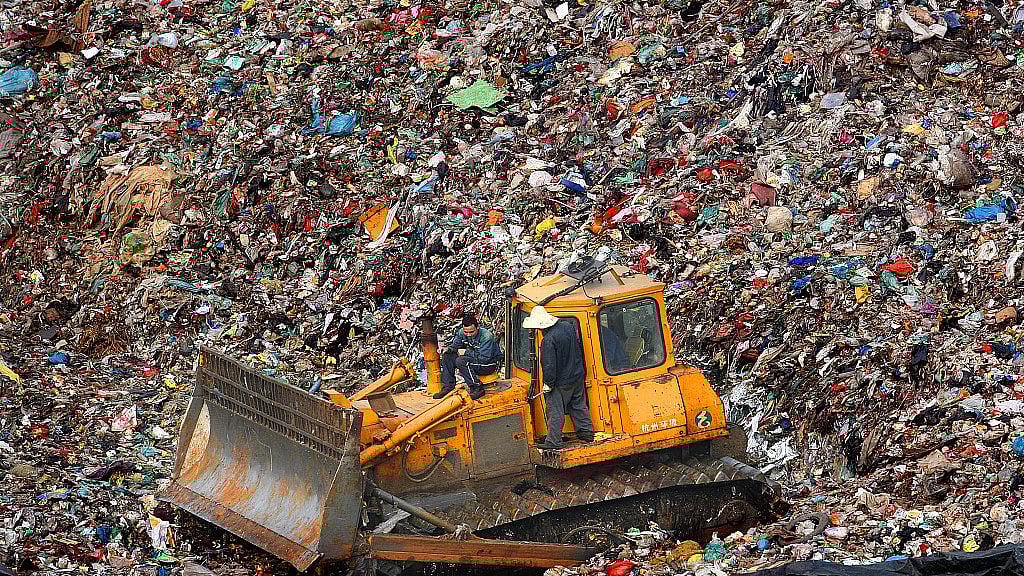
Out of sight, out of mind, has been the paradigm for India’s solid waste management practice, although the law, the municipal Solid Waste Management Rules 2016 mandates a scientific process of collection and disposal. Data on SWM from 2023-24 indicate that about 65,300 tonnes of municipal waste is dumped everyday without treatment, while another 5,000 tonnes is not collected at all. These are data reported by states, relying on weak reporting systems, and most likely underestimated. The Union government wants to turn a new leaf - again - and is poised to implement the upgraded SWM Rules for 2026 from April 1. As a statement of intent that is more detailed in its scope than previous iterations, the rules must be welcomed. Yet, they have little chance of succeeding for a variety of reasons, chiefly the absence of political will, low capacity of civic bodies especially in smaller towns and rural areas, an indifferent consumer goods and retail sector, and urban residents who look upon waste as an externality for which they bear no responsibility. The new rules want to change all this through an online, portal-based system of reporting of average waste generation, collection, treatment, and materials recovery by local bodies, pollution control authorities and waste-to-energy systems, and details of bulk waste generators (who must secure responsibility certificates from the local body for a fee). Urban local bodies have detailed tasks, the most important of which is involving the community in managing waste through a decentralised framework. These provisions are promising, but the rules falter when they prescribe penalties in the place of incentives.
For the MSW Rules to work at the community level, an appeal to enlightened self-interest may work better than top-down prescriptions that have failed so far. Sheer economics ensures that all waste with residual value has always been segregated and sold, even at the level of households. Thus, the four-way segregation of waste prescribed by the new rules could produce well-demarcated streams of biodegradable waste (making compost or biogas at different levels) and recyclable or combustible waste, if citizens are incentivised. Germany, for instance, has a successful plastic bottle return programme that pays back a deposit of 25 cents per unit, which makes it attractive for anyone to collect such bottles. By contrast, plastic waste is an orphan in India because of its sheer volume and low prices. Lack of enforcement on the sale of banned single-use articles leaves piles of uncleared trash outside cities. New mandates for industry to use Refuse Derived Fuel and report their performance could make a difference, if compliance is monitored. The depressing reality is that many cities lack robust systems - including prosperous ones such as Bengaluru - reflecting the low priority waste management enjoys in practice. Community monitoring of MSW Rules 2026 may hold the key.

