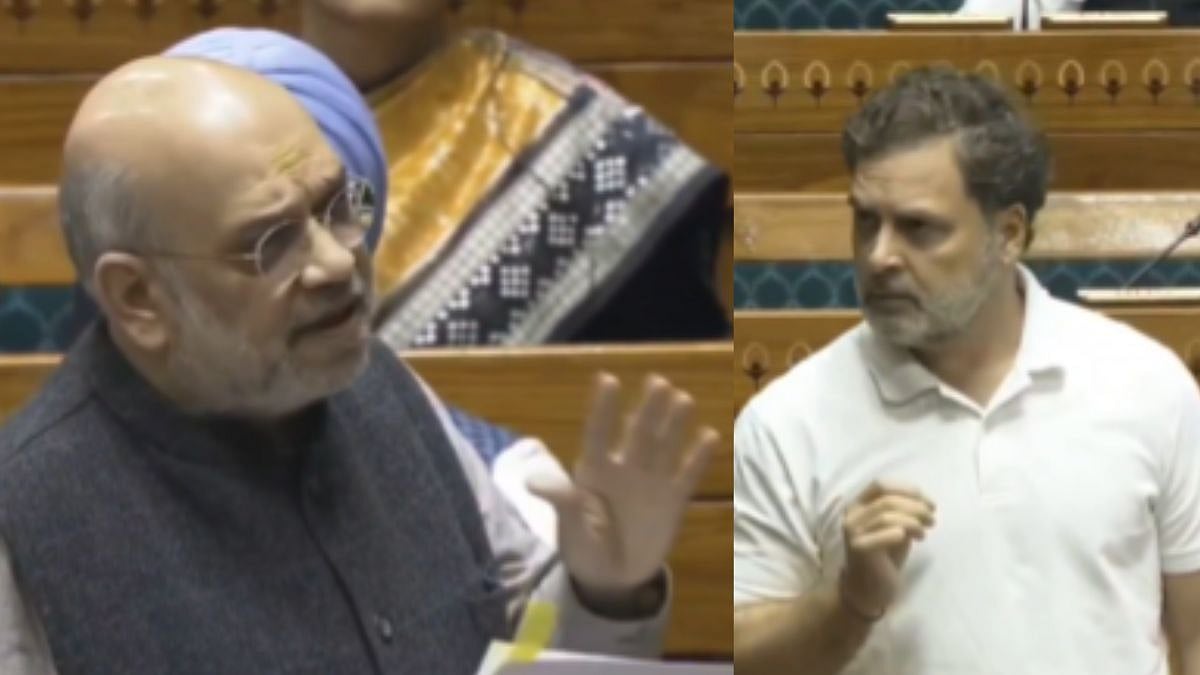
"Vote Chori” is the latest political coinage minted by Leader of the Opposition Rahul Gandhi, and it echoed loudly in Parliament on Wednesday. Home Minister Amit Shah, never one to miss an opportunity, seized the phrase to deliver sharp counterblows. He dredged up history to show how Jawaharlal Nehru became Prime Minister despite receiving fewer votes than Sardar Patel and how Indira Gandhi clung to power even after losing her election case in the Allahabad High Court. As political ripostes go, Shah’s interventions were clever, well-aimed and rhetorically effective. Gandhi, by contrast, had little new to add beyond what he had already said at three widely covered press conferences. But while the political spectacle entertained, crucial questions that matter to the ordinary voter were left unanswered—especially those concerning the functioning of the Election Commission.
If Shah wanted to defend the integrity of the electoral system, why did he sidestep the most basic question: Why was the system of appointing the Chief Election Commissioner and the Election Commissioners amended? Originally, a balanced three-member selection panel comprising the Prime Minister, the Chief Justice of India, and the Leader of the Opposition was expected to choose them. The government removed the CJI and replaced him with a Union minister handpicked by the PM. The present committee—Modi, Shah and Gandhi—hardly inspires confidence in impartiality. Equally unexplained was the need for legislation granting levels of immunity to the CEC and ECs that even the President of India does not enjoy. What national urgency required such sweeping protection? Shah did clarify why many voters listed a common address but sidestepped a far more significant question: Why does the ECI still refuse to make the voters’ list electronically readable? In an era when artificial intelligence is transforming every industry, the Commission insists that citizens download and manually sift through tens of thousands of pages to identify possible irregularities. A properly digitised, machine-readable electoral roll would instantly reveal duplications, anomalies, and suspicious patterns—whether they favour any political party or not.
The real issue is not “Vote Chori”; it is the growing opacity that now clouds the electoral process. Democracy does not thrive in the dark; transparency is its very oxygen, the element that keeps public trust alive. Had the Election Commission responded promptly and proactively to the Opposition’s allegations, many citizens might well have concluded that the criticism was overstated or politically motivated. Instead, silence, defensiveness, and procedural ambiguity have only deepened public suspicion. India needs an electoral system that shines with clarity, one that embraces accountability rather than hides behind amendments, immunities, and unreadable voter lists. Restoring transparency at every level is not optional; it is essential if our democracy is to remain robust, credible, and worthy of the people’s faith.

