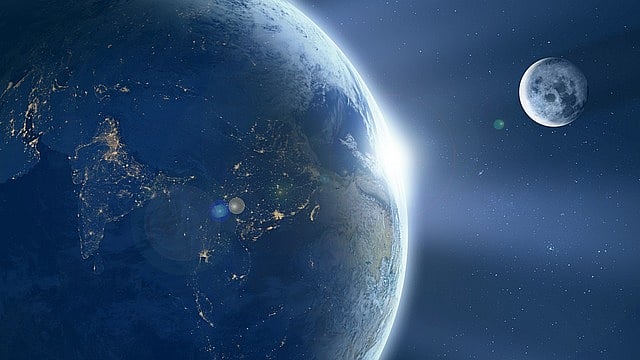
In a few days, we will celebrate the new year—it is simply our home and the earth completing one circle around the sun. Put like that, it seems no big deal.
Yet, this journey is responsible for a lot of things on our planet, including changing seasons. Given all this, even though it appears ordinary, it provides us a reference point in the flow of time and space that governs our functioning lives—a chance to examine where we are and where we're going.
This is a time to look back and review how we spent our year. Did we achieve what we set out to do? Did we get sidetracked? Did we change our goals? Did deeper priorities emerge? It's valuable to look back honestly and evaluate our lives over the past year—the good, the bad, and the ugly, everything. Take a good, honest look at your life.
This pause also lets us plan for the year ahead, breaking down our long-term priorities into manageable goals in the coming year. What do we wish to achieve? Are we thinking of life's deeper facets or merely caught up in externals? These few days offer a precious opportunity to look both behind and ahead, considering what we can make of our lives.
We can find deeper meaning in this through Sanātana Dharma, or Hinduism, as it's popularly called. The sun symbolises Īśvara, or Bhagavān, and the earth—representing all humanity—circles around it, performing pradakṣiṇa. The earth's revolution around the sun is thus a pradakṣiṇa, while its rotation on its own axis is pradakṣiṇa to itself.
Viewed this way, the earth itself participates in the worship of Bhagavān, of Īśvara. We will be blessed by adopting such an attitude to divinise our own lives. As we complete this cosmic circle, let us embrace both reflection and aspiration, recognising that our journey through time mirrors the sacred movements of creation itself.
The writer is the founder of Aarsha Vidya Foundation. You can write to him at aarshavidyaf@gmail.com

