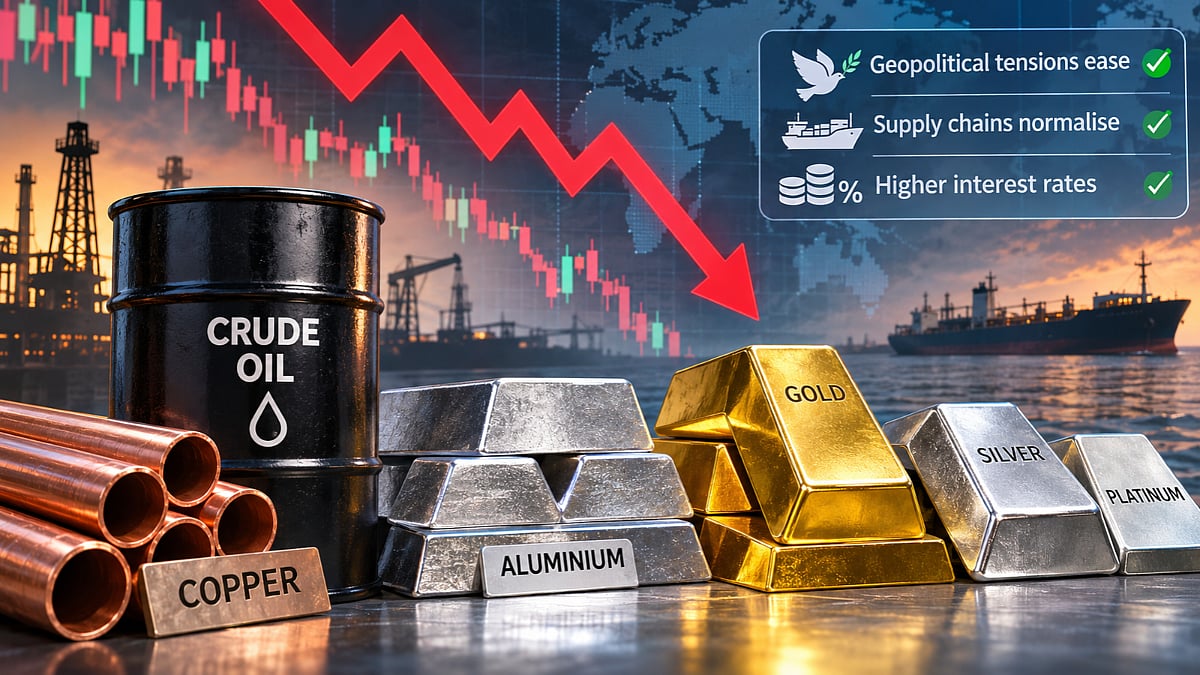
Commodity markets rode the geopolitical tide for most of this year, with prices touching unprecedented levels because of a combination of military action, supply chain disruption, inflation and higher interest rate expectations.
However, the bullish fervour seems to have ended with a massive sell-off across commodities in recent days. Prices of energy products (crude oil), industrial metals (copper and aluminium) and precious metals (gold and silver) have all declined sharply.
This follows positive signs that disruptions in supply chains have eased markedly, as transit through the Strait of Hormuz is rapidly normalising and central bankers are working relentlessly to contain inflation by hiking interest rates and squeezing liquidity.
Although geopolitical risks have not decisively ended, market participants do not foresee an escalation at this point in time. Reports suggest that exports from the Gulf states have stabilised at a high level despite the ongoing sporadic attacks on ships and have now reached around 80% of pre-war levels.
War Risk Premium Declines
De-escalation has led to a decline in the war-risk premium that several key commodities, including crude oil, commanded until recently. Brent crude was trading around $92 a barrel until last Friday, with prospects of a 5% downward correction by the year-end. In the European gas market, prices are under pressure, while in the US, a forecast of a mild winter may cause gas demand to fall.
In the case of copper, from a high of $14,800 a tonne, prices have fallen to around $12,500 a tonne. The US interest rate hike expectation (the next Fed meeting is on December 8) is currently weighing on the industrial metal, with lingering doubts over the sustainability of an artificial intelligence-driven demand boom and the falling expectation of the US import tariff on refined copper. Concerns about China have added to the pressure on industrial metals.
Aluminium prices, too, are under pressure, having fallen by around 5% in the last one month to $2,870 a tonne. As the situation in the Strait of Hormuz has eased, production prospects in the region have improved.
Gold And Silver Under Pressure
Gold and silver have had a phenomenal bull run this year to touch unprecedented price levels, but rates have collapsed in recent weeks because of elevated levels of US bond yields and a stronger dollar.
On November 20, a troy ounce of gold was trading at $3,572, having fallen by 20% from a month ago and down 13% from year-ago levels. As a non-yielding asset, gold collapsed when US bond yields stayed elevated with the prospect of a Fed rate hike in the upcoming December meeting and as geopolitical tensions began to ease.
Apart from being a precious metal, silver enjoys industrial demand, but demand from the solar panel sector has started to weaken as users look for more stable and less volatile substitutes. Silver was trading just above $41 an ounce last weekend.
Platinum Market Moves Into Surplus
Platinum, too, was caught up in the metals sell-off maelstrom. Prices have declined to $1,300 an ounce, the lowest since August 2025. The platinum market has moved into surplus with declining jewellery demand.
It is clear the geopolitics-driven price boom that helped some commodities overshoot to the upside has ended. With tensions gradually easing and supplies normalising, the market fundamentals of supply and demand for key commodities are now beginning to assert themselves. Risk appetite is weakening.
Commodity Outlook For 2027
There is widespread anticipation that in 2027, geopolitics may take a backseat, energy supplies will normalise, inflation may decline, economic activities will pick up, and markets will be less volatile. In the event, demand for key industrial commodities would begin to strengthen.
Therefore, the outlook for key commodities in 2027 is overall constructive. Market gyrations will depend on individual commodities’ specific dynamics and drivers. One can expect a more stable and less volatile market environment.
G. Chandrashekhar is a senior journalist specialising in commodity markets. Views are personal.
To get details on exclusive and budget-friendly property deals in Mumbai & surrounding regions, do visit: https://budgetproperties.in/

