The Ministry of Education finds itself navigating an exceptionally lively public conversation. Within weeks, the intricacies of administrative reform have been laid bare, and not by traditional institutional audits but by the remarkably sharp, tech-savvy students who live within the great system every day.
A coincidental trifecta has arrived, all at once, much like a high-stakes horse-racing bet where three volatile variables must align perfectly for a gamble to pay off, except here the house rolled the dice on the nation's youth. In the NEET-UG evaluation process, the future trajectories of 23 lakh medical aspirants encountered unexpected systemic bottlenecks.
Simultaneously, the CBSE’s ambitious foray into digital evaluation via the On-Screen Marking (OSM) system introduced unintended suspense for 16 lakh Class 12 students, who found themselves navigating the quirks of the newly deployed scanning software obtained via a dubious tender process.
To round out the academic season, a spirited curriculum update has been introduced for 25 lakh Class 9 students through the Three-Language Policy, inviting families to embrace local linguistics with refreshing, short-notice spontaneity, even as India strives to integrate with the world at large.
Rise of the Cockroach Janta Party
Enter the Cockroach Janta Party (CJP). What began as a Gen-Z satirical digital movement led by Abhijeet Dipke has quickly grown into a mainstream cultural phenomenon. With a social media following of 22 million and a digital reach that shames the BJP's highly efficient digital machinery, Dipke’s viral commentary has struck a chord.
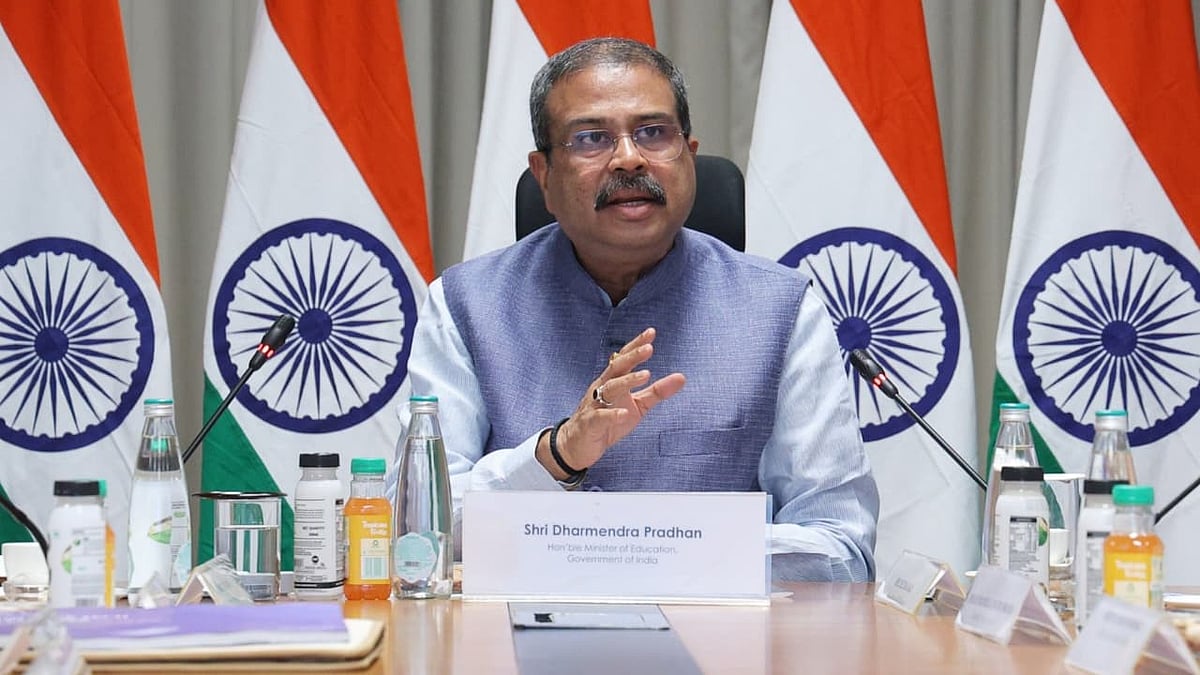
The Chief Cockroach has announced his return to India to personally counsel Union Education Minister Dharmendra Pradhan on youth sentiment.
Judicial observations and administrative response
The judiciary has naturally offered its own guidance. The Supreme Court has passed down notably observant commentary, gently urging a review of the systemic lacunae in the NEET framework while politely questioning the rapid timeline of the CBSE’s language policy to ensure families are spared any "unreasonable hardship".
In response to these cascading learning opportunities, the government proactively reallocated its administrative talent on June 2, transferring the CBSE chairman and secretary, even ordering a probe.
While a bureaucratic reshuffle offers a welcome change of scene to the transferees, addressing deep, structural, shall we say, glitches this way can give off the feel of using a water pistol to fight a forest fire, or applying a band-aid to treat cancer, or rearranging the deckchairs on the Titanic to ensure a better view of the horizon even as it plunges.
Questions over accountability
Now, the government has submitted to the Supreme Court that the Prime Minister is "personally monitoring" the NEET situation. But realistically, how much can the Prime Minister personally micromanage? The CBSE also?
Surely, there are other distinguished cabinet colleagues available to step in and assist Dharmendra Pradhan in his yeoman service to the nation?
Given reports that Indian Air Force planes are being utilised to transport exam question papers safely, perhaps the Defence Minister could be deployed here? After all, in for a penny, in for a pound, like?
