Two of this week's movie releases—Alpha and Baby Do Die Do—have women in action roles, which is now happening more frequently, if not on the big screen, then on OTT (see Priyanka Chopra in Citadel). Still, when a project has women doing stunts, it is hailed as something out of the ordinary, or even revolutionary.
We forget that Fearless Nadia was doing fight scenes without the help of special effects 90 years ago. If that is too far back in time, then the OG action TV series, Charlie's Angels, turns 50 this year. The show, with its glamorous female secret agents, was such a novelty that it launched a franchise (Bollywood did a copycat film version called Ashanti in 1982) and its own universe of merchandise, board games, beauty products, comics and film reboots. In February 2026, it was announced that a new project was in the works—and it is rare that the influence of a TV show lasts for half a century!
A Groundbreaking Television Phenomenon
The series followed the adventures of the Angels, a team of women working for the Townsend Agency, a private agency, under the leadership of the unseen Charlie Townsend. At a time when prime-time television was dominated by male-led police procedurals like Kojak, Starsky & Hutch and The Rockford Files, Charlie's Angels offered a radical change. It ruled the ratings over its five seasons, and its pop-cultural echoes endured due to its creation of a template for female-led action that persists to this day.
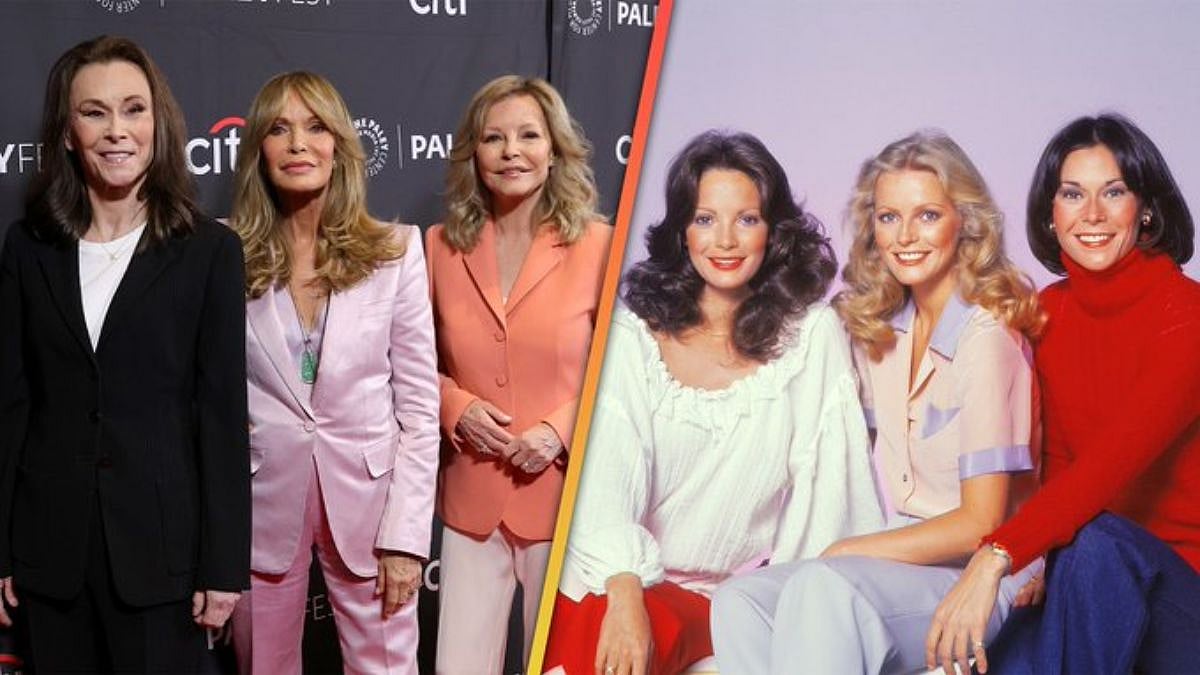
While male crime fighters were all rough and gruff (with the exception of James Bond), the original Angels, played by Farrah Fawcett, Kate Jackson and Jaclyn Smith, had model-like, slinky glamour. The fact did not go unnoticed that the series arrived at a time when the women's liberation movement was at its peak. Commercially inclined television executives wanted to tap this social shift without disturbing the status quo too much, unsure of how conservative mass audiences would react to women in traditionally male roles. The solution was the creation of Charlie's Angels by Ivan Goff and Ben Roberts as a calculated risk, with women who were tough and fearless but also followers of orders issued by a man over a speakerphone.
The series was about Sabrina Duncan (Kate Jackson), Kelly Garrett (Jaclyn Smith) and Jill Munroe (Farrah Fawcett), three recent graduates of the Los Angeles Police Academy who, in keeping with the misogyny of the times, were given insignificant tasks like filing and traffic control. They are pulled out of this humiliating grind by the titular Charlie and employed as private detectives on high-stakes cases.
Praise And Criticism
Media observers did note the contradiction between intention and execution. The Angels often had to go undercover in roles that required revealing outfits—as swimsuit models, beauty pageant contestants, roller-skating waitresses or inmates in women's prisons. The show made use of their beauty, intelligence, fighting skills and physical agility but also kept the reins of real power in the hands of a man. ABC executive Fred Silverman famously labelled the genre "jiggle TV", a term critics adopted to dismiss the show as mindless voyeurism.
In an interview, Farrah Fawcett, speaking on the show's success, said, "When the show was number three, I figured it was our acting. When it got to be number one, I decided it could only be because none of us wear a bra."
Feminist critics like Gloria Steinem denounced the series for reducing women to sexual objects under the literal and figurative command of an invisible patriarch, but millions of young women were inspired by the independence and bravery of the three women. Others, like Camille Paglia, wrote that the show "was denounced by feminists as a 'tits-and-ass' parade but was in fact an effervescent action-adventure showing smart, bold women working side by side in fruitful collaboration."
Jaclyn Smith, who was the only Angel to star in all five seasons, told People magazine how Charlie's Angels changed her and TV audiences across America: "It was ground-breaking. It was about three emotionally and financially independent women. We shot at beautiful locations with fancy fast cars, and they cared about each other, so there was a heart to the show. Critics said that as actresses we were sexually exploited, but it was a nursery rhyme. We were in a bathing suit at the beach, and if there was a hint of a love scene, it was so proper. I think the producers were smart. They wanted to bring in that younger audience and did want families to watch together."
"And we," wrote feminist film critic Molly Haskell in The New York Times, "who were doing the agitating and analysing didn't know whether to laugh or cry."
A Lasting Legacy
When it became such a television phenomenon, there were books and studies on it. A piece on the show's success stated: "The historical significance of Charlie's Angels lies in how it broke the glass ceiling for female action stars on television. Prior to 1976, women on television were overwhelmingly confined to domestic spheres or secondary, supportive roles. Charlie's Angels proved to networks that a prime-time action series, starring an all-female cast, could not only survive but also dominate the ratings and generate hundreds of millions of dollars in merchandising, syndication and international sales. Without the commercial success of the original Angels, the television landscape might never have opened its doors to subsequent genre-defining icons like Buffy the Vampire Slayer, Xena: Warrior Princess, or the modern procedural heroines of the CSI and Law & Order franchises. The original series proved that women could be glamorous, physically powerful and fiercely independent all at once. Decades later, the definitive image of three women standing back-to-back, weapons drawn, smiles intact, remains an indelible symbol of pop-cultural empowerment."
Decades later, female-led action films and shows may have downgraded the male gaze a bit by not parading the leading ladies in bikinis, but what remains is the indelible showbiz dictum—the packaging is equally, if not more, important than the content.
Deepa Gahlot is a Mumbai-based columnist, critic and author.

