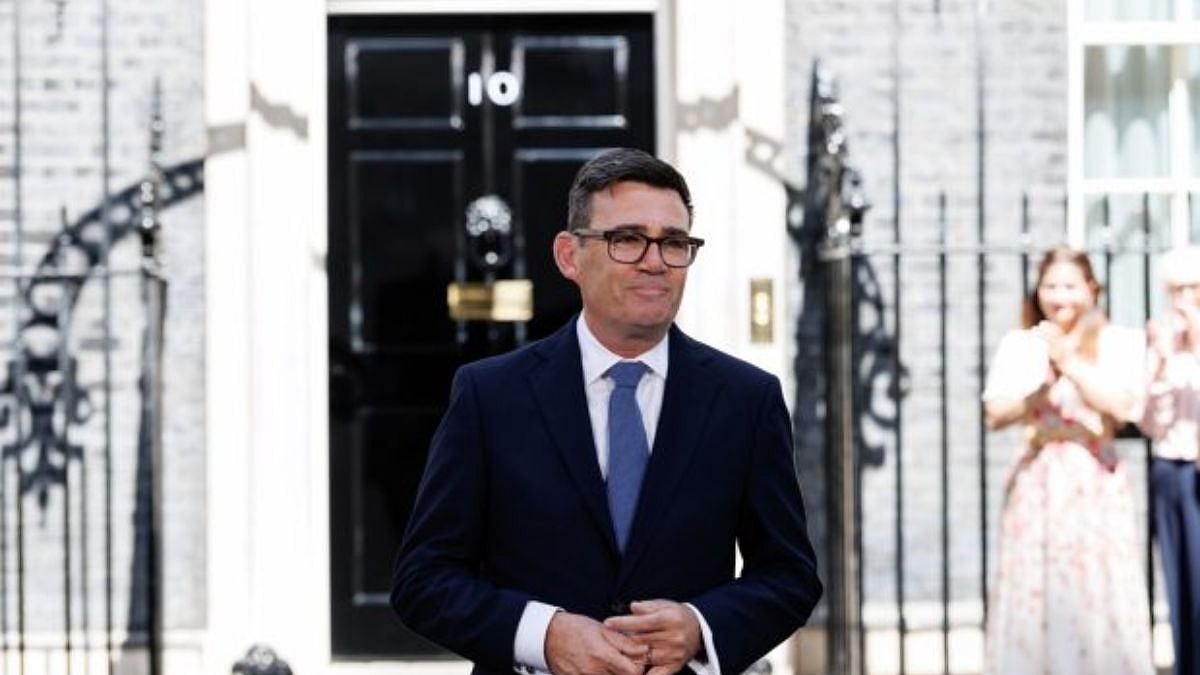
Political transitions often generate anxiety in international relations. Yet Andy Burnham's emergence as Britain's new Prime Minister is being viewed in New Delhi with cautious optimism rather than apprehension. Unlike the uncertainty that followed Brexit or the rapid succession of British prime ministers over the past decade, Burnham's arrival is unlikely to alter the trajectory of India-UK relations. Instead, it offers an opportunity to consolidate gains and deepen one of Britain's fastest-growing strategic partnerships.
For India, the question is not whether Burnham will reinvent the relationship but whether his government will implement commitments already made. The focus is shifting from negotiating agreements to executing them. The recently concluded Comprehensive Economic and Trade Agreement (CETA), expected to raise bilateral trade by about £25.5 billion annually over the long term, alongside greater investment, defence cooperation and technology partnerships, will dominate the bilateral agenda.
From Negotiation to Implementation
The India-UK partnership today extends well beyond trade. Bilateral trade has already crossed £42 billion, while both countries have become major investors in each other's economies. More than 970 Indian companies operate in Britain, employing over 100,000 people, while Britain remains among the largest G-20 investors in India. Cooperation now spans defence manufacturing, artificial intelligence, cyber security, clean energy, fintech, semiconductors and higher education.
Consequently, New Delhi's expectations from Burnham are pragmatic. India seeks timely implementation of CETA, smoother regulatory procedures, easier mobility for professionals, stronger innovation partnerships and predictable investment rules.
Trade agreements create opportunities only when translated into commercial outcomes. Indian exporters, British manufacturers and investors need policy stability and efficient implementation. If Burnham focuses on delivery rather than reopening settled negotiations, bilateral economic ties could enter their strongest phase since Brexit.
Domestic Priorities May Benefit India
Burnham assumes office amid formidable domestic challenges. Britain continues to grapple with a prolonged cost-of-living crisis, sluggish economic growth, persistent housing shortages, strained public services and widening regional inequalities. Public debt remains close to 100 per cent of GDP, leaving limited fiscal room for expansive spending programmes.
These domestic pressures are expected to dominate his initial months in office.
Paradoxically, this inward focus could strengthen ties with India. Governments seeking economic revival naturally look for reliable partners capable of generating investment, jobs and exports. India, the world's fastest-growing major economy, fits that requirement. British companies view India as a key destination for manufacturing, financial services, healthcare, renewable energy and digital innovation, while Indian firms continue expanding their presence in Britain through technology, pharmaceuticals and financial services.
Rather than pursuing headline-grabbing diplomacy, Burnham is expected to prioritise practical economic engagement that produces tangible domestic benefits—an approach that aligns closely with India's commercially driven foreign policy.
Beyond Trade: Strategic Convergence
Economic engagement is only one pillar of the relationship. Russia's war in Ukraine, China's growing assertiveness, Indo-Pacific competition, cyber threats and terrorism have broadened India-UK cooperation.
Defence collaboration is expanding beyond military exchanges into joint research, maritime security, defence manufacturing, advanced technologies and resilient supply chains. Intelligence sharing on terrorism and cyber security has also intensified. Britain's Indo-Pacific strategy has further enhanced opportunities for cooperation with India in ensuring maritime security and a rules-based international order.
These strategic convergences are structural rather than political and are therefore unlikely to change under Burnham.
The Trump Challenge
Among Burnham's most difficult foreign policy tests will be managing relations with US President Donald Trump.
Britain cannot afford distance from Washington. The United States remains its foremost defence ally, intelligence partner through the Five Eyes network and one of its largest trading partners. Yet Labour's political instincts differ sharply from Trump's transactional approach to alliances and global trade.
Burnham will need to preserve close institutional cooperation while managing differences over tariffs, climate policy, multilateral institutions and global governance. The transatlantic partnership is likely to remain strong, but less personal and more transactional than in recent Conservative administrations.
For India, this balancing act matters. New Delhi has deepened strategic ties with both Washington and London and would prefer stronger coordination among democratic partners rather than strategic divergence.
A Cooler Tone Across the Atlantic
Burnham has already outlined his worldview. In a Times of London article, he reaffirmed Labour's commitment to NATO, Britain's independent nuclear deterrent and continued military, diplomatic and financial support for Ukraine.
These positions indicate continuity on Britain's core security commitments. However, the tone towards Washington is expected to become more measured. Strategic cooperation with the United States will remain indispensable, but Labour appears inclined to emphasise institutional alliances, international law and multilateral engagement over personalised political chemistry.
Continuity, Not Disruption
Ultimately, Burnham's premiership is unlikely to trigger a major shift in Britain's India policy. The structural logic remains compelling. Britain needs dynamic economic partners outside Europe, while India seeks trusted technology, investment and security partners in an increasingly fragmented world.
The real test of Burnham's leadership will not be new announcements but the implementation of commitments already made. For New Delhi, this political transition is less a reset than an opportunity to convert diplomatic goodwill into measurable outcomes. If execution replaces rhetoric, the Burnham era could become one of the most productive phases in the modern history of India-UK relations.
(Writer is strategic affairs columnist and senior political analyst based in Shimla)

