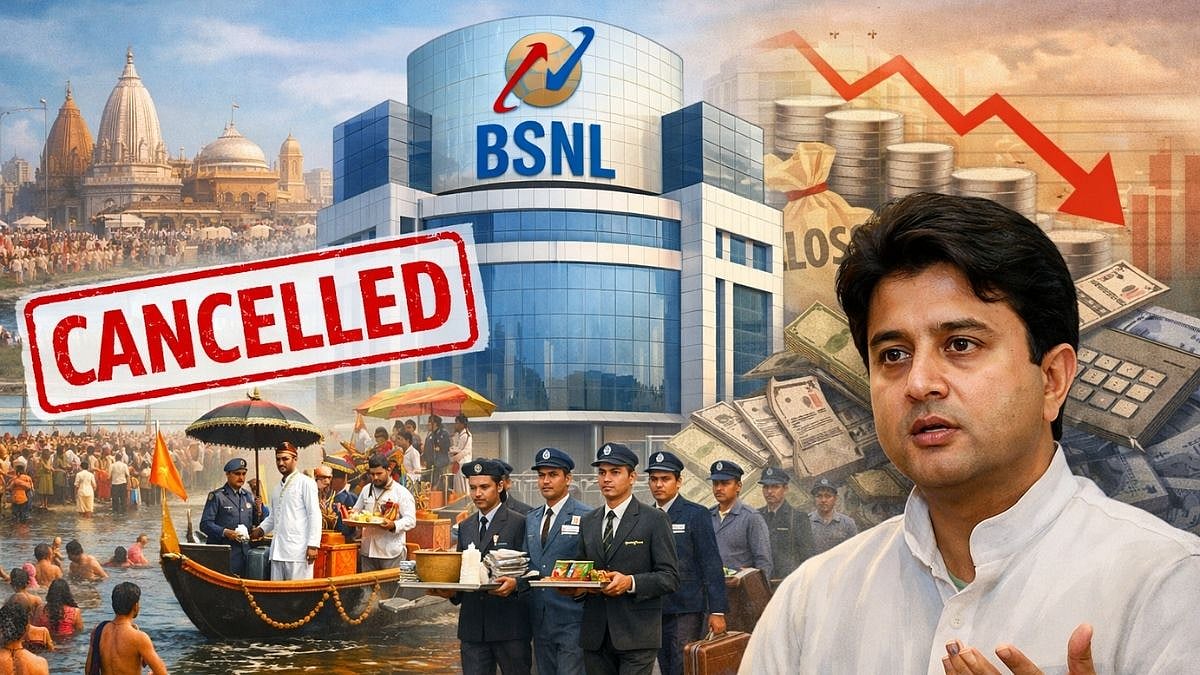
The aborted visit of a Bharat Sanchar Nigam Limited (BSNL) director to Prayagraj has exposed, yet again, the feudal mindset that continues to haunt India’s public sector undertakings. What was meant to be a private, two-day spiritual trip to take a holy dip at the Sangam turned into a spectacle of bureaucratic extravagance—one that would have made mediaeval emperors proud.
An official order issued by a Deputy General Manager laid out an astonishing protocol: 50 staff members were to be deployed over two days to execute 21 separate tasks for Director Vivek Bansal. These duties went far beyond basic logistics. Staff were assigned to receive the family at the railway station, arrange boat rides to the Sangam, coordinate temple visits and manage local transport.
They were instructed to prepare “snan kits” containing towels, undergarments, oil and combs; arrange suits and clothing; stock vehicles with bottled water, chocolates, chips and refreshments; click photographs; package personal items; and ensure seamless hospitality at every step. This was an exercise in servility masquerading as administrative efficiency.
Public outrage and ministerial response
The circular, once leaked on social media, sparked outrage. Citizens rightly questioned how a loss-making PSU could justify deploying manpower and resources for a purely personal visit. The backlash quickly reached the desk of Union Minister Jyotiraditya Scindia, forcing him to cancel the trip. Whether disciplinary action will follow is another matter. The cancellation may have saved face, but it does not erase the troubling reality the episode revealed.
Had the visit proceeded, BSNL would have spent lakhs of rupees on travel, logistics and hospitality. Equally significant is the loss of man-hours: 50 employees diverted from their actual duties in a company already struggling to remain relevant.
A deeper structural malaise
BSNL reportedly posted a loss exceeding Rs 1,300 crore in the last quarter alone. In the private sector, such persistent losses would have triggered restructuring or closure long ago. Extravagant spending of this nature is one reason many PSUs remain perpetually in the red.
Ministers and senior officials often treat them as extensions of their personal establishments, while compliant officers see opportunities to inflate bills and skim off the surplus. The culture of entitlement and quiet collusion has “milked” PSUs for decades, eroding efficiency and public trust.
BSNL’s predicament is particularly stark. In an era when private telecom players dominate the market, the company struggles to define its role. Episodes like this reinforce the perception that it survives not as a competitive enterprise but as a patronage network sustained by taxpayer funds.
The lesson from the Prayagraj protocol is clear: accountability cannot remain optional. If public sector units are to justify their existence, they must shed the VIP culture, enforce financial discipline and serve the public—not the personal whims of those in power.
