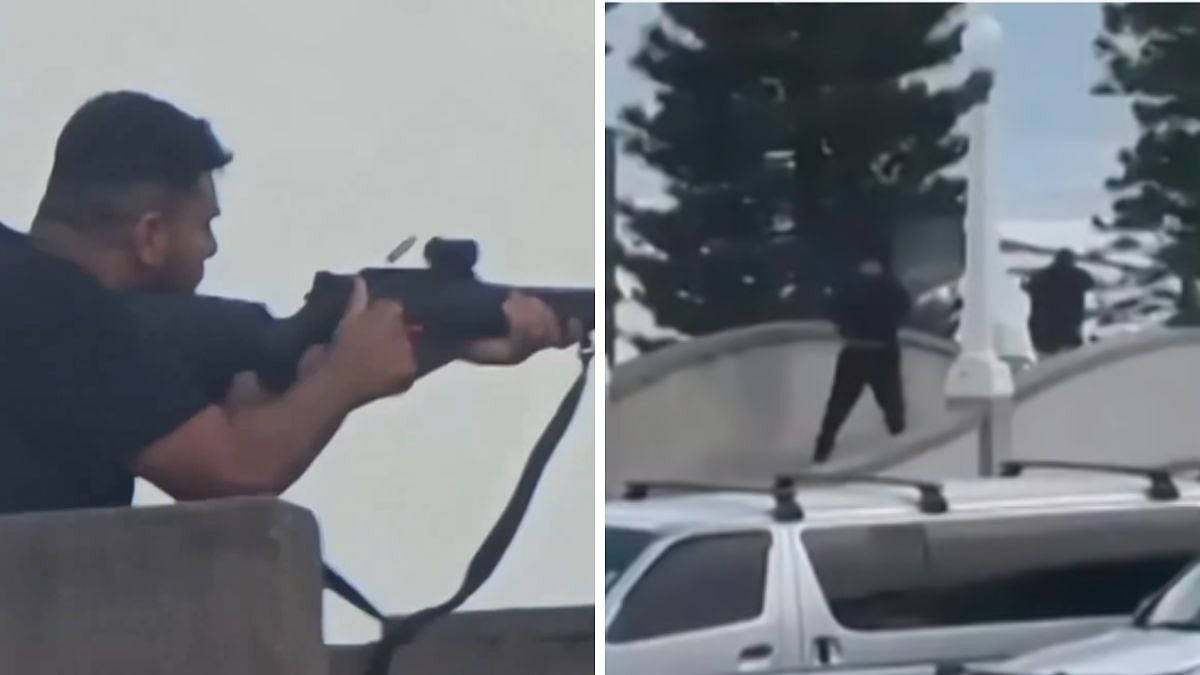
What Australia witnessed at Bondi Beach in Sydney on Sunday was horrific beyond words. What should have been a peaceful community gathering to mark the first night of Hannukah turned into a scene of terror, bloodshed, and grief.
More than a thousand people had assembled to celebrate light and hope. Instead, at least 15 innocent people were killed and many others injured when a father-son duo, heavily armed and dressed in black, opened fire on the crowd.
Australian authorities have rightly described the massacre as a terrorist attack. One of the attackers was shot dead by the police; the other, his son, has been arrested. The dead include a respected rabbi and organiser of the event, who was also a Holocaust survivor. The symbolism of that loss alone underlines the unmistakably antisemitic nature of the crime.
While investigators are yet to establish the precise motive, hatred of Jews is beyond doubt. Any attempt to link the crime directly to the Gaza war at this stage remains conjecture and should not cloud the criminal investigation. What is equally undeniable is that the toll would have been far higher but for the extraordinary courage of an ordinary bystander.
At grave risk to his own life, he crept up on one of the gunmen and wrested the rifle from his hands, stopping what could have become an even greater slaughter. That man, Ahmed al-Ahmed, is a real-life hero. His bravery demolishes, in one decisive act, the lazy and dangerous argument that terrorism can be equated with any religion.
Muslim organisations across Australia have condemned the attack in the strongest terms and demanded that the perpetrators and their collaborators face the full force of the law. Their response reinforces a simple truth: terrorism thrives on hate, not faith.
It is true that the Jewish community feels the state may not have done enough to prevent such an atrocity. Yet, few could have imagined a father and son arriving so well prepared, armed not only with firearms but also with improvised explosive devices intended to cause even greater devastation.
The incident will inevitably reopen debate on gun control. Australia’s strict firearms laws, introduced after the Port Arthur massacre in 1996, have saved countless lives. But the steady rise in registered guns in recent years raises uncomfortable questions that policymakers cannot ignore.
There are also disturbing reports that Iranian diplomats were expelled over alleged attempts to instigate attacks against Jewish targets. If confirmed, such foreign interference is deeply worrying and demands firm diplomatic and legal responses.
Prime Minister Narendra Modi, condoling the deaths, reiterated India’s long-standing policy of zero tolerance for terrorism. That principle must guide the global response as well. Terrorism, whatever its disguise, is an assault on humanity itself and must be rejected, resisted, and punished without hesitation.

