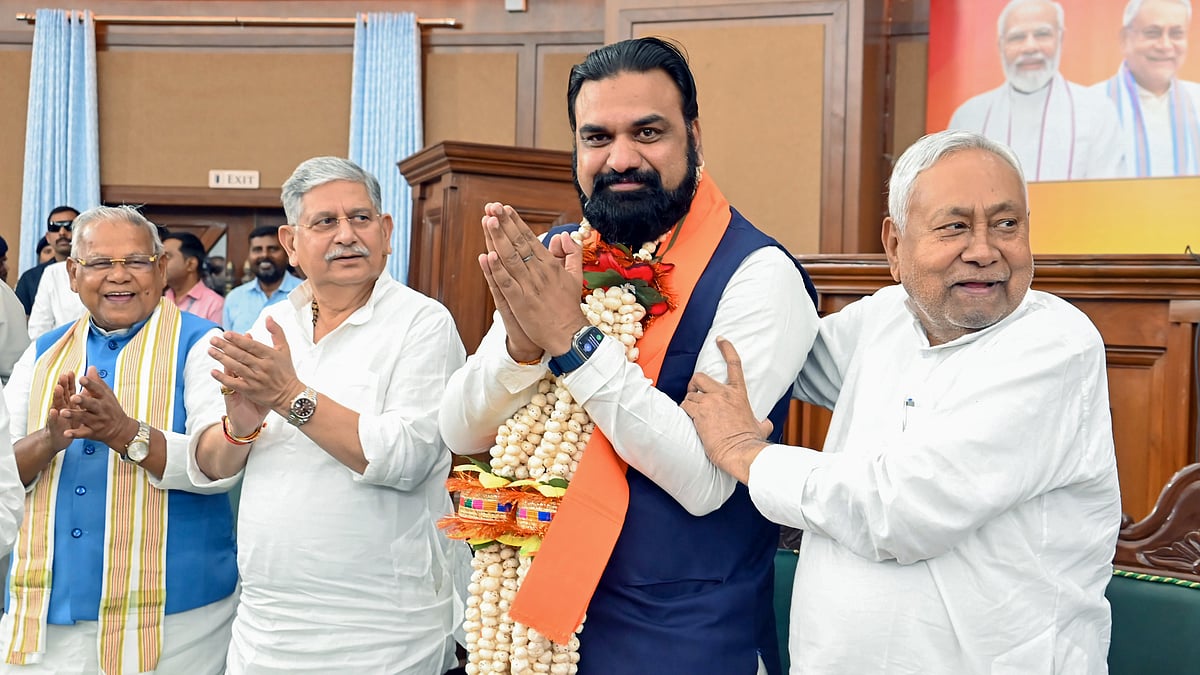
The ascent of Samrat Choudhary as chief minister marks a decisive political moment in Bihar, one that reflects the long-term strategy of the Bharatiya Janata Party (BJP) to assume undisputed leadership in the state. For nearly two decades, Nitish Kumar managed Bihar’s complex political terrain with remarkable agility, stitching together alliances that allowed him to retain power despite shifting ideological ground.
His move to the Rajya Sabha now signals not just a personal transition but the end of an era in Bihar politics. The BJP’s success lies not merely in electoral arithmetic but also in its ability to patiently recalibrate equations until the balance tilted in its favour.
Today, the party leads all the large, populous states in the North. Choudhary’s elevation, after serving as deputy chief minister, appears both logical and strategic, ensuring continuity while also marking a generational shift in leadership.
Experience and political background
The new chief minister brings with him a long and varied political career that predates his association with the BJP. Having held ministerial roles since the 1990s, including under Lalu Prasad Yadav, he is no novice to governance. His political pedigree is equally notable: his father was elected to the assembly six times, and his mother once, embedding him firmly within Bihar’s tradition of familial political influence.
Yet, he is not a conventional BJP leader, having joined the party only in 2017 after stints with multiple formations. In a state where caste equations remain central, his belonging to the Koeri community, considered among the most backward, offers the BJP a significant social and political advantage.
This combination of experience, lineage, and social identity strengthens his claim to leadership, even as it reflects the party’s broader strategy of social engineering.
Questions and challenges ahead
However, Choudhary’s rise is not without questions. Discrepancies in his election affidavits, including variations in his name and date of birth, have raised concerns about credibility. His educational qualifications, too, remain unclear, with claims ranging from limited formal schooling to degrees from institutions whose authenticity has been questioned.
In addition, Prashant Kishore, founder of the Jan Suraaj Party, has levelled several criminal allegations against him, further intensifying scrutiny of his public record. The Constitution does not prescribe educational criteria for public office, as leaders like Rabri Devi and K. Kamaraj have demonstrated through effective governance despite modest schooling.
What it does demand, however, is honesty and transparency. Choudhary would do well to clarify these inconsistencies early in his tenure, for public trust is as critical as political support.
Leading a coalition government in Bihar is no easy task; it requires not only administrative skill but also moral authority. Ultimately, he will be judged less by his past claims and more by his ability to deliver stable and effective governance in a politically demanding environment.

