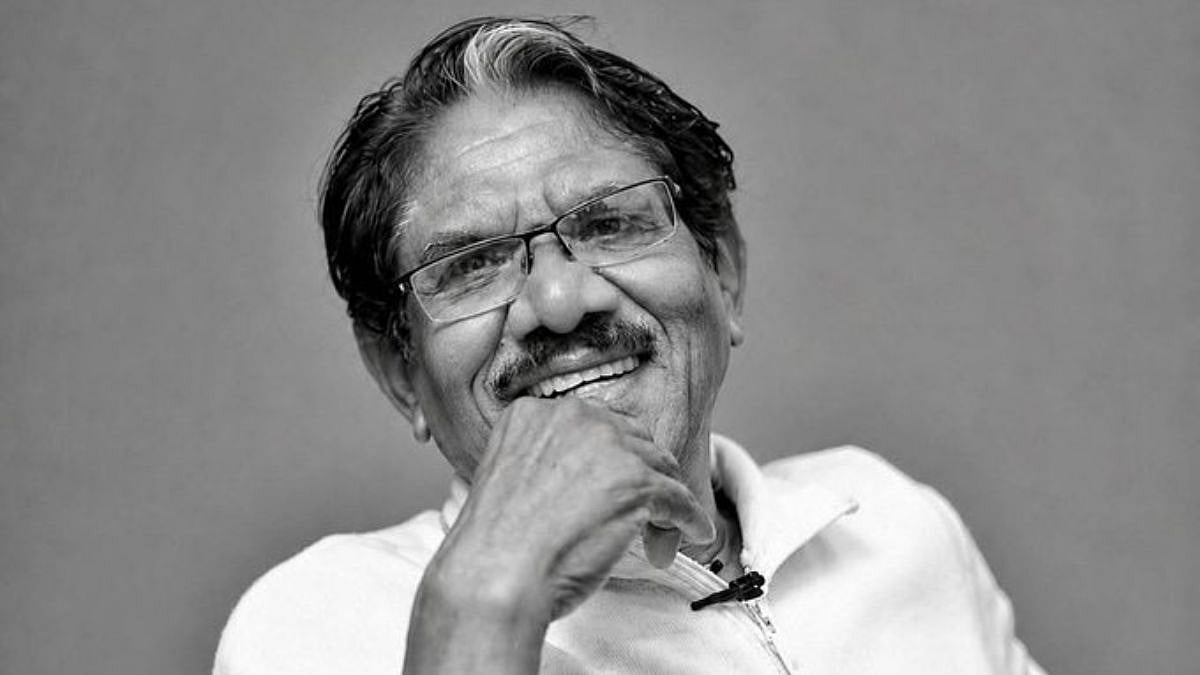
If you were to ask Bharathiraja how to make a film, he would likely tell you to step out of the theatre, ignore the flashing lights of Bollywood, and go breathe in the dust of a far-flung, long-forgotten village, and then maybe you will get somewhere. Long before realism became a fashionable buzzword in Indian cinema, this legendary auteur singlehandedly shattered the status quo.
In the late 1970s, Tamil cinema was suffocating inside the confines of artificial, swanky indoor studio sets in Madras. Bharathiraja dragged the camera into the rugged and unforgiving countryside of Tamil Nadu. In doing so, he fundamentally changed how a film looks and speaks to an audience. He replaced heavy theatrical cosmetics with the raw texture of sun-baked skin and traded melodramatic, stagey dialogue for the authentic, conversational cadences of everyday people.
Revolutionary Treatment Of Subjects
His treatment of subjects was equally revolutionary. Bharathiraja used the rural landscape not just as a backdrop but as a living, breathing character to explore complex human psychologies. He was fearless. Whether navigating the poetic, age-defying platonic love of Mudhal Mariyathai or launching a fierce social crusade against the caste system and female infanticide in Vedham Pudhithu and Karuthamma, he possessed a rare ability to blend uncompromising social reality with deeply engaging commercial storytelling.
Collaboration With Ilaiyaraaja
This cinematic revolution was fuelled by a pathbreaking collaboration with his childhood best friend and music maestro, Ilaiyaraaja. Together, they formed arguably the most legendary director-composer duo in Indian history. While Bharathiraja captured the visual soul of the soil, Ilaiyaraaja gave it a haunting voice, a refrain that lingered long after the screen went blank. His rustic melodies, sweeping orchestrations, and pioneering background scores perfectly elevated Bharathiraja’s stories of the soil into timeless masterpieces.
Scouting Raw Talent And The 'R' Factor
Beyond his technical genius, Bharathiraja possessed an uncanny, almost mystical eye for scouting raw talent. He famously claimed he could turn anyone into a star, a boast proven by the long line of cinematic icons he launched. Amusingly, this talent became intertwined with a legendary superstition: his knack for discovering powerhouse heroines whose names began with the letter 'R'—including Radhika, Radha, Rati Agnihotri, and Revathi. To him, the letter was a lucky charm that beautifully complemented his rustic narratives.
Legacy Of Iyakkunar Imayam
Today, the legacy of Iyakkunar Imayam (The Pinnacle of Directors) lives on in every modern filmmaker who dares to shoot on location and tell grounded, culturally-rooted stories. He democratised cinema, proving that the lives of ordinary people possessed the grandest drama of all.
Reflecting on his own uncompromising philosophy of looking at the world rather than existing formulas, Bharathiraja once supposedly remarked, “Stories don't come from Hollywood or European cinema. They are sitting right next to you on a local bus, in a village tea shop, or inside a middle-class home.” He brought the truth closer home.
