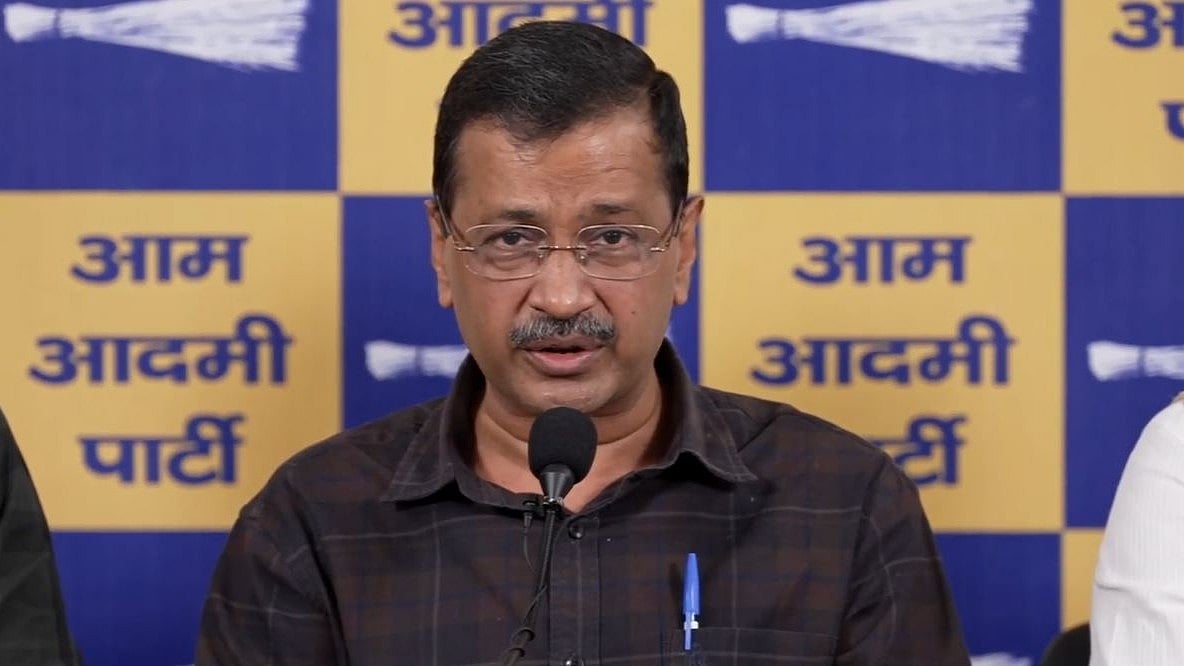
The Aam Aadmi Party began with a bang as a unique experiment in participatory politics that captured the public imagination. The party’s downward spiral from 2023 onwards, culminating in the defection of prominent faces to the BJP last fortnight, was a tragedy foretold. The question is whether AAP can emerge from its existential crisis by maintaining its electoral presence in Punjab, Gujarat, Goa, and Delhi in 2027.
Punjab now central to AAP strategy
Punjab is now AAP’s focus, given that six of the seven Rajya Sabha MPs who defected to the BJP are from the state, including the strategists credited with the party’s 2022 victory in Punjab. A thoroughly spooked Arvind Kejriwal, the party supremo, has reached out to the party MLAs. Chief Minister Bhagwant Singh Mann and state in charge Manish Sisodia called a meeting of all the AAP legislators in Jalandhar district on April 29. Many of the 92 MLAs were close to defectors Raghav Chadha and Sandeep Kumar Pathak, and more than 60 are said to be vulnerable to overtures from the BJP.
Rumblings within the party are inevitable, following the exit of ex-loyalists, but the most worrying aspect for Arvind Kejriwal is that his leadership skills are being questioned. The IIT alumnus has been the undisputed leader and face of the party since its inception.
Rise of a disruptive political force
The high-voltage excitement generated by AAP’s advent on the electoral scene in 2013 is now all but forgotten. For a brand-new party led by the poster child of everyman ordinariness to secure a 30 per cent vote share was electrifying. Two years later, when ‘Muffler Man’ Kejriwal led AAP to an unprecedented 96 per cent majority, Delhi was exhilarated. Every citizen who voted AAP saw it as a personal victory, a thumbing-of-the-nose at national parties at the very site of their power. Here was politics as unusual and a party that could make a real difference.
A mild case of post-electoral dissonance set in when Kejriwal jettisoned potential challengers such as Prashant Bhushan and Yogendra Yadav from AAP, but not enough to dent the euphoria. The initial success of the AAP government’s citizen-driven initiatives was heartening. Relying heavily on social media to mobilise public opinion and engaging with young people and apolitical domain experts to find solutions to public issues, AAP seemed to hold out the promise of inclusive governance.
Subsidy politics and expansion
Signs of demagoguery and populism began to appear. Alongside wild allegations against the centre in general and the Prime Minister in particular, Kejriwal & Co. peddled exaggerated tropes of victimhood and built its brand as a champion of the underprivileged. Subsidies on electricity and water, free bus travel for women (‘pink passes’) and a bunch of other freebies cost taxpayers a whopping Rs 37,000 crore during Kejriwal’s term as Chief Minister of Delhi. Annual expenditure on non-merit subsidies leapfrogged from Rs 550 crore to Rs 5,310 crore in 2024-25. Power subsidies accounted for 70 per cent of the total. With consumption up to 200 units free and up to 400 units at half-price, less than half the metered connections in Delhi were billable. The measures paid off, and Kejriwal was returned in 2020 with a slightly reduced majority.
AAP now sensed an opportunity in states where legacy parties had consistently failed to satisfy voters. The 2022 legislative assembly elections in Punjab, Gujarat, and Goa proved a testing ground. With the decline of the Shiromani Akali Dal and a dissension-ridden Congress, the party swept the Punjab elections. In Gujarat, the decline of the Congress enabled it to win a 13 per cent vote share and five seats, even as the BJP retained power with a breathtaking 156 of 182 seats and a 52.5 per cent vote share. In Goa, it again benefitted from the Congress decline and won two seats, while the BJP won 20 and formed the government.
Decline and leadership challenge
The AAP performance in Punjab, Gujarat, and Goa was seen as being at the cost of the Congress and not the BJP. Thus, it was emerging as a challenger to the Congress in the centre-left space, with little impact on the BJP’s core vote bank. Even in Delhi, the early enthusiasm for AAP was diminishing.
The trouble with subsidies on power, water, and transportation is that once applied, they cannot be withdrawn without risking public ire. By 2022, it became clear that subsidies needed to be rationalised. The opt-in scheme for power subsidies was operationalised to reduce the subsidy burden but proved ineffective. The revenue surplus declined, as did capital expenditure on public infrastructure. Delhi went from a fiscal surplus to a fiscal deficit. As gaps in public services ballooned, discontent spread from middle-class taxpayers to all classes. Questions were raised on several state government decisions, such as hiring some 400 consultants across various departments.
The liquor scam put the seal on AAP’s decline in Delhi. In 2023, the party’s number two, Manish Sisodia, was arrested and denied bail. In 2024, Kejriwal was also arrested ahead of the general elections, after ignoring nine summonses from the Enforcement Directorate. The public response to the arrests was tepid, indicating that AAP had lost its hold on voters. He was released after five months, well in time to prepare for the 2025 Delhi elections. But the damage had been done, and AAP was wiped out. Both Kejriwal and Sisodia were acquitted by a special judge earlier this year.
Can AAP recover?
Punjab Chief Minister Bhagwant Singh Mann, against all expectations, has continued to be loyal to AAP. Despite differences with the AAP leadership in Delhi and allegations of interference by Delhi in Punjab, he did not split the party. The fact is that Mann, like Kejriwal, needs to keep his flock together. He is facing a tough contest, having failed to stem Punjab’s rising tide of debt or address unemployment. Law and order, too, has suffered.
Kejriwal has been low-key since his defeat in 2025. Whether he still commands the moral authority to resuscitate the combative spirit and values on which his party was founded remains to be seen.
Bhavdeep Kang is a senior journalist with 35 years of experience in working with major newspapers and magazines. She is now an independent writer and author.

