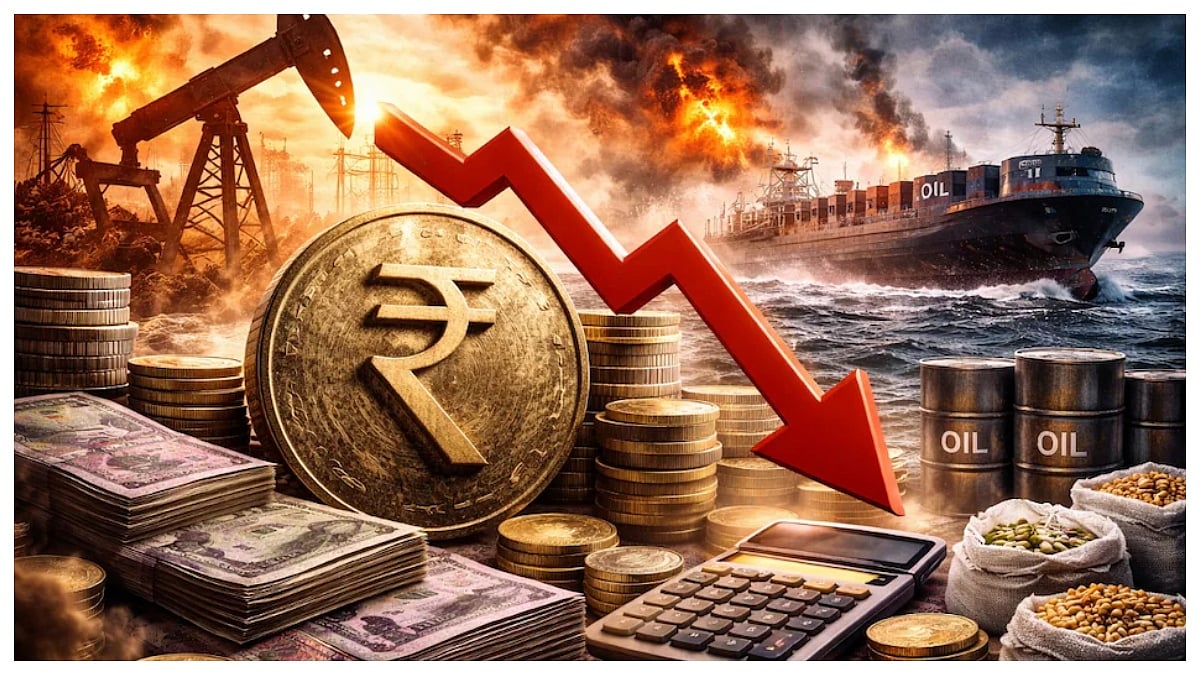
As reports suggest, US President Donald Trump now wants Arab states to share the financial burden of the US-Israel war against Iran. What this framing ignores is a simpler truth: the world is already paying for a conflict he initiated in concert with Israeli Prime Minister Benjamin Netanyahu — and the bill has been mounting by the day.
In India, queues for LPG cylinders are lengthening, with black-market prices reportedly tripling or even quadrupling. Fuel-linked inflation looms, threatening to ripple through transport, food, and household budgets. In Australia, at least two provinces have withdrawn free public transport as fuel costs surge.
Even in the United States, the average gasoline price has crossed $4 a gallon for the first time since 2022. From Indonesia to Kuwait, lives have been lost — peacekeepers, migrant workers, ordinary citizens caught in a widening arc of instability.
There are, in truth, few countries untouched by this war’s economic and human fallout. Supply chains are tightening, currencies are under pressure, and governments are scrambling to shield their most vulnerable citizens.
Rising costs and global impact
More troubling than the cost is the absence of clarity about purpose. The rationale for the war appears to shift with the political winds: from aiding Iranians in their democratic aspirations — implicitly invoking regime change — to talk of collecting nuclear waste. Such moving goalposts erode credibility and deepen global unease. Even close allies are asking tough questions.
Australia’s Prime Minister Anthony Albanese has publicly queried the objective of the campaign. Within the US administration itself, dissent is visible. Director of National Intelligence Tulsi Gabbard has indicated there is no imminent nuclear threat from Iran — an assessment that should, by any measure, temper the rush to escalate.
Yet the narrative of an urgent nuclear danger from Tehran persists, seemingly less as an evidence-based conclusion and more as a post hoc justification. The narrative about the weapons of mass destruction comes to mind. Wars fought on elastic premises tend to expand in scope while shrinking in legitimacy.
Escalation risks and humanitarian concerns
The rhetoric has now turned openly punitive. Threats to destroy Iran’s oil infrastructure and water desalination facilities if navigation through critical sea lanes is impeded signal a willingness to impose long-term suffering on civilians for short-term strategic ends.
Such measures would cripple essential services, setting back reconstruction for decades and blurring the line between military necessity and collective punishment. History has judged harshly those who embraced such doctrines, and it is unlikely to be kinder now.
Call for de-escalation
The imperative, therefore, is urgent and unambiguous: de-escalation. A ceasefire, back-channel diplomacy, and a return to verifiable, multilateral frameworks are the only credible paths forward. The global economy cannot absorb a prolonged shock; nor can fragile regions withstand the spillover. Peace, in this moment, is not idealism — it is the only realistic policy.

