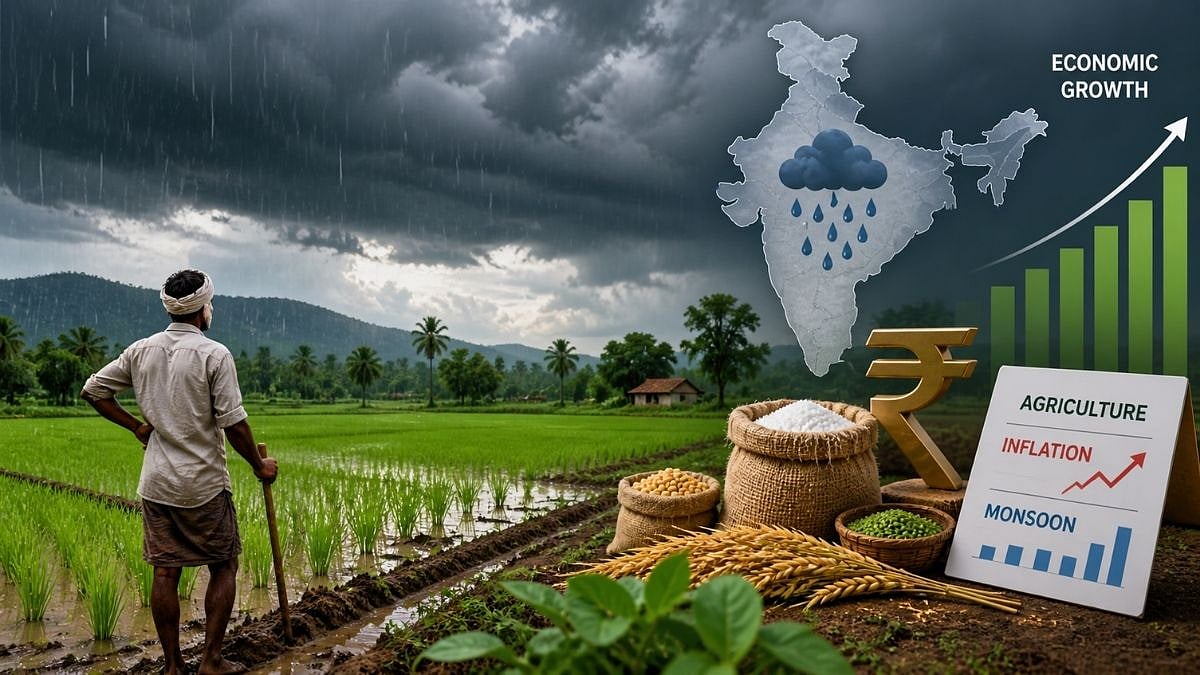
The war in West Asia does dominate sentiment as it has affected the markets perceptibly on a daily basis. The economy has held on quite well, which is commendable. But there is another factor playing in the background which will come to the forefront in the next couple of months—rainfall. This will probably be the most important factor which will determine the growth path this year, as it will guide both consumption and investment.
Monsoon forecasts and El Nino concerns
The two main agencies which track and forecast the monsoon are the IMD and Skymet. The IMD has predicted that rainfall will be 92% of normal, while Skymet expects it to be 94%. While this is a preliminary forecast, the final shape will be known from June onwards. But there is acknowledgement of the prevalence of El Nino this year, especially in the second half of the monsoon. This is a phenomenon when temperatures rise to high levels, affecting the monsoon winds. This can pose challenges for the agricultural sector.
Dependence of agriculture on rainfall
Almost 40-45% of the kharif crop is dependent on rains, and this is what makes it critical for the prospects of agriculture. Here, too, the northern states appear well irrigated and, hence, will not have an issue if the monsoon is sub-normal. The coastal regions normally do get adequate rainfall even when the monsoon is below par. However, it is the interiors that are more vulnerable even when the monsoon is normal, as the winds at times do get weaker by the time they touch down on these regions.
The period 2014-16 had sub-normal monsoons of less than 90% of the long-period average. A normal monsoon is defined as a range of 96-104% of the long-period average. In 2023-24, it was at 94.6%, which did not quite affect the crop. Therefore, the present forecasts may not be necessarily harmful but could cause concerns for some crops.
Key factors determining monsoon impact
The importance of the monsoon needs to be looked at in a comprehensive manner. The first is the overall number, which needs to be above 96% of the long-period average. Anything less than this number indicates deficiency. Second, the arrival of the monsoon is important. Traditionally, it would arrive at the beginning of June. However, over time, with climate change, this pattern has changed, and, normally, most of the regions get rains towards the end of the month. This becomes important because it affects the cropping pattern in the country. Farmers sow the seeds depending on the rains.
Third, the progress of the monsoon is also important, as different crops require water at different stages. Ideally, it should be spread evenly across the period of 3-4 months for crops to benefit.
Fourth, the spread across regions becomes critical, especially for crops grown in the interiors like MP, Karnataka, Andhra, Maharashtra, and MP. Some of these regions fall in the rain shadow area and tend to encounter weaker monsoon winds. And these regions have less access to river water for irrigation. The northern states in the Gangetic belt are insulated to a large extent on this score. Even in the past, when states like Punjab and Haryana did not receive enough rain, the crop performed well due to access to irrigation (both river and groundwater).
Last, the withdrawal of the monsoon is important, as this affects harvests. Hence, the final crop numbers can be affected by all these phases.
Impact on reservoirs and rural economy
Rains are also important from the point of view of reservoirs which get filled up during these four months. This water is used for drinking purposes as well as for supporting animal husbandry. Further, the reservoir water is an important source of irrigation for the rabi crop, especially when the region does not have the benefit of the northeast monsoon. Hence, all these factors go into the final prospects for the agricultural crop. There are 165 reservoirs that are monitored by the Central Water Commission, and the present level of around 40% is higher than that of last year. But this level would keep coming down until the onset of the rains.
In the current environment, farming output has already been subjected to pressure on account of the oil crisis, with the prices of fertilisers and pesticides going up. Any deficiency of rains will spell trouble for farmers who get affected. This has the potential to affect rural income, which has so far supported consumption at the national level at a time when urban demand has been capricious.
Growth, employment and inflation linkages
The share of agriculture in the GDP is low, at around 14-15%. However, it is more important when it comes to employment, as almost 40-45% of the labour force is employed here. Farm prospects become important, as they would have a bearing on rural incomes. The government has done what is needed on the GST front to lower prices to push up consumption. For this to be sustained, income has to increase at both the rural and the urban levels.
The other economic variable which gets affected by rains is inflation. Food inflation was very benign last year due to a good crop as well as high base effects. The latter will not be there for sure, and, hence, output needs to be good to keep prices in check. Two sets of crops which are very price-sensitive are oilseeds and pulses, and these tend to be grown in states like Maharashtra, Karnataka, Gujarat, MP, and Rajasthan, which are more susceptible to weak monsoon winds.
Inflation is important because this year the course of monetary policy will be driven by both the growth and inflation factors. Growth is expected to be lower, going by the RBI estimate of 6.9%. Inflation has been forecast at 4.6% by the RBI for FY27, which is above the target but within the band. The MPC will be on alert for sure.
The author is Chief Economist, Bank of Baroda, and author of ‘Corporate Quirks: The Darker Side of the Sun’. Views are personal.

