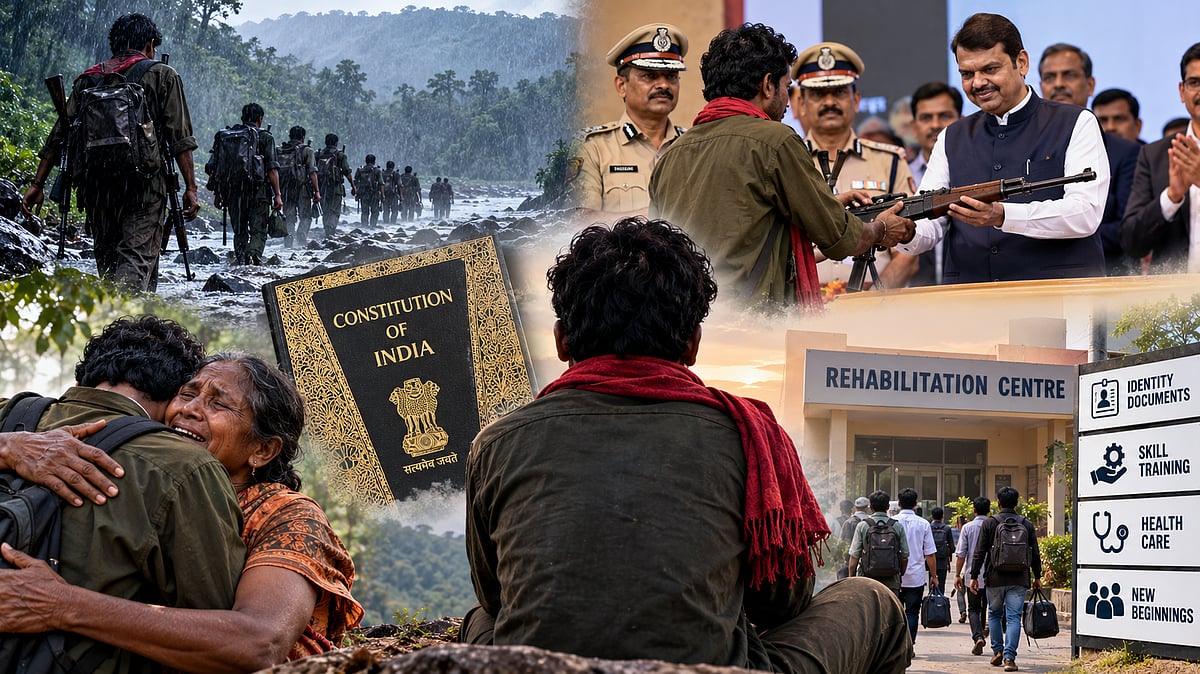
Today marks one full year since I, along with 60 others, laid down our arms before the government. The life we have lived over this past year has been completely different from the life we lived before. This experience has strengthened our conviction that the decision we took was absolutely right. I extend my heartfelt gratitude to everyone who helped make this possible, and offer special appreciation to the media for its support.
On the afternoon of 13 October 2025, we descended the Mad hills. It was raining throughout our journey. We were all still dressed in our guerrilla uniforms. By evening, we crossed the Pamulagautami River. Farmers working in the fields along our route watched us in utter bewilderment. Their expressions seemed to ask: “What is going to happen? Why are the annas moving like this while there is still so much daylight?”
They had no idea that we were on our way to lay down our arms. Nor did they know that, a month earlier, I had announced a temporary suspension of the armed struggle. They were Adivasi people with no access to the internet.
When we told those who ferried us across the river in their dongas (traditional boats) that we were bidding them a temporary farewell, they were unable to bear the moment. Yet their eyes also conveyed a sense that, given the changed circumstances, this was the right thing to do. In a state of profound sadness and resignation, they raised their fists.
We walked farther from there and, at around nine that night, got into police vehicles. The police officers who had come to receive us were apprehensive and afraid for their lives, wondering what we might do while still armed. We were in much the same state of mind. We too were anxious and suspicious, wondering whether the police might deceive us.
Then an officer approached us, shook hands with me and handed me a phone. On the other end was the voice of the district Superintendent of Police.
“Our men have come to receive you and your team. Hand over your weapons to them. They will take you safely to a secure location.”
I told them, “Now that I have decided to give up my weapon, I have no need for a weapon that no one else has.” I handed my weapon to the officer as well, and we got into the vehicles.
After we had travelled some distance, an officer who introduced himself as an Additional Superintendent of Police came forward to receive me. We reached Gadchiroli at around four in the morning. By then, we had all changed into civilian clothes.
The morning of 15 October arrived. Elaborate arrangements had been made for our surrender ceremony in the presence of Maharashtra Chief Minister Devendra Fadnavis, the Director General of Police and other senior police officials of the state. One after another, we went up on stage and handed over our weapons to the Chief Minister. We embraced the Constitution of India.
Grand Welcome
Hundreds of people from Gadchiroli and a large contingent of media personnel had gathered there. They welcomed us with resounding applause.
Among those who publicly welcomed our decision at the time were a very small number of former Maoist activists, including Jampanna and Madhu. In contrast, many people who have congratulated us in large numbers continue to send us messages of support even today.
Some people based in Hyderabad criticised us. They particularly targeted me, making baseless allegations and accusations. But we had taken this decision fully anticipating such reactions, and therefore did not allow them to influence us in the slightest.
What is strange is that even today, many people share with us the “background histories” of those who denounce us. As former party leaders, we can only say that we must seek forgiveness for our past failure to correct such people.
From that day until September 1, 2026, we remained in a police rehabilitation centre. Many others who came after us stayed there alongside us.
Following our surrender, large numbers of family members from Bijapur, Dantewada and Sukma districts came to the rehabilitation centres to embrace their children. As they broke down in tears, saying, “We never thought we would see you again,” their anguish became painfully evident. They all appreciated the party's decision, saying that it was a very good thing that we had taken this step.
We told these oppressed people, who had understood the realities of the changed circumstances, that we had failed to take the movement forward and asked them to forgive our mistakes.
After spending more than ten months in the rehabilitation centres, we received from the police all the identity documents required by citizens of this country. The Maharashtra government transferred into our bank accounts only the reward money it had announced for us. The process of disbursing the remaining reward amounts is still under way.
It is only when the money actually reaches us that we begin to understand the enormous disparity between the prices placed on our heads in media reports and the amounts governments actually pay.
Health Concerns
One area in which the authorities showed particular concern was our health. Everyone at the rehabilitation centres received medical attention and treatment. The basic training we received through vocational courses can be regarded as a foundation, along with a certificate, to help us settle into our lives ahead.
After we laid down our arms, large numbers of party leaders, activists and guerrillas from movement areas across the country followed suit, endorsing my appeal. They all said that taking this decision in the changed circumstances was the right thing to do.
It was in this context that the Union Home Minister declared in the Lok Sabha that India would be free of Maoism by 31 March. As for those who continue to dream that Maoists still exist in the country, let them remain suspended in their dreams. Poor things—it seems that is where they feel most comfortable.
While we were at the rehabilitation centre, we requested the police to allow us to visit the Vidarbha region, where we were staying, so that we could understand the changed social realities around us. They made the necessary arrangements.
During that visit, I repeatedly recalled the words in a letter written to me by Comrade Kadarla Satyanarayana Reddy, known as Kosa Dada, a former member of our Central Committee:
“When people with no experience of working in any organisation are recruited to fill the ranks, they have little social knowledge and no understanding of revolutionary politics. Since large numbers of young people aged between 13 and 18 are joining out of sheer enthusiasm, it takes a long time to develop their political understanding.”
After the visit, our cadres shared with one another many things they had never seen before and had never imagined they would get an opportunity to see. They felt they had learnt a great deal.
Historic Decision
Although I took this historic decision very late, it enabled thousands of party cadres to come out alive. Some leaders who came out after us have begun working towards their political objectives through new means suited to the changed circumstances. Many activists have returned to their homes, joined their families in agricultural work and begun sharing their experiences with villagers.
The most important message they convey is this: “Given the changed circumstances, the political decision you took was the right one. If you had taken it much earlier, many more people would have been among us today, just as you are.”
Yes, we failed to take this decision earlier. But the people deserve an answer to their question: Who is responsible for our failure to take this decision collectively, at least when we finally did? Let us abide by the verdict of history.
It is heartening that even some of those who initially denounced me are gradually engaging in serious intellectual reflection. I appeal to them to come before the people courageously and apologise for past mistakes.
In the changed circumstances, I hope you will change as well, sharpen your thinking and stand honestly among the people. Drawing on our experiences over this past year, I once again express this expectation of you.
(The writer is a surrendered Maoist.)

