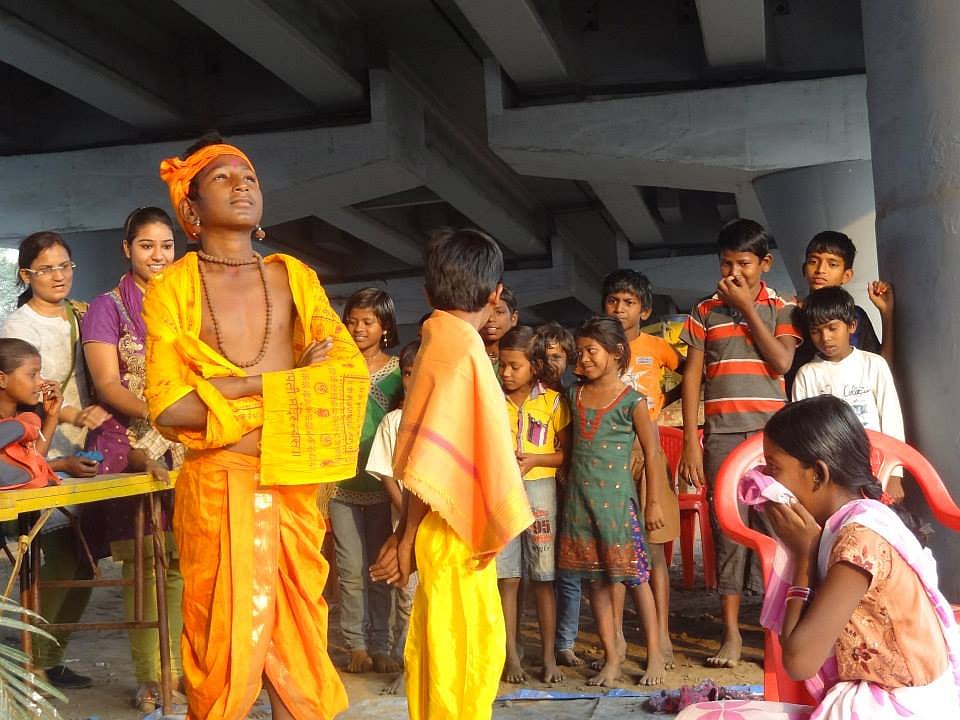
Vashi: More than 10.000 children in Mumbai go hungry every day and almost an equal number of them have never seen a school. The findings of the census conducted by the Tata Institute of Social Sciences and Action Aid India explains how the Right to Free and Compulsory Education (RTE) Act, which ensures education for every child between 6 and 14 years of age, is just a farce. The non-profit organisation, August Kranti founded by Kharghar resident Kaval Katazia works for the progress of underprivileged children. It makes education accessible to street children by setting up schools on the streets. Their learning centers operate under Vashi and Kharghar flyover, making school equal to home. The space below the flyover is seen bustling with children, who are trained by a group of teachers and volunteers.
Katazia, used to notice young children begging on the streets or selling small items for money. “I once noticed few kids selling flags and badges during Republic Day. I just asked one of them what it was and why they were selling it. She was shocked to know that none of them knew why they were selling it.” I talked to many friends and foun
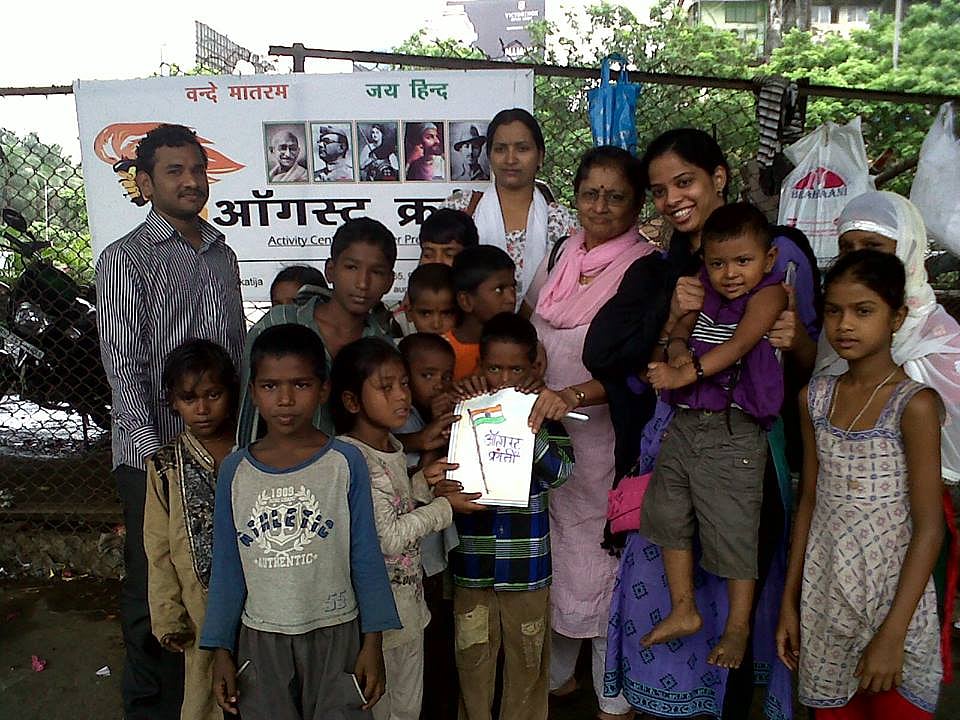
d many people with similar views and wanted to teach them. Many wanted to help but they just didn’t know where to start from.
The incident moved her so much that she started off by gathering these children from signals and teaching them alphabets. “It was really a difficult task to convince these kids to sit with us even for an hour. Not only were the children but even the families not supporting us as most of them wanted their children to come back and work.” Katazia took help from her friend Anil Tayade who gave his pictorial representation of what they were teaching and this attracted child. He helps kids to create beautiful craft work and got some very creative pots painted by them.
She did not stop here but she ensured that these children, who worked as beggars or ragpickers, get regular education like others. “The major problems of street children are: Insecure life; physical and sexual abuse by adults of the immediate community; harassment by law enforcing agencies; no, or inadequate, access to educational institutions and healthcare facilities; and lack of decent employment opportunity.”
The NGO was not a welcomed idea among the parents of the area at first. “Since these kids contribute to their family income, I faced quite a bit of hesitation and had to convince them to send their kids.” Initially, the parents were hesitant to send their kids but after spending 15 to 20 minutes every day with them, Katija was able to persuade the parents to send their kids. The NGO also functions as a platform where v
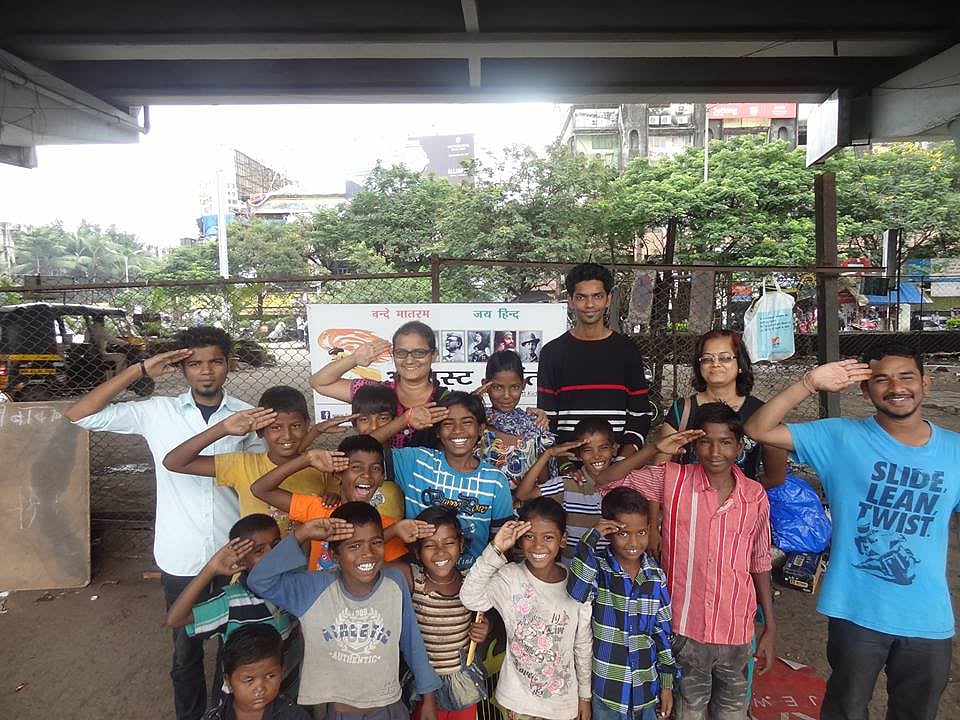
olunteers and donors can meet deprived children and share their resources directly with them. One can contribute by sharing their time and teaching the children. Shravan and Viren are among 40 homeless children involved in the project in Vashi who were admitted to municipal schools to continue their education.
The group had to face lot’s of challenges starting from resistance from slum people to school authorities. Many people didn’t want these children to get study and used to create problems for the volunteers. Kaval said, “I gave parents practical reasons by telling them that as a labourer they earn Rs. 200-330 but their children can earn much more than that if they get educated. Persuading them also involved making personal visits to the hutments of labourers and slum-dwellers. I tried to paint a clear picture to them. I asked students and their parents, “Do you want to see your son or daughter as a street hawk? Will you feel good if you see you’re grown up son lugging bricks or working as sewage cleaner?” Some just didn’t listen or showed interest. Education was alien to them. But I carried on with whoever showed up willing to be taught.”
Also the police supported the in their initiative from day one and the group was able to tackle the miscreants from slums who were opposing them. The group got the support of Inspector Yunus Sheikh, Maya More, Assistant Sub Inspector RB Shinde, provided the place below the flyover.
According to Katazia, “Education has become vital for survival and growth of the country. Education also has to be imparted at different levels so that an all-round personality development can be created. We at August Kranti believe in developing all the potentials and aptitude of a child beside the academic curriculum. We have music, sports, fine arts, value education, leadership training, vocational training and learning through experimentation and project work. In Kharghar and Vashi, we had taught the children the importance of the freedom struggle by making them enact the struggle. They had presented this at the Kharghar police station, at malls in Vashi and in nearby societies and restaurants.”
“I keep the children engaged for two hours per day and make learning fun. Through skits and songs, I teach them about our history, our freedom struggle and make them sing patriotic songs. Also, I ensure that personal hygiene is thoroughly explained and today, I see a marked difference in them since they joined class,” added Katija.
She said, “The central government’s had made so many plans of giving free education to children but it hardly anywhere this is happening. The group ensured that these children get admission in schools and after insistent struggle the children got admission in a municipal school at Juhu Gaon.”


