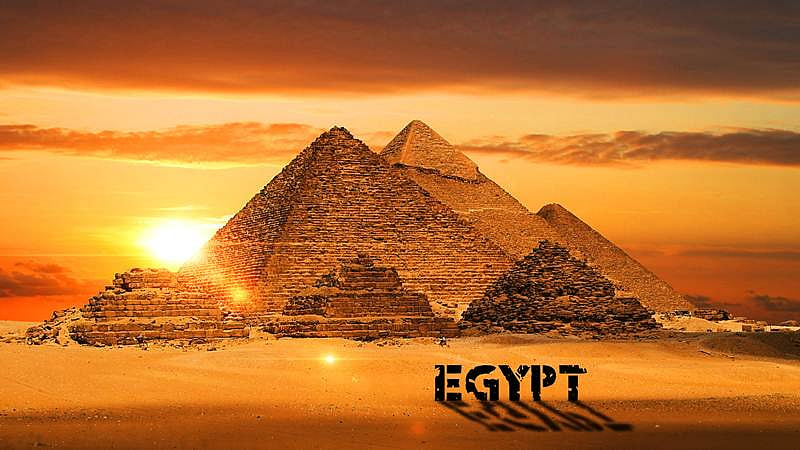
Egypt recalls for me the claim by the distinguished lawyer, Nani A. Palkhivala, that it is very difficult, if not impossible, for a country that has once been great ever to regain that greatness. Palkhivala was speaking of India. But against the grandeur of Egypt’s past, its present is not only disappointingly modest but demeaning in its dependence on European and American tourists.
There have been so many revolutions in Egypt that the word has lost its meaning. One is made sharply aware of the continuum of death and rebirth in the Valley of the Kings and the massive Graeco-Roman temples along the Nile. I was a boy when Mohamed Naguib informed King Farouk he was no longer king and the monarch replied with an enigmatic “You have done what I always meant to do!” I was a university student in England when Jawaharlal Nehru denounced as “naked aggression” the invasion of Egypt by Britain, France and Israel after Gamal Abdel Nasser’s nationalisation of the Suez Canal which sent tremors throughout the world. Nasser was a leading light of the non-aligned movement with Nehru, Sukarno and Josip Broz Tito. He hurled defiance at the Western world such as had never been known before. Denied global funds, he promised to build the Aswan High Dam with the blood and sweat of this people.
The Soviet Union stepped in to help; the dam was built and is today yet another tranquil site for foreign and domestic tourists. It has spared Egypt floods and drought, helped irrigation and navigation, and generates electricity. But the early promise of Egypt leading the Afro-Asian world has not been realised. This is not a country that has made outstanding industrial progress. One of its major attractions is still tourism. One of its most popular avocations is still revolution.
The two have been closely linked since the third president, Anwar Sadat, was assassinated in 1981 during the annual victory parade in Cairo. An uprising in early 2011 brought an end to Hosni Mubarak’s 30-year rule. The fifth president, Mohammed Morsi, the first democratically elected head of state in 5,000 years, was overthrown in 2013 by a military coup only a year after taking office, and the army chief, General Abdul Fattah al-Sisi, took over as the sixth and current president. More than 1,400 people were killed and tens of thousands detained during the anti-Morsi demonstrations. The Muslim Brotherhood, which had supported him, was again banned.
In tandem with these political convulsions, a series of high-profile terrorist attacks and airline disasters ground the economy to a virtual halt. The downing of Metrojet 7K9268 in the popular Sinai resort of Sharm el-Sheikh in October 2015 shattered the tourism industry that made up 11.4 per cent of Egypt’s GDP in 2015. Continuing low-key turmoil has ensured that any gains the industry made since the shock of 2011 have been reversed: tourist numbers in July last year were down 41.9 per cent, compared to the same period in 2015. Critics say that until Egypt is truly transparent about the reasons behind the Metrojet crash, as well as the crash of EgyptAir flight 804 in May 2016, Europeans won’t return with confidence.
The lounge of my hotel in Luxor, the Sonesta St George, where the fourth president Hosni Mubarak used to visit, was crowded with Chinese visitors. The Chinese are replacing frightened Russians who have kept away since the Sharm El Sheikh terrorist attacks and the 2015 explosion that killed all 217 persons on board the Metrojet 7K9268. It’s a huge setback but making the best of a bad job, the Egyptians say the Chinese are preferable. The Russians were demanding, arrogant and unfriendly. Not that the Chinese are friendly or great spenders, but they have fewer needs. Down the road at the famed Winter Palace, formerly the home of the Egyptian royal family, ornate gold-and-glass chandeliers hang over empty brocade sofas, awaiting visitors.
Although the Egyptians say they prefer the Chinese, there are hopes the Russians will soon return in large numbers. Germany recently restarted direct flights to Sharm el-Sheikh, previously the main generator of tourism for Egypt and a keystone for British tour companies. All Western countries now send fewer tourists. Britain doesn’t allow direct flights to Sharm el-Sheikh but doesn’t ban Britons from visiting the area. Flights are possible via Cairo, and Heathrow recently reinstated a direct EgyptAir flight to Luxor. Egypt has promised to resuscitate the industry to 15 million annual visitors but people who are employed in tourism complain the promise is not backed by logistical or financial help.
The low number of tourists has sent the economy on a downward spiral, even as the government insists that mega-projects, such as the second Suez Canal channel, will reverse the country’s fortunes. Egypt recently borrowed $12 billion from the IMF, requiring it to slice further into subsidies and, in all likelihood, devalue its currency for a second time in a year. The result has been price hikes for basic goods and services, not to mention the sudden introduction of VAT, that have hit ordinary Egyptians in the pocket from Aswan to Alexandria. The Luxor Museum, which recently increased ticket prices and added a special fee for taking photos, without flash, of the exhibits, says it gets only 20 visitors daily. The revenue from ticket sales from the museum and other historical sites around the country are pooled and fed back to the Ministry of Antiquities, which maintains a separate budget from the rest of the government, funded largely by these ticket sales. Lower sales mean less money for projects like the long-awaited Grand Egyptian Museum near Cairo, designed to draw in new visitors once it opens in 2018.
A drop in visitor numbers might also affect security. There is no shortage of trained guides, but safety remains a concern, especially after Karnak suffered an attack by a suicide bomber and two gunmen in 2015. The Ministry of Antiquities needs money to keep metal detectors and bag scanners at heritage sites across Egypt in top condition. The government has also worked hard to reopen attractions such as the tombs of King Seti and Queen Nefertari, as well as four tombs used to bury royal servants which reopened in late 2015, but visitor numbers lag far behind their previous highs. The ripples of this decline reach beyond well-known tourist spots and affect all consumer and service industries.
Egypt’s past has much to show the world. Egypt needs tourists for survival. Having said that, I cannot but feel there is a demeaning spin-off that one also sees in Kashmir and other parts of India frequented by foreigners. The luxury hotel industry can be an exercise in servility. Selling curios is often a cross between begging and bullying. No self-respecting nation should have to depend on either.
The writer is the author of several books and a regular media columnist
