ISRO's High-Stakes Comeback: EOS 5 Launch Set For September 4 After Back-To-Back PSLV Setbacks
ISRO is set to launch EOS 5 aboard the GSLV F17 on September 4, marking its return to the launchpad after two consecutive PSLV failures. The Earth-observation satellite, successor to the failed 2021 EOS 3 mission, will provide frequent imagery of India. ISRO also plans seven launches by March 2027, including Gaganyaan's first uncrewed mission.

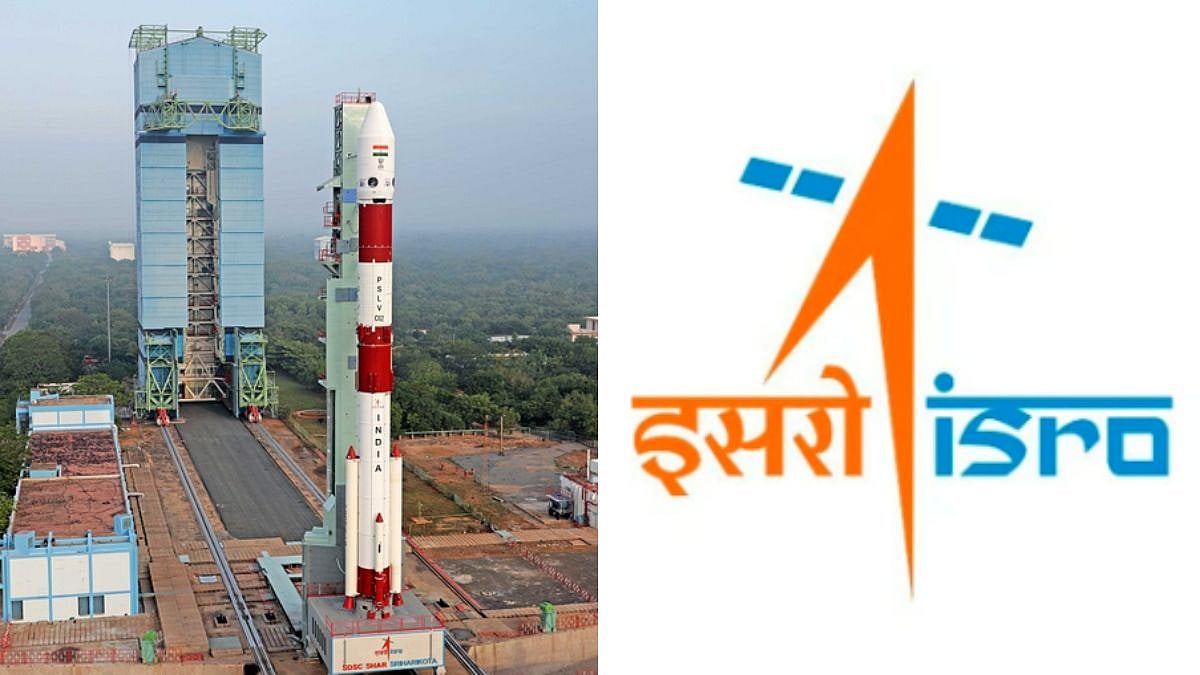
ISRO's High-Stakes Comeback: EOS 5 Launch Set For September 4 After Back-To-Back PSLV Setbacks | IANS & File Pic
Nearly eight months after its last launch and amid heightened scrutiny following two successive setbacks involving its Polar Satellite Launch Vehicle (PSLV), the Indian Space Research Organisation (ISRO) is preparing to return to the launchpad with a high-stakes Earth observation mission.
ISRO Chairman Dr V Narayanan told NDTV that the space agency is readying for the important mission, which is scheduled for the early hours of September 4.
The mission will use the Geo-synchronous Satellite Launch Vehicle (GSLV F17) to deploy EOS 5, one of ISRO's most significant Earth observation satellites. The launch is expected to take place while much of the country is still asleep.
EOS 5, previously designated GISAT 1A, has been developed to give India an almost continuous view of its territory from an altitude of around 36,000 kilometres. Positioned in a high-altitude orbit, the satellite is expected to play an important role in monitoring developments across the country.
Seven launches planned by March 2027
The September mission is part of an intensive launch schedule planned by ISRO. Dr Narayanan said the agency is targeting seven launches between now and March 2027, with the programme also including G1, the first uncrewed mission under India's Gaganyaan human spaceflight programme.
ISRO has set itself an equally ambitious target for the ongoing financial year. The agency plans to complete 12 satellites and conduct eight launch vehicle missions. The missions are expected to cater to a range of applications, including communications, navigation, Earth observation and scientific research, while also contributing to India's longer-term ambitions in human spaceflight and space exploration.
PSLV remains grounded after consecutive failures
The return to launch operations comes at a particularly important juncture for ISRO. The PSLV continues to remain grounded as investigations and validation exercises are carried out following two consecutive launch failures.
However, the GSLV Mk II scheduled to carry EOS 5 uses a different propulsion architecture. The rocket does not rely on the same engines or critical propulsion systems used by the PSLV, reducing the direct technological overlap between the two situations.
EOS 5 revives an earlier failed mission
The upcoming launch also has a strong connection to one of ISRO's earlier setbacks.
On August 12, 2021, the agency attempted to send EOS 03, the original GISAT satellite, into orbit using the GSLV F10. The mission failed after an issue developed in the indigenous cryogenic upper stage. The cryogenic engine failed to function as expected, resulting in the spacecraft being lost.
The setback prevented India from gaining an Earth observation capability that had been under development for years and prompted ISRO to undertake an extensive review of the technology involved.
ALSO READ
EOS 5 is being developed as the successor to that unsuccessful mission. Once operational, it is expected to repeatedly scan the Indian landmass during the day, providing rapid information on rapidly evolving events such as cyclones, floods, cloudbursts and forest fires.
The satellite's observations could prove particularly valuable to disaster response authorities, meteorological agencies, agricultural planners and security organisations by providing information that can be used with minimal delay.
Such an ability assumes greater importance as India faces an increasing frequency and intensity of extreme weather events.
GSLV Mk II faces another test of reliability
The EOS 5 launch will also serve as another test of the GSLV Mk II's operational reliability and the progress ISRO has made with its launch vehicle technology.
ALSO READ
The rocket recently carried the NASA-ISRO Synthetic Aperture Radar (NISAR) satellite into orbit. The joint India-US mission was a major milestone in Earth observation and involved what has been described as the world's most expensive Earth imaging satellite.
The successful NISAR launch provided another boost to confidence in the GSLV Mk II and highlighted ISRO's growing expertise in the use of sophisticated cryogenic propulsion systems.
For ISRO, the EOS 5 mission consequently carries significance well beyond the deployment of a single satellite. It represents an important opportunity to demonstrate the reliability of the GSLV Mk II, restore momentum to India's launch programme and deliver an Earth observation capability with potentially wide-ranging applications.
RECENT STORIES
-
-
-
-
-