Minab School Strike: How Outdated Military Data, AI & Reduced Civilian Checks Combined To Kill More Than 150 People
A Bloomberg investigation has revealed how outdated intelligence, reliance on AI, a rushed targeting process and drastic cuts to civilian-protection teams contributed to the deadly US strike on Iran’s Minab school. The February 28 attack killed more than 150 people, including at least 123 children, while a UN inquiry said it may have amounted to a war crime.

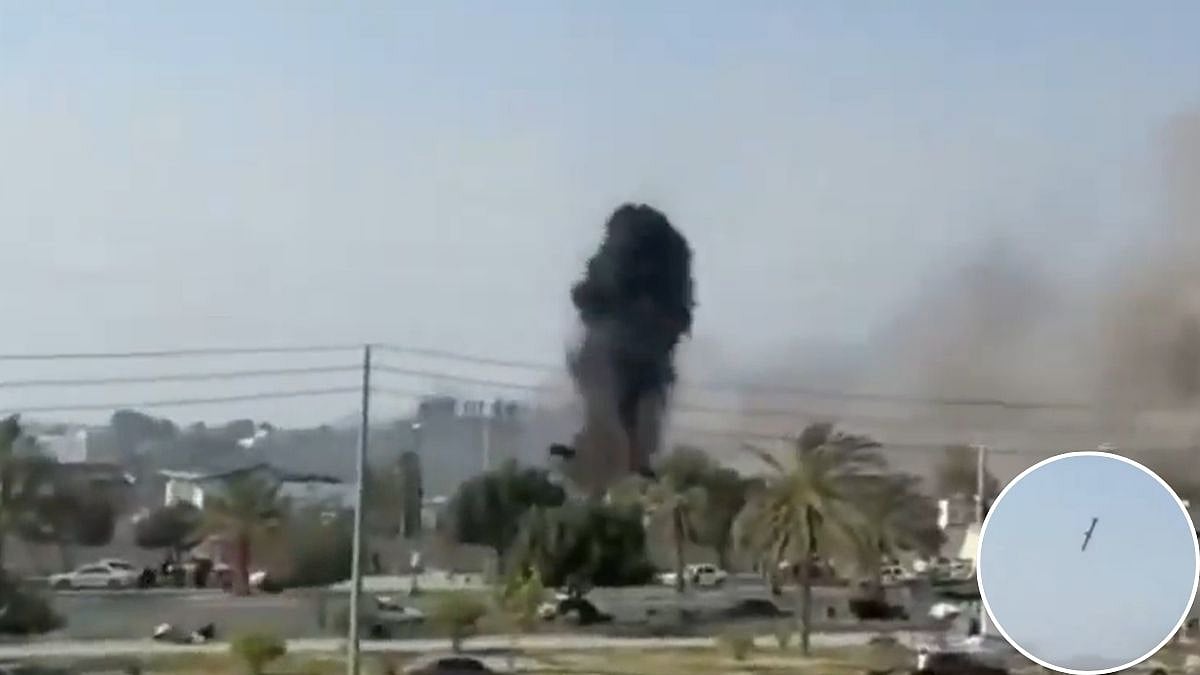
Minab School Strike: How Outdated Military Data, AI & Reduced Civilian Checks Combined To Kill More Than 150 People | X
Two Tomahawk missiles struck the Shajarah Tayyebeh Elementary School in Iran's southern city of Minab on February 28, killing more than 150 people, including at least 123 children, as the US and Israel launched their joint military campaign against Iran.
The two-storey school stood on land that had previously formed part of a military compound. Iran blamed the United States for the attack, while a subsequent UN investigation said there were reasonable grounds to conclude that the strike, along with another US attack that day, amounted to war crimes.
A Bloomberg investigation, citing more than two dozen current and former US officials familiar with the matter, has now shed further light on how the strike happened. According to people involved in the Pentagon's internal inquiry, outdated intelligence, an accelerated targeting process, reductions in civilian-protection personnel and excessive reliance on artificial intelligence combined to produce what officials described as a series of preventable failures.
In terms of child casualties, the Minab strike has been described as the deadliest American military targeting error of the 21st century.
Outdated intelligence kept school listed as military site
The Minab location had for years been classified in the US military's databases as an Islamic Revolutionary Guard Corps (IRGC) facility. That designation played a crucial role in placing the site among potential targets when US planners prepared for the opening phase of the war.
However, officials involved in the investigation said there was evidence that the location's character had changed substantially. Commercial satellite imagery showed that walls and entrances separating the school from the military area had been constructed by around 2017. Images from the following year showed brightly painted structures, a football field, assembly areas and markings associated with children's activities.
US intelligence analysts had reportedly noticed some of these changes years before the attack. According to officials cited by Bloomberg, an analyst recorded observations about modifications to the site in 2019. Those remarks, however, were stored in a system that was separate from the primary intelligence database used for military targeting.
As a result, the principal database continued to identify the location as an IRGC facility.
ALSO READ
A New York Times report cited by Bloomberg had previously found that targeting officials relied on satellite imagery that was around seven years old and did not show the school. Investigators have subsequently examined why the site's classification was not updated.
AI system played central role in target selection
Another focus of the Pentagon inquiry has been the use of the Maven Smart System, an AI-enabled platform developed by Palantir Technologies.
Maven combines more than 150 data inputs to help military personnel organise information and support decisions involving activities such as targeting and command and control. The US Defence Department has increasingly incorporated the system into its military operations, with the technology playing a prominent role in the targeting process during the Iran campaign.
Officials familiar with the investigation said some personnel at US Central Command appeared to place excessive confidence in Maven and expected the system to detect outdated intelligence or contradictions within the information used to evaluate potential targets.
A Palantir spokesperson told Bloomberg the company "is not responsible for the underlying data nor identifying intelligence deficiencies" and said there was no evidence that its software was responsible for the Minab strike.
People familiar with Palantir's Pentagon contracts also said the US government remains responsible for the quality of the information supplied to Maven. However, they noted that users of AI systems can sometimes develop operational expectations that differ from the technology's formal contractual role.
Following the Minab strike, Palantir reportedly added capabilities to Maven that "re-review underlying intelligence to identify factors that would disqualify a target and flag inconsistencies and inaccuracies that human review may have missed."
Speed of military operation compressed targeting process
The Minab strike came as US officials rushed to prepare a large-scale opening assault against Iran. According to people involved in the Pentagon investigation, more than 1,000 Iranian targets were struck during the first 24 hours of the war.
ALSO READ
The urgency of the operation shortened the time available to evaluate and approve targets. Officials said work that would normally have taken considerably longer was compressed into a much shorter period as military planners prepared a large list of potential targets.
The Minab site, still carrying its outdated IRGC classification, was processed through Maven along with other locations and ultimately emerged as one of the recommended targets for the first day of the operation.
How the military's 'kill chain' failed
The US military uses a process known as the "kill chain" to assess and approve targets. Traditionally, it involves multiple layers of personnel, including intelligence analysts, imagery specialists, targeteers, lawyers, commanders and weapons crews.
The process is designed to establish whether a target is legitimate, assess available intelligence, estimate potential civilian harm and determine the appropriate weapon and timing.
Officials told Bloomberg that Maven has increasingly become embedded in this process, reducing work that previously required hours to tasks that could be completed within minutes.
In the Minab case, investigators examining intelligence databases, satellite imagery, targeting records, operational communications and computer logs found that personnel involved in the process maintained high confidence that the site was an IRGC facility.
The investigation, however, also identified several points at which the error could potentially have been detected before the missiles were launched.
Civilian protection teams had been drastically reduced
Another factor under scrutiny is the reduction of personnel responsible for assessing potential civilian harm.
Officials familiar with the Pentagon's investigation said Defence Secretary Pete Hegseth had dismantled much of the Pentagon's civilian harm mitigation structure, reducing staffing across relevant teams by roughly 90%. At US Central Command, the team was reportedly reduced from 10 personnel to one.
ALSO READ
No civilian-harm mitigation specialist reviewed the Minab location before the attack, according to officials involved in the investigation.
Such a review was not mandatory, but officials said it could have provided an additional opportunity to identify the civilian nature of the site and consider alternative approaches that could have reduced the danger to non-combatants.
"Haste can lead to errors," Laurie Blank, who served as a special counsel at the Pentagon's general counsel from 2022 to 2024, told Bloomberg.
She drew a distinction between targets selected during an active emergency and pre-planned targets, saying: "A rush to hit pre-planned targets just isn't the same thing," she said, "especially when the operations are launched by choice and not in response to an attack where you are responding without time to plan."
Why Minab was considered a military target
Minab is located roughly 1,300 kilometres south of Tehran near the strategically important Strait of Hormuz. The city, with a population of around 76,000, has military installations situated alongside residential areas.
The IRGC maintains missile, naval and logistics facilities in the region, making the area strategically significant to US military planners.
The school itself had been constructed almost a decade before the attack on land that had previously been occupied by an IRGC naval facility. Although the military database continued to classify the site as an IRGC installation, satellite imagery showed that the location had subsequently developed into a functioning school.
The outdated classification meant the school was included in the targeting process when US forces prepared their initial list of military objectives.
UN says failure went beyond negligence
A UN investigation said there were reasonable grounds to conclude that the strike, together with another US attack in Iran on the same day, amounted to war crimes. Investigators said the United States had "failed in its obligation to do everything feasible to verify" that the school was a military target and concluded that the failure "went beyond negligence".
A separate UN human rights communication had also raised concerns about the February 28 bombing of the school and the killing of civilians, particularly women and girls, as well as broader questions concerning the protection of schools and other civilian infrastructure.
The United States has not publicly accepted responsibility for the strike. President Donald Trump had previously suggested that the circumstances surrounding the attack could not be conclusively established.
On July 14, he told Fox News, "I don't think anybody's going to ever be able to say what happened there."
Questions remain over Pentagon investigation
The attack has prompted questions in Washington about the role of AI and the military's targeting procedures.
On March 12, more than 120 Democratic members of the US House wrote to Defence Secretary Pete Hegseth seeking information about the strike and the role played by artificial intelligence, including Maven, in identifying the school as a target.
The Pentagon declined to publicly address those questions, citing its ongoing investigation.
ALSO READ
Officials familiar with the inquiry told Bloomberg that the investigation has effectively been completed for several months, but its findings have not been publicly released. US Central Command chief Admiral Brad Cooper, who ordered the investigation, told Congress in May that he was committed to transparency.
However, it remains uncertain how much of the investigation will ultimately be made public.
A Pentagon spokesperson said the inquiry remained ongoing and declined to provide further details. Asked when the White House was informed that the strike was an error, a senior administration official also referred to the investigation and said, "The United States does not target civilians."
RECENT STORIES
-
-
-
-
-