Women's Quota Must Benefit Ordinary Women, Not Political Families: Neelam Gorhe In Pune
On concerns that delimitation could increase the political representation of northern states at the expense of southern states, Neelam Gorhe said the exercise should not be viewed as creating a North-South divide

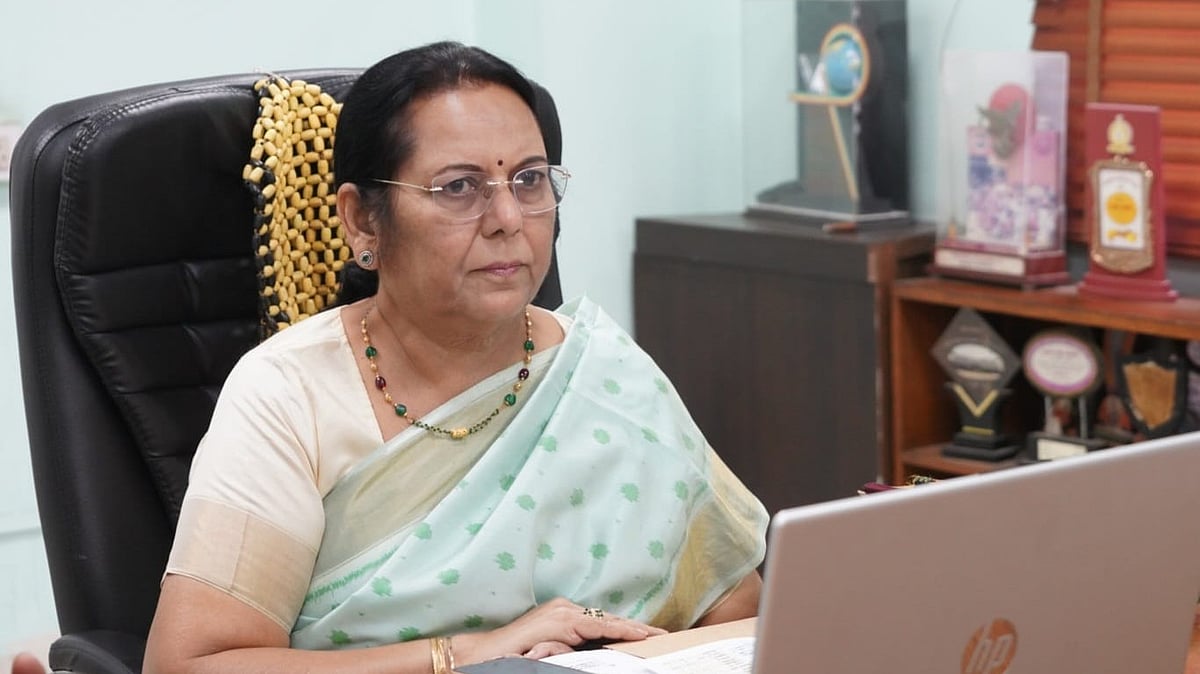
Women's Quota Must Benefit Ordinary Women, Not Political Families: Neelam Gorhe In Pune | Sourced
Pune: Shiv Sena MLC Neelam Gorhe on Sunday said women’s reservation must create opportunities for ordinary women and grassroots political workers rather than benefit only established political families. Calling for at least 50% of party tickets to be given to ordinary women workers, she questioned the Congress’s commitment to women’s political representation and asked why it had not implemented 50% reservation within its own organisation.
Gorhe said the proposed women’s reservation legislation and the delimitation exercise must go hand in hand to ensure meaningful representation of women in Parliament and State legislatures. She expressed hope that all political parties would support the legislation during the special parliamentary session.
“The issue is not merely about the number of women in legislatures. What matters is our approach towards women’s rights and their empowerment,” she said, adding that women continued to face barriers such as money power, muscle power, social restrictions, family responsibilities and scrutiny of their character while seeking political opportunities.
ALSO READ
Calls for opportunities beyond political families
Responding to concerns that women’s reservation could further strengthen dynastic politics, Gorhe said political parties must ensure that ordinary women workers get opportunities to contest elections.
She said, “Every political party should give tickets to at least 50% ordinary women workers.” Citing her own political journey, she pointed out that the Shiv Sena had nominated her to the Maharashtra Legislative Council five times despite her having no political family background and without any reservation.
She also cited the appointment of Jyoti Waghmare to the Rajya Sabha, describing her as a woman from an ordinary background who had risen through political work. However, Gorhe acknowledged that dynastic politics existed across parties and said women from political families should not be the only beneficiaries of increased representation.
Questions Congress over its commitment
Gorhe accused the Congress of adopting a contradictory position on women’s representation and questioned why it had not voluntarily given more opportunities to women within its organisation.
She said, “If the Congress genuinely believes in women’s reservation, why has it not given 50% representation to women within its own party? Let it give 50% tickets to women in elections and show how many seats it actually offers.”
She alleged that opposition parties were using concerns over delimitation to oppose the broader objective of women’s political participation. Recalling the history of the legislation, she said the demand for women’s reservation had been raised for decades, with the first Bill introduced in Parliament in 1996 and subsequently passed by the Rajya Sabha in 2010. She also referred to the Nari Shakti Vandan Adhiniyam, passed in 2023, saying it had renewed hopes of greater representation for women.
Defends delimitation, rejects North-South divide
On concerns that delimitation could increase the political representation of northern states at the expense of southern states, Gorhe said the exercise should not be viewed as creating a North-South divide.
“Language-related conflicts are a separate issue, but the NDA has never discriminated against any southern state in terms of development,” she said, referring to Andhra Pradesh, Telangana and Karnataka. She maintained that the proposed increase in seats would benefit states across the country and argued that women’s reservation without an expansion of constituencies would not fulfil its full potential.
Gorhe expressed optimism about the parliamentary discussions and said she hoped opposition parties would reconsider their positions. She also welcomed the possibility of NCP-SP chief Sharad Pawar supporting the legislation.
She said, “If he decides to support the Bill from the perspective of delimitation and women’s reservation, it would be welcome. He is a senior leader, and his decisions are important not only for his party but also for Maharashtra.”
ALSO READ
Calls for dialogue over Sahitya Parishad dispute
Commenting on the controversy surrounding the Maharashtra Sahitya Parishad elections in Pune, Gorhe rejected suggestions that it was a direct Shiv Sena-BJP confrontation, saying the two sides had traditionally contested through separate panels.
She said, “I have appealed to people from both sides to find a solution through dialogue and ensure that the literary event takes place without any disruption. If asked, I will speak to Eknath Shinde and try to find a way forward.”
On MNS chief Raj Thackeray’s remarks regarding delimitation and the possibility of increasing centralisation, Gorhe declined to comment directly, saying his observations and predictions could fill a book.
Describing the proposed legislation as the culmination of nearly four decades of efforts by women’s organisations, Gorhe said its implementation would mark an important step towards ensuring women’s participation in decision-making. She added that smaller constituencies could also make it easier for elected representatives, irrespective of gender, to reach voters.
RECENT STORIES
-
-
-
-
-