Pune: NCP Corporator Nivrutti Bandal Proposes 12 Water Tanks Under PPP Model In Undri, Handewadi
In a detailed representation submitted to Pune Municipal Commissioner Naval Kishore Ram, Nivrutti Anna Bandal said residents in these areas have been suffering from inadequate and unreliable water supply infrastructure for nearly two decades, despite massive urban growth and substantial revenue generation for the civic body

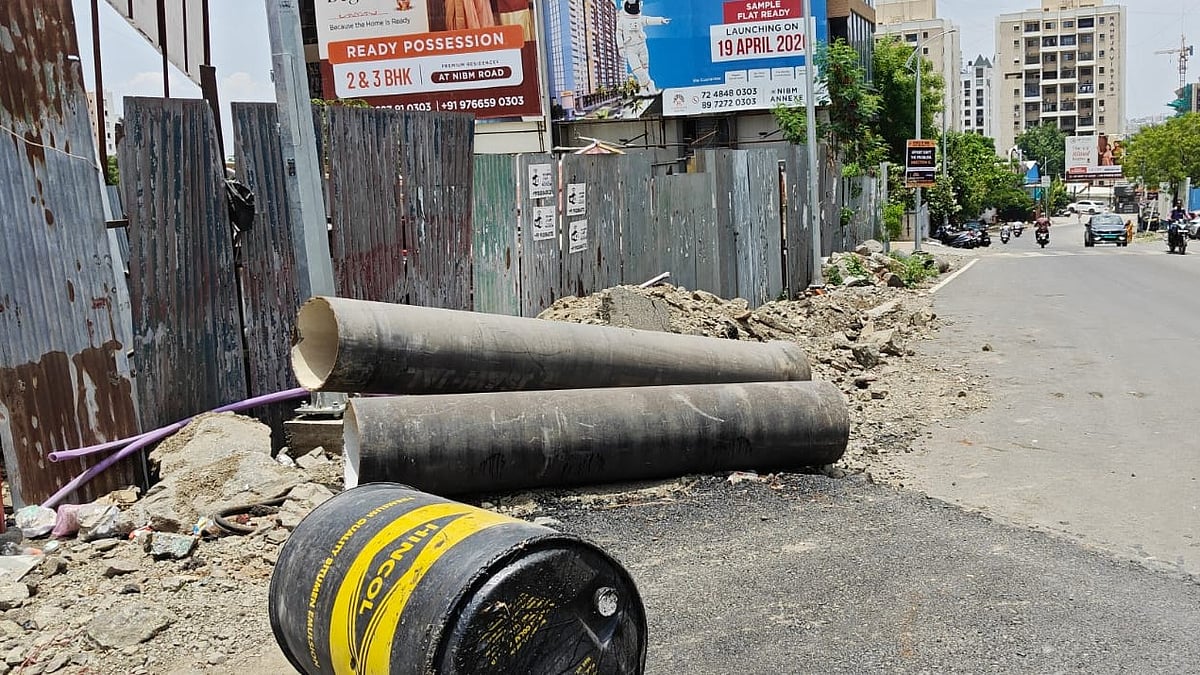
NCP Corporator Nivrutti Anna Bandal Proposes 12 Water Tanks Under PPP Model In Undri, Handewadi | Sourced
Raising serious concern over the worsening drinking water crisis in Pune’s rapidly urbanising southern fringe, NCP corporator from Ward No 41, Nivrutti Anna Bandal, has demanded the immediate construction of at least 12 overhead water tanks across Undri Hilltop, Pisoli, Handewadi, Autadewadi, Wadachiwadi and Holkarwadi areas to permanently resolve the long-pending water shortage affecting nearly 8 to 10 lakh residents.
In a detailed representation submitted to Pune Municipal Commissioner Naval Kishore Ram, Bandal said residents in these areas have been suffering from inadequate and unreliable water supply infrastructure for nearly two decades, despite massive urban growth and substantial revenue generation for the civic body.
According to the representation, the southern suburban belt has witnessed unprecedented residential expansion over the past 15 to 20 years, with hundreds of housing societies, apartment complexes, row houses and standalone residential projects coming up in the region. However, civic infrastructure, particularly water storage and distribution systems, has failed to keep pace with the rapid urbanisation.
Despite paying property tax ...
Bandal stated that a majority of residents in these areas continue to depend heavily on expensive private water tankers, irregular PMC supply, temporary society-level water arrangements and rapidly depleting borewells.
“Despite paying property tax, development charges and water taxes, lakhs of citizens are still forced to spend enormous amounts every year on tanker water due to the absence of adequate infrastructure,” the representation stated.
Residents from the affected localities echoed similar concerns and said the worsening crisis has severely impacted daily life. “We have been living with tanker dependency for years despite paying all civic taxes regularly. Every summer, the situation becomes unbearable as societies are forced to spend lakhs on private tankers. The city has expanded rapidly but water infrastructure has completely failed to keep pace,” said Anzar Rade, a resident of Undri.
ALSO READ
Senior citizens, women and children suffer
The corporator pointed out that the crisis worsens drastically during summer months when many housing societies receive water only for limited durations while several localities experience complete dry spells.
According to Bandal, the key issue is not merely water availability but the absence of proper storage, balancing and pressure-management infrastructure in elevated and geographically scattered localities such as Undri Hilltop and adjoining areas.
“Due to uneven topography and massive vertical residential development, the existing distribution systems fail to maintain adequate pressure and equitable water distribution, especially in tail-end and elevated areas,” he said.
Residents from elevated areas said low pressure and erratic supply have become routine problems. “Many elevated areas receive extremely low water pressure, and sometimes there is no supply for entire days. Senior citizens, women and children suffer the most during shortages. PMC must now move beyond temporary arrangements and create permanent storage infrastructure,” said Farzana Shaikh, a resident of Pisoli.
Proposal is practical and urgently needed
To address the issue permanently, Bandal proposed the construction of a chain of at least 12 strategically located interconnected overhead water tanks that would function as a pressure-balancing and storage network for the region.
Importantly, the corporator suggested that the project be implemented through a Public-Private Partnership (PPP) model to reduce the financial burden on PMC and accelerate execution.
Under the proposed PPP framework, major developers, township projects and private stakeholders in the region could contribute through infrastructure obligations, CSR participation and development-linked funding mechanisms. Bandal also suggested utilising and reserving amenity space plots for the construction of the overhead reservoirs.
“Undri, Handewadi and nearby areas have become major residential hubs with thousands of new families shifting here every year, but basic infrastructure still resembles that of a rural belt. The proposal for interconnected overhead tanks is practical and urgently needed,” said Amit Gaikwad, a resident of Handewadi.
Drawing parallels with Mohammadwadi, which faced a similar water crisis in the past, Bandal said focused civic planning and infrastructure intervention had significantly improved water accessibility in that area.
“Mohammadwadi demonstrates that long-pending water crises can be resolved through administrative will, reservoir planning and proper infrastructure expansion. The same model must now be replicated urgently in Undri, Pisoli, Handewadi and surrounding areas before the crisis worsens further,” he said.
The representation also urged PMC to immediately conduct a technical feasibility survey, prepare a comprehensive master plan for the proposed overhead tank network, identify suitable locations and convene a joint meeting of civic officials, engineers, urban planners and local representatives to discuss the proposal.
“People are paying huge maintenance charges because societies are forced to buy tanker water almost throughout the year. Borewells are drying up rapidly, and groundwater levels have fallen sharply. Unless PMC creates a proper reservoir and pressure management network, the crisis will only worsen,” said Nilesh Shinde, a resident of Wadachiwadi.
“These areas are among Pune’s fastest-growing residential zones and contribute substantially to the city’s revenue. Residents rightfully expect assured drinking water supply and basic civic amenities. Water is a fundamental necessity and not a luxury,” Bandal stated.
“We have repeatedly raised complaints regarding irregular supply, low pressure and inequitable distribution, especially in hilltop areas. Tail-end localities are the worst affected. A planned overhead tank network can finally bring some relief to lakhs of residents,” said Saba Khan, a resident of Autadewadi.
Proposed benefits of the project
- Ensure equitable water distribution in elevated and tail-end localities
- Reduce dependence on private water tankers
- Stabilise water pressure across residential areas
- Create emergency storage capacity during shortages and repairs
- Support future urban expansion
- Prevent growing civic anger over water scarcity.
RECENT STORIES
-
-
-
-
-