Ganeshotsav: Pune Techie Builds Free Tool To Plan Mandal Visits
The website allows users to select how much time they have -- from around 1.5 hours to eight hours -- and what they want to see, including Manache Paach, live natak, elaborate sets, light shows and traditional mandals. It then generates a sequence of stops designed to reduce unnecessary walking and backtracking

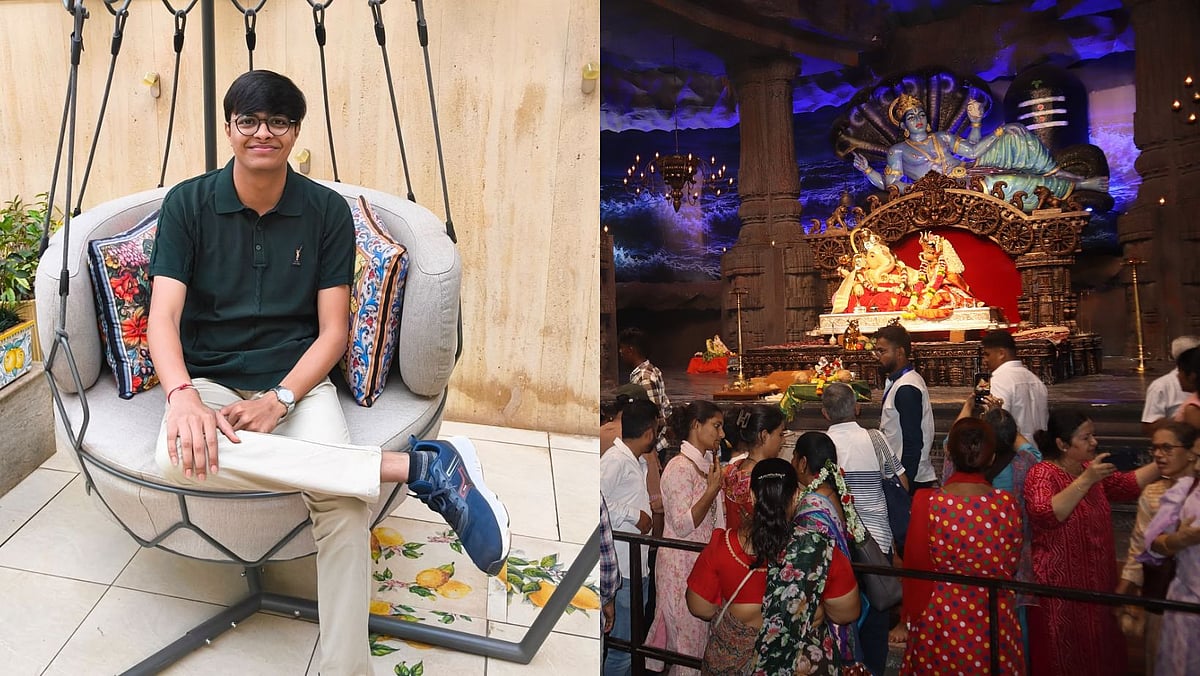
Ganeshotsav: Pune Techie Builds Free Tool To Plan Mandal Visits | FPJ Photo
Pune: For devotees navigating Pune’s crowded Peth areas during Ganeshotsav, deciding which mandals to visit and in what order can often be as difficult as finding them. Addressing this problem, 24-year-old software engineer Ameya Jain has developed puneganpati.in, a free route-planning platform that helps visitors plan their darshan based on their available time, preferences and entry point into the Peth area.
Speaking to The Free Press Journal, Jain said the platform focuses specifically on the Peths and includes prominent public Ganesh mandals across Kasba Peth, Budhwar Peth, Sadashiv Peth, Narayan Peth and Shukrawar Peth. It features popular destinations including the Manache Paach, Dagdusheth, Tulshibaug and other prominent mandals.
What led him to create this platform?
Jain said the idea came after watching visitors struggle to navigate the Peth areas during the festival. “Last year I was near Shanipar in the Peth area and saw people asking shopkeepers and locals, ‘Where is this mandal? Which gali? Where do we go next?’ A list of mandal names does not solve the real problem,” he said.
ALSO READ
The website allows users to select how much time they have -- from around 1.5 hours to eight hours -- and what they want to see, including Manache Paach, live natak, elaborate sets, light shows and traditional mandals. It then generates a sequence of stops designed to reduce unnecessary walking and backtracking.
“Users can also choose between visiting every pandal from inside or opting for a mix of inside and outside darshan. At crowded mandals, the latter option allows devotees to view the decoration from the road without spending significant time in queues,” he said.
‘Tell it your time, it plans your darshan’
The route-building system considers the selected mandals, available time and the user’s entry point. Jain said, “If location access is provided, the route can begin from the user’s side of the Peth area. Otherwise, the platform selects a suitable entry point from known locations such as Mandai Metro, Shaniwar Wada, Alka Talkies Chowk, SP College and Sonya Maruti Chowk.”
ALSO READ
He added that users can also manually add or remove mandals before starting their journey. “For those who already know where they want to go, the ‘Build your own route’ option allows them to select mandals and optimise their walking order,” Jain said.
Walking time meets darshan time
Jain said the platform separately estimates walking and darshan time. Distances between mandals are converted into walking minutes using a slower festival walking speed, taking into account the crowds in the Peth lanes. A buffer of around 12 minutes is also added to the overall walking time.
Darshan estimates vary from mandal to mandal. “Dagdusheth has a long line. Inside can take around 50 minutes. From outside, mukh darshan from the road is around 10 minutes,” Jain said.
He added that these are usual estimates and actual waiting times can change depending on the crowd on a particular day.
The platform does not attempt to replace Google Maps for street-level navigation. Instead, users can tap the Google Maps option for final walking directions.
“We put mandals in order. We do not claim exact gali directions,” Jain said, adding that crowd movement and police arrangements can change the accessibility of Peth lanes during the festival.
One link keeps the entire group on route
One of the key features of the platform is its route-sharing facility. “Once a route is created, users can share a single link with family and friends through WhatsApp without creating an account or logging in,” he said.
ALSO READ
Jain added that the person leading the group can mark each stop as “I’ve arrived”, “Darshan done” or “Skip”. The shared route then reflects the progress, allowing other members to see which mandal the group has reached and what comes next.
“If the group splits near Mandai or Shanipar, they still know where you are on the route,” Jain said.
The platform also alerts users when they are near a prominent mandal that is part of its database but not included in their current route.
‘4,000-plus users without paid promotion’
Jain said more than 4,100 people have used the website so far, while it has appeared around 8,200 times in Google searches. He said the platform has received this response without paid advertisements, posters or promotional campaigns. “I built it so friends would stop asking me for a list on a call. Now they are sharing it themselves,” he said.
ALSO READ
The project has cost Jain around ₹500, primarily for the domain, while hosting, maps and analytics are currently being operated through free plans.
Jain said, “I plan to keep the platform focused on the Peth areas rather than expand it across the entire city.” Future additions could include more detailed information on this year’s dekhavas and themes, morning and evening recommendations and revised walking times based on feedback from users.
“Ganeshotsav in the Peths is beautiful, but it is also crowded. You do not need to see every mandal. See the ones that matter to you, in a calm order, and give Bappa your attention,” Jain said.
RECENT STORIES
-
-
-
-
-