US Commerce Secretary Howard Lutnick Says India-US Trade Deal Stalled As PM Modi Did Not Call President Donald Trump
US Commerce Secretary Howard Lutnick said the India-US trade deal didn’t materialise because Prime Minister Modi didn’t call former US President Donald Trump. Lutnick explained that Trump rewards countries that act quickly, and by delaying, India missed the “first stair” while deals with other nations were completed.

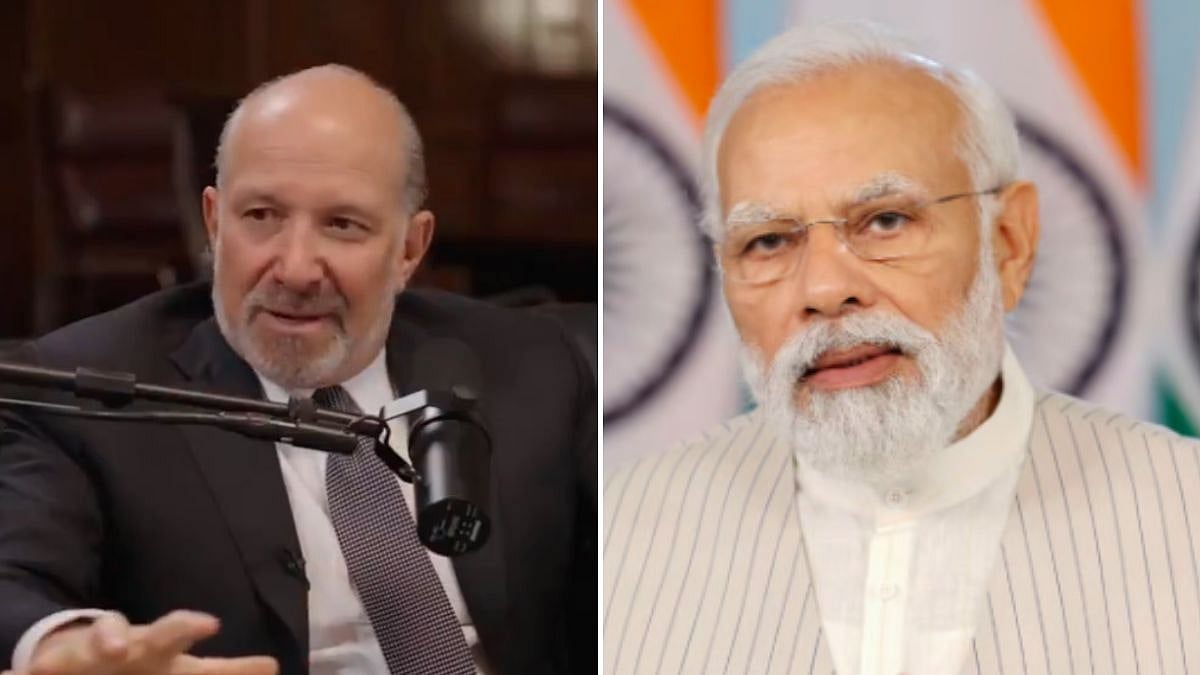
US Commerce Secretary Howard Lutnick (L) & Prime Minister Narendra Modi (R) | X @AdityaRajKaul & FIle Pic
Mumbai: US Commerce Secretary Howard Lutnick has placed the blame on the India-US trade deal being in limbo squarely on New Delhi, saying Prime Minister Narendra Modi didn’t make the call to US President Donald Trump as had been the expectation.
Speaking in an All-In podcast with Sri Lanka-born Canadian-American venture capitalist Chamath Palihapitiya, Lutnick said India was still “out there” even as the US had concluded deals with Europe and the UK. “India is our ally,” he said, but added that New Delhi missed its window to close the agreement.
He suggested that India showed some movement recently, pointing to New Delhi’s purchase of a large quantity of liquefied petroleum gas (LPG) from the US in November, but said the broader trade agreement failed to materialise in time.
Lutnick said the Trump administration followed what he described as a “staircase” approach to trade negotiations, where the country that finalised a deal first received the best terms. “First stair gets the best deal. You can’t get the best deal after the first guy went,” he said, explaining that the approach was meant to push countries to come to the table quickly. Recounting the UK deal, Lutnick said London was given a tight deadline.
ALSO READ
“We told the UK that they had to get it done by two Fridays from now, that the train was gonna leave the station,” he said. He recalled that British Prime Minister Keir Starmer was on the phone with Trump by Wednesday night, and the deal was announced the next day.
According to Lutnick, India was given a threeFriday deadline. “We were talking India, and we told India you had three Fridays to get it done. You put them on a shot clock,” he said. He added that the key requirement was a call between Modi and Trump. “I said, you gotta have Modi, it’s all set up, you have to have Modi call the President,” Lutnick said, shrugging as he recounted the episode. “And they were uncomfortable doing it. So Modi didn’t call.” As a result, he said, the deadline passed, and the US moved on to other countries. “
So that Friday left, middle of the next week, we did Indonesia, the Philippines, Vietnam… Malaysia in that period,” he said, describing how multiple deals were announced in quick succession. He said those agreements were negotiated at higher rates because the administration had assumed India would have closed its deal earlier. In July 2025, the United States concluded tariff negotiations with several countries, including Vietnam (July 2), Indonesia (July 22), the Philippines (July 22), Japan (July 23), the European Union (July 27), South Korea (July 31) and the United Kingdom (May 8). When India later came back, Lutnick said it was too late.
“India calls back and says, ‘Oh, okay, we’re ready.’ I said, ‘Ready for what?’” he recalled. “Are you ready for the train that left the station three weeks ago?” He said India wanted terms that fell between the UK and Vietnam deals, but that was no longer possible. “They say, ‘But you agreed.’ And I said, ‘Then. Not now, then.’” Lutnick insisted the delay was not about hostility, but timing and internal constraints. “Sometimes there’s that seesaw, and people are on just the wrong side of the seesaw,” he said, adding that countries often struggle with domestic political approvals.
“These are deeply complex things, and we’re dealing with the world.” He also underlined that while he set up negotiations, the final decisions rested with Trump. “Let’s be clear, it’s his deal. He’s the closer, he does the deal,” Lutnick said, noting that Trump often referred to him as the “greatest table setter who ever lived.” The remarks come despite the White House having said on June 30, 2025, that the US and India were “very close” to a trade deal.
(Except for the headline, this article has not been edited by FPJ's editorial team and auto-generated from an agency feed.)
RECENT STORIES
-
-
-
-
-