World Snake Day: Nashik Experts Advise on Identifying Venomous and Non-Venomous Species and Emergency Tips
In India, over 280 snake species contribute to diverse ecosystems, with Maharashtra alone hosting more than 50 species categorised as non-venomous, mildly venomous, and venomous.

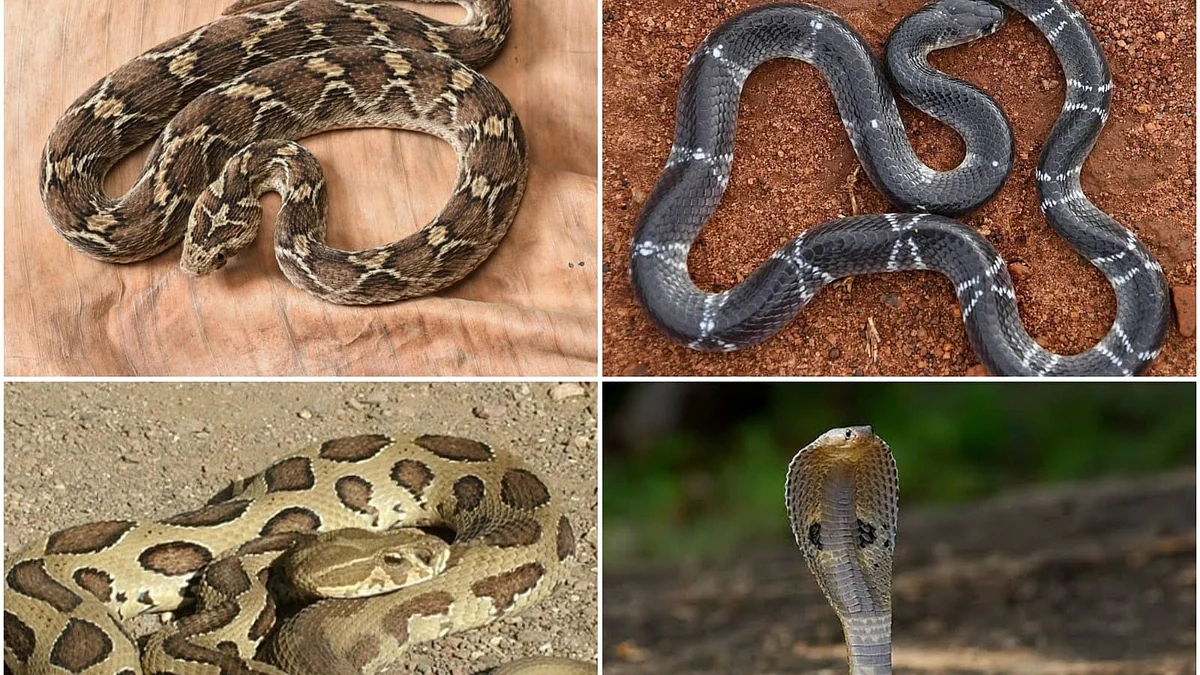
World Snake Day: Nashik Experts Advise on Identifying Venomous and Non-Venomous Species and Emergency Tips |
July 16 is marked globally as World Snake Day, aiming to raise awareness about the importance of snakes in ecosystems despite prevalent misconceptions. During the monsoon season, snakes frequently venture into human settlements and agricultural areas, leading to an uptick in snakebite incidents. This movement underscores their crucial role in pest control and ecological balance, making their conservation vital.
In India, over 280 snake species contribute to diverse ecosystems, with Maharashtra alone hosting more than 50 species categorised as non-venomous, mildly venomous, and venomous. Non-venomous species like the Indian Rock Python and Common Sand Boa play roles in controlling rodents, while semi-venomous types such as the Common Cat Snake and Common Vine Snake contribute to biodiversity.
ALSO READ
Venomous snakes
Venomous snakes include the Indian Cobra, Russell's Viper, Common Indian Krait, and Saw Scaled Viper, each posing varying degrees of danger. Understanding these species helps mitigate human-wildlife conflict and promotes coexistence strategies.
Akshay Mhetre, Assistant Conservator of Forest Manmad, emphasised the seasonal increase in snake numbers and advised, "During the rainy season, the number of snakes increases, leading to more snakebite incidents. However, if we know about the four major poisonous species, other non-poisonous snakes pose no danger to humans. Citizens should contact the nearest snake handler if they see a snake. If any snake handlers demand excessive money in the name of petrol costs, report it to the forest department."
Sushant Ranshur, Snake Scientist at the AREAS Foundation, reflects on his personal experience, stating, "After surviving a fatal snakebite 14 years ago, I realised the importance of educating the public about misconceptions and remedies for snakebites. The Zero Snakebite Awareness Campaign is being implemented through the AREAS Foundation. For public awareness programs in schools, colleges, localities, or offices, or if you find a snake or are bitten by one, please contact 9764839825, 9822820995, 9881079139, or 7499597134."
What to do if you spot snake?
- Keep a close eye on the snake
- Call a snake handler or wildlife rescuer
- Use the toll-free number 1926 for the forest department
- Do not approach or attempt to catch the snake yourself
What to do after a snakebite?
- Remain calm and avoid panic
- Tie a bandage three inches above and below the bite area
- Use a handkerchief, blanket, or rope
- Do not tie tightly
- Do not cut the bite area
- Reduce physical activity
- Go to the nearest hospital for treatment
RECENT STORIES
-
-
-
-
-