Pune Metro Line 3: Hinjawadi-Shivajinagar Route To Open On Nov 4; Timings, Ticket Fares, Special Features And More
Prime Minister Modi To Virtually Inaugurate 23-Km Corridor On Nov 3; Six Stations To Remain Closed, Fares Yet To Be Announced

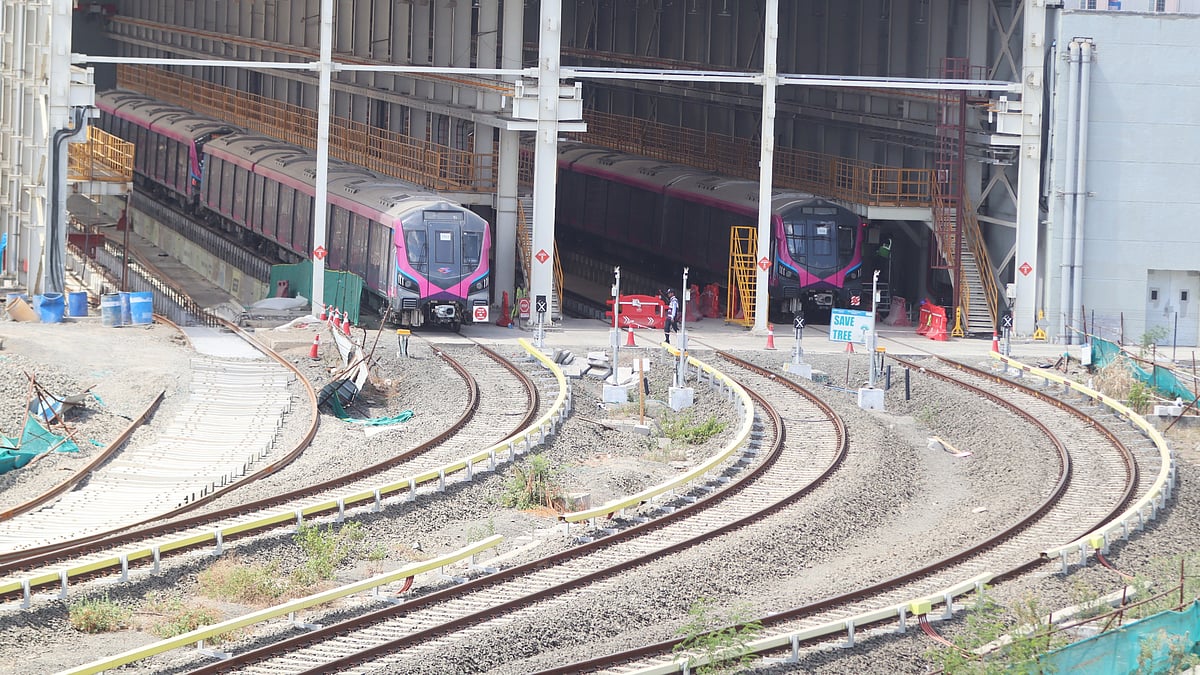
Pune Metro Line 3: Hinjawadi-Shivajinagar Route To Open On Nov 4; Timings, Ticket Fares, Special Features And More | Anand Chaini
Pune: Pune Metro Line 3, connecting Maan near Hinjawadi with Pune District Court in Shivajinagar, will open for passengers on Nov 4. However, only 17 of the corridor's 23 stations will be operational in the first phase. Prime Minister Narendra Modi will virtually inaugurate the 23-km metro corridor on Nov 3 at Balewadi Stadium. The programme will begin at 10.30 am and will be attended by Chief Minister Devendra Fadnavis, both Deputy Chief Ministers and other ministers and public representatives.
Pune Metropolitan Region Development Authority (PMRDA) Commissioner Dr Abhijeet Chaudhari announced the schedule on Saturday. He said passenger services would begin at 6 am on Nov 4, with the last train scheduled at 11.40 pm. Although the entire corridor is being inaugurated, six stations will not be available to passengers initially. The operational section will include stations one to 12, followed by stations 17, 18, 19, 21 and 23. This will allow passengers to travel between Maan and District Court, with trains skipping the six stations that are not yet ready for passenger services -- similar to the first two metro lines in Pune.
Six Stations To Remain Closed Initially
The six stations that will not be operational from Nov 4 are Laxmi Nagar, Balewadi Phata, Baner Gaon, Baner-Pashan Link Road, Reserve Bank of India and Shivajinagar. The opening of District Court station is significant as it will provide connectivity to the city centre despite the remaining stations being unavailable.
Metro Line 3, also known as the Pink Line or Puneri Metro, has been developed under the public-private partnership (PPP) model. PMRDA is monitoring the project, while a joint venture between Tata and Siemens has executed it.
The corridor was planned to improve connectivity between Hinjawadi's IT parks and central Pune. It is expected to provide an alternative to road travel for thousands of IT employees and other daily commuters.
Fares Yet To Be Announced; Multiple Ticketing Options Available
Chaudhari said the detailed fare chart had not yet been released. Fares would be distance-based and determined according to the provisions of the project's concession agreement.
PMRDA will publish the fare details and make them available to passengers at metro stations, he added.
Passengers will have multiple ticketing options, including WhatsApp ticketing, mobile application-based booking, ticket counters and automatic ticket vending machines.
PMRDA Working On Last-Mile Connectivity
Chaudhari said PMRDA was coordinating with Pune Mahanagar Parivahan Mahamandal Limited (PMPML), private service providers and auto-rickshaw associations to improve last-mile connectivity.
Designated drop-off zones have been provided at all stations, while parking facilities have been developed wherever feasible.
Pedestrian pathways around the stations are also part of the connectivity plan. PMRDA and the Maharashtra Industrial Development Corporation (MIDC) are implementing a separate project to improve pedestrian infrastructure.
However, the availability and frequency of feeder bus services and other transport options will be important for commuters travelling between metro stations and their workplaces or residential areas.
All-Women Operators, Solar Power And Third-Rail Technology
The Pink Line will have an all-women team of trained train operators from the first day of commercial operations, Chaudhari said.
The metro project has a solar power generation capacity of around 7.6 MW across its stations and depot. According to Chaudhari, solar energy will meet around 30% of the electricity required for metro operations.
Another feature is the third-rail power supply system. Unlike conventional metro systems that use overhead electric wires, trains on this corridor will draw electricity from a third rail installed along the tracks. Chaudhari said this was the first such system in Maharashtra.
ALSO READ
All stations have been equipped with accessibility features, including ramps, escalators and lifts, to help passengers with disabilities and other commuters.
With passenger services scheduled to begin on Nov 4, commuters will be able to use the long-awaited metro connection between Hinjawadi and central Pune. However, the opening of the remaining six stations and the availability of effective last-mile transport will remain important factors in determining how easily passengers can use the new corridor.
ALSO READ
‘Important Step To Well-Connected Pune’
Anil Kumar Saini, CEO, Pune IT City Metro Rail Limited told the media, “Pune’s growth story is closely tied to the evolution of its IT and business ecosystem, and seamless connectivity will be critical to sustaining this momentum. Metro Line 3 is designed to bridge the distance between Maan-Hinjawadi’s thriving IT hub and the heart of Pune, making everyday commutes more predictable, convenient and efficient.”
“Beyond easing travel, the corridor represents a shift towards a more integrated urban mobility network, one that connects people to opportunity while helping reduce the pressure on the city’s roads. We see this as an important step towards building a Pune that is better connected, more accessible and equipped for the demands of its next phase of growth,” he added.
RECENT STORIES
-
-
-
-
-