Pride Month Special: Pune’s SatRang Festival Celebrates Queer Expression Through Theatre
The programme brought together a mix of established theatre practitioners and emerging artists, with all works written, directed and choreographed by queer creators across a range of gender identities and sexual orientations

Pride Month Special: Pune’s SatRang Festival Celebrates Queer Expression Through Theatre | Sourced
SatRang Mahotsav, a six-day queer theatre festival, was held in Pune from June 16 to 21 at Shreeram Lagoo Rang Avkash (SLR Theatre). Billed as the first national queer festival, the event featured 12 performances across genres, including theatrical drag, dance-theatre and social commentary.
The programme brought together a mix of established theatre practitioners and emerging artists, with all works written, directed and choreographed by queer creators across a range of gender identities and sexual orientations. Alongside the performances, the festival included panel discussions, workshops and round tables, offering space for interaction between artists and audiences.
Festival director Deepa D said the scale of programming expanded beyond initial expectations. “So much work came in that what was originally planned as a three-day festival had to be extended to six days,” she said, adding that some works still could not be accommodated due to logistical and financial constraints.
ALSO READ
She added that the volume of work itself reflects a shift in the cultural landscape. “The fact that there is enough work being made for this festival to happen, which might not have been the case even five years ago, is itself a sign of change,” she said.
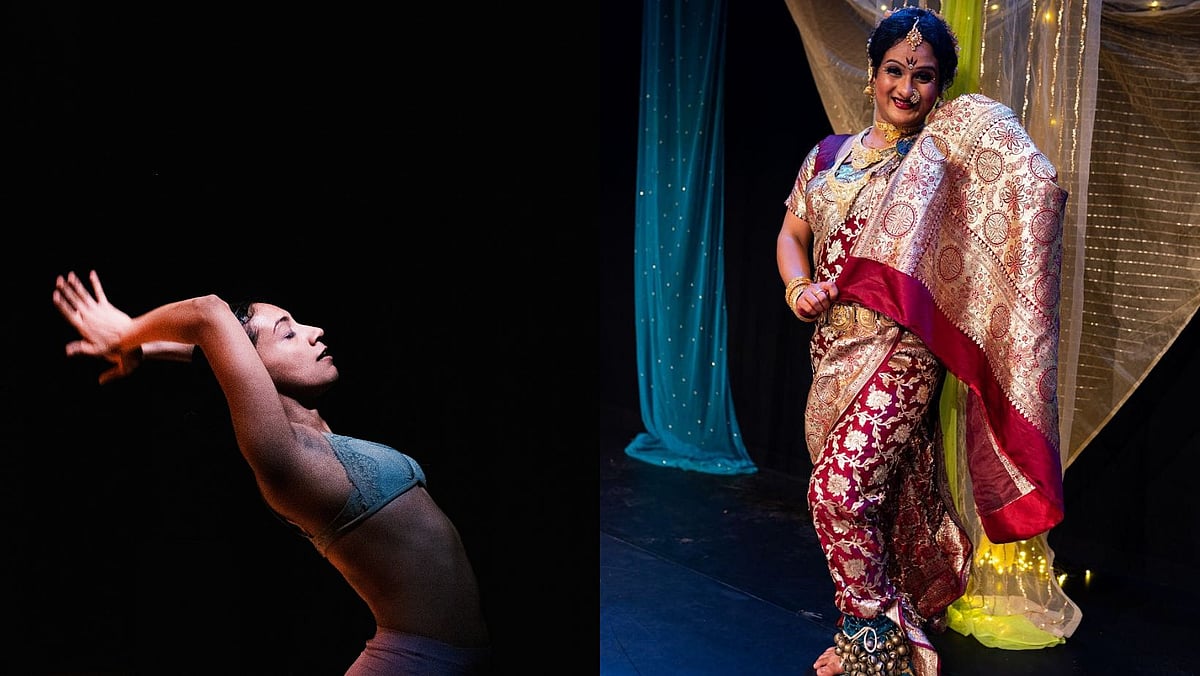
Among the performances was Deviant Octopus, a non-verbal contemporary dance piece by Delhi-based artist Jasmine Yadav, which had previously won the Prakriti Excellence in Contemporary Dance Awards (PECDA) 2024. The work explores how the female experience of the body and desire finds expression through movement.
Yadav described the octopus as central to her choreographic process. “There was something fluid in the way my body and limbs were moving, and that led me towards the octopus as a form,” she said, adding that its sensory world helped shape the movement vocabulary of the piece.
Speaking about her practice, she said, “What dance allows me to do is step away from a fixed narrative and stay with a body that is always changing.” She added that her work draws from the natural world and its shifting forms. “Nature, to me, is deeply queer; nothing in it is fixed, everything is constantly shifting and transforming, and that is something I try to bring into my movement,” she said.
She further added, “I feel a conviction in the body that this is me and this is me becoming,” describing movement and dance as a space of continuous transformation.
Another performance, Rang Birangi Lavani, featured Akshay Malvankar in collaboration with Gauri Jadhav and Sopinath Patokar, which reworked traditional Lavani through queer storytelling and expressions of love.
Malvankar said the dance form allowed space for reinterpretation and resistance. “Lavani has no rigid boundaries, and that openness is what allows us to bring queer stories into it,” he said.
He added that audience reception has been evolving. “People are beginning to see that Lavani is not limited to only one kind of love story anymore. They are beginning to relate to it in their own ways,” he said.
Speaking about his own performance identity, he said, “While I exist in multiple ways depending on the space I am in, on stage, those versions don’t have to be separated, they can exist together, and that’s the most meaningful aspect of queer theatre for me.”
ALSO READ
He also spoke about visibility and expression within queer performance spaces. “For me, performance is not about fitting into one fixed idea of identity. It’s about allowing those shifts to be visible,” he said.
Reflecting on Pride Month, he added, “It is important that the community comes together during this time, not just as individuals but collectively, through shared visibility and participation.”
The festival closed with reflections from director Deepa D, who emphasised the importance of visibility, collaboration and sustained artistic space. She said SatRang Mahotsav was shaped not only by the works it presented, but by the conditions that made it possible.
“What this festival shows is that queer artists are not working in isolation,” she said. “There is an ecosystem now, and this ecosystem deserves to be seen, supported, and allowed to grow,” she summarised.
RECENT STORIES
-
-
-
-
-