Opinion: If You Only Hear The Slurs, You're Missing What Gen Z Is Trying To Say
From Instagram reels and memes to placards at protest sites, the vocabulary of Gen Z, particularly when directed at Prime Minister Narendra Modi, has left many from the older generation deeply uncomfortable. Boomers have described it as shocking and disrespectful. Millennials have called it crude, offensive and unnecessarily abusive

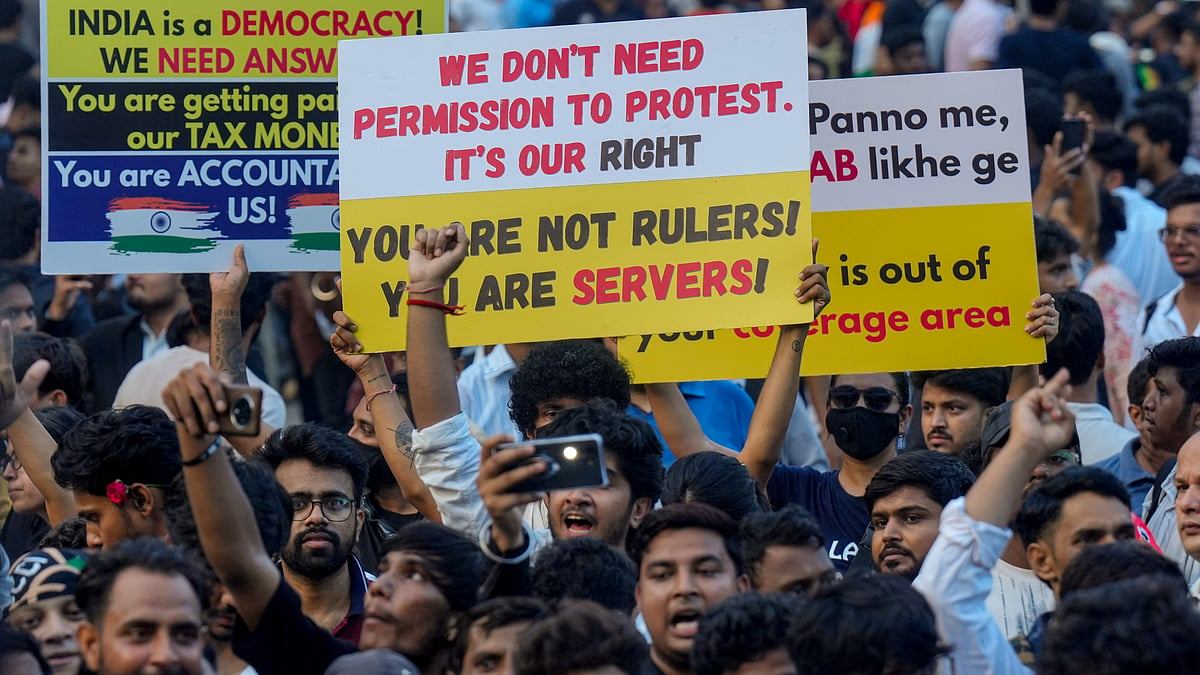
Opinion: If You Only Hear The Slurs, You're Missing What Gen Z Is Trying To Say | PTI Photo
The nationwide protests over the NEET paper leak have sparked several debates. One has centred on accountability in education. Another has focused on police action against student protesters. But among boomers and millennials, an entirely different debate has emerged: the language of Gen Z.
From Instagram reels and memes to placards at protest sites, the vocabulary of Gen Z, particularly when directed at Prime Minister Narendra Modi, has left many from the older generation deeply uncomfortable. Boomers have described it as shocking and disrespectful. Millennials have called it crude, offensive and unnecessarily abusive.
A former colleague of mine, a millennial, summed up this sentiment in an Instagram post. She wrote: "Criticism is necessary. You are allowed to have opinions. This is your right. But to abuse someone of the age of your father or grandfather just because you don't like them isn't right. This tells a lot about your upbringing. Love him or hate him. Respect his post. Respect his age."
This is a view many would instinctively agree with. However, rather than focusing on how Gen Z speaks, it is more important to understand why it speaks this way.
Every generation has spoken the language of protest differently. Boomers staged street plays, organised rallies and marched with fiery slogans. Millennials took their battles to Facebook posts, blogs and tweets. Gen Z, meanwhile, communicates through memes, reels, internet slang and movie references. Its language is visual, concise and unapologetically provocative. To older ears, it sounds offensive. To Gen Z, it is simply everyday conversation.
This generation has lived almost entirely online. Its conversations are shaped less by newspapers and television than by Instagram and YouTube. Humour is exaggerated. Irony is relentless. Even affection is often expressed through mock insults. What sounds rude to outsiders frequently functions as ordinary conversation within its own circles.
ALSO READ
Of course, this is not to argue that civility no longer matters. Abuse can never become a substitute for reasoned criticism. Democracies thrive on disagreement, but they also depend on the ability to debate without reducing opponents to caricatures. The moment arguments are replaced entirely by insults, public discourse becomes poorer.
But the reverse is equally true. If we reduce an entire generation to "ill-mannered youngsters" simply because its vocabulary feels unfamiliar, we avoid confronting the reasons it is angry in the first place.
History suggests this pattern is hardly new. Every generation believes that the next one has ruined the language. Rock music was once considered morally corrupting. Text messages were blamed for destroying English. Emojis were accused of replacing thought. Society survived every one of these moral panics. Today's anxiety over Gen Z's language may well become another chapter in that long history.
There is also a larger context. Gen Z is entering adulthood at a time of unprecedented competition, shrinking employment opportunities, rising living costs and relentless digital scrutiny. It is chronically online. Young people live online, argue online and protest online. Social media rewards speed over nuance, humour over restraint and virality over politeness. Their political expression inevitably reflects that ecosystem.
Older generations may dislike that reality. But disliking it does not make it disappear. If they focus only on the vocabulary while ignoring the frustrations that produce it, they risk misunderstanding an entire generation. Language is often a symptom, not the disease.
The medium has changed. The humour has changed. The tone has changed. What has not changed is the purpose of protest. Gen Z is still demanding accountability, transparency and fairness. It is simply doing so in a language that many older Indians neither recognise nor particularly appreciate.
Whether one applauds that language or condemns it, one thing is clear: it has become the language of political participation for a generation raised on the internet.
The challenge is not to imitate it. Nor is it to celebrate every crude slogan or viral insult. The challenge is to understand what it reveals about a generation that values authenticity over etiquette, immediacy over convention, and is unwilling to soften its words simply to make those in power, or those older than them, more comfortable.
(The author is the Pune Bureau Chief of The Free Press Journal)
RECENT STORIES
-
-
-
-
-