FPJ Explained: Why Pune Teachers' & Graduates' Poll Counting Took Over 30 Hours
The exercise began at 8am on Tuesday at the Shri Shiv Chhatrapati Sports Complex in Balewadi. It involved opening ballot boxes, sorting ballot papers into bundles of 50, separating valid and invalid votes and calculating the quota required for election before proceeding to preference-based counting

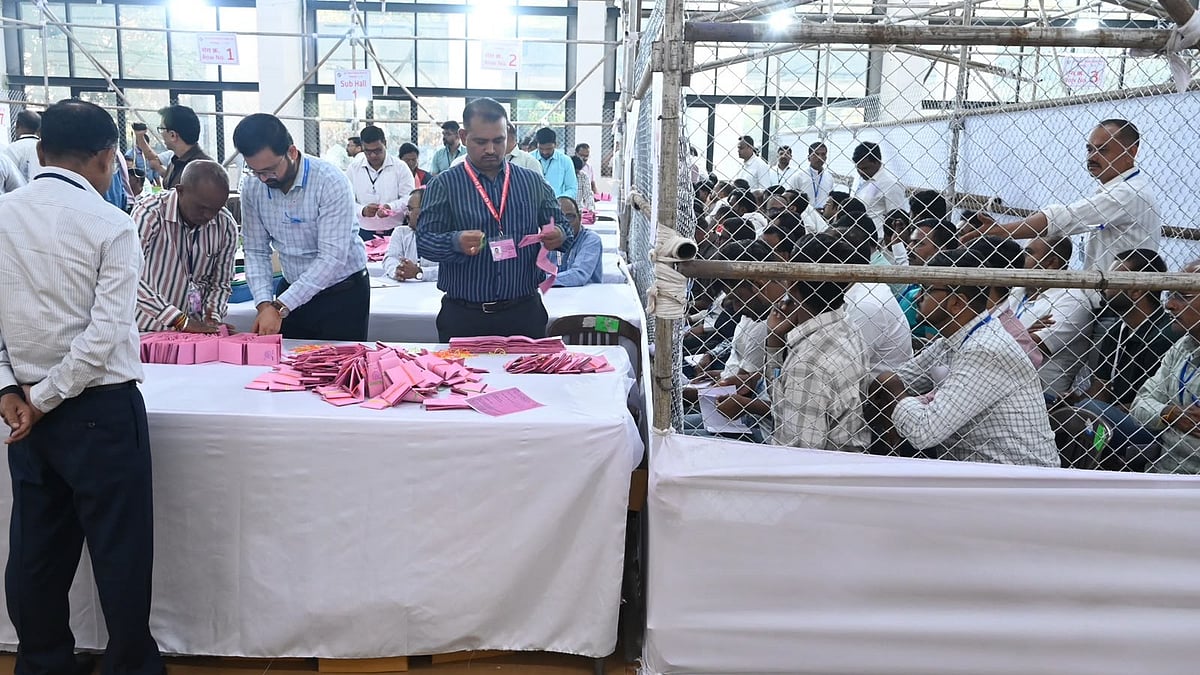
FPJ Explained: Why Pune Teachers' & Graduates' Poll Counting Took Over 30 Hours | Sourced
Pune: The counting of votes for the Pune Division Teachers’ and Graduates’ Constituency elections continued into the second day on Wednesday, as officials worked through nearly three lakh ballot papers using a multi-stage manual process.
The exercise began at 8am on Tuesday at the Shri Shiv Chhatrapati Sports Complex in Balewadi. It involved opening ballot boxes, sorting ballot papers into bundles of 50, separating valid and invalid votes and calculating the quota required for election before proceeding to preference-based counting.
The process took considerably longer than anticipated, with the preliminary stages alone consuming several hours. The exercise extended beyond 30 hours, highlighting the time and manpower required to count ballot papers under the proportional representation system.
Why did counting take so long?
Unlike elections conducted using Electronic Voting Machines (EVMs), these elections require officials to physically handle and scrutinise ballot papers. The elections covered five districts -- Pune, Satara, Sangli, Kolhapur and Solapur. By 4pm on polling day, 2,43,611 votes had been polled in the Graduates’ constituency and 53,185 in the Teachers’ constituency.
Officials had arranged 100 counting tables for the Graduates’ constituency and 42 for the Teachers’ constituency. However, the large volume of ballots meant that each stage had to be completed before the next could begin.
“Every ballot paper has to be handled carefully. Officials first open the boxes, arrange the papers into bundles of 50 and then examine each ballot to determine whether it is valid. Only after this scrutiny can the valid-vote total and the quota be established. The process involves considerable manual work,” an election official told The Free Press Journal on condition of anonymity.
How long did ballot scrutiny take?
The initial stage involved consolidating ballot papers received from all five districts. This process continued until around 3pm on Tuesday, after which officials began scrutinising valid and invalid votes.
The scrutiny was completed at around 7pm for the Teachers’ constituency and 10pm for the Graduates’ constituency. Preference-based counting could begin only after the necessary figures had been established.
In the Teachers’ constituency, 51,511 votes were declared valid and 1,673 invalid. In the Graduates’ constituency, 2,26,224 votes were declared valid. These figures were essential for calculating the quota required to determine the elected candidates.
“The preliminary work is essential because the quota cannot be calculated until the valid votes are established. With thousands of ballot papers to examine, the process takes time. The counting teams must follow the prescribed procedure at every stage,” the official said.
Why were ballot papers used instead of EVMs?
The Teachers’ and Graduates’ Constituency elections follow a preferential voting system under Rule 37A of the Conduct of Elections Rules, 1961. Voters rank candidates by marking numerical preferences on ballot papers. Votes can subsequently be transferred according to the preferences marked, wherever required under the prescribed counting procedure.
“Voters must mark their preferences on the ballot paper, and the counting has to follow the prescribed rules. This is a statutory procedure for these elections, not a decision taken locally by the Pune election authorities,” the official said.
How does preference-based voting work?
The Teachers’ and Graduates’ constituencies elect members to the Maharashtra Legislative Council through proportional representation by means of the Single Transferable Vote system.
ALSO READ
Voters rank candidates by marking preferences such as 1, 2 and 3. First-preference votes are counted initially. If no candidate reaches the required quota, further rounds may be necessary. Depending on the stage of counting, the lowest-placed candidate may be eliminated and the next available preferences on those ballots examined under the prescribed rules. Surplus votes may also be transferred where applicable.
Therefore, counting does not necessarily end when the first-preference totals are compiled. Further rounds may be required to determine whether a candidate has secured the quota.
“Once the valid votes are established, officials calculate the quota and begin counting according to the preferences marked by voters. If the required quota is not reached, the subsequent stages must be completed as prescribed. This is why the process cannot be compared directly with a straightforward EVM count,” the official explained.
What do these constituencies represent?
The elections provide eligible graduates and teachers with a separate channel of representation in the Maharashtra Legislative Council, the upper house of the state legislature.
Voters in the Graduates’ constituency must meet prescribed educational and residency requirements, including holding a recognised degree or equivalent qualification for at least three years before the qualifying date. Teachers’ constituency voters must meet the prescribed teaching-experience and institutional eligibility requirements.
In both cases, voters must be registered on the relevant electoral roll.
What can elected MLCs do for teachers and graduates?
Members of the Legislative Council can raise issues concerning teacher recruitment, salaries, pensions, vacancies, transfers, university administration, graduate employment and education policy. They can participate in debates, question ministers through applicable legislative procedures and press the government to address constituency-specific concerns.
However, an MLC cannot independently order a salary revision, appoint teachers or compel a university to change its decisions. Such measures require action by the relevant government department, competent authority or institution.
RECENT STORIES
-
-
-
-
-