Maharashtra: BNHS Conducts Ornithology Course At Nandur-Madhmeshwar Sanctuary To Promote Bird Conservation
The Bombay Natural History Society held a three-day ornithology course at Nandur-Madhmeshwar Wildlife Sanctuary, Maharashtra, training 13 participants in bird counting, ringing, and conservation. The programme combined classroom learning with fieldwork, highlighting the sanctuary’s rich avian biodiversity and ecological importance as a Ramsar wetland site.

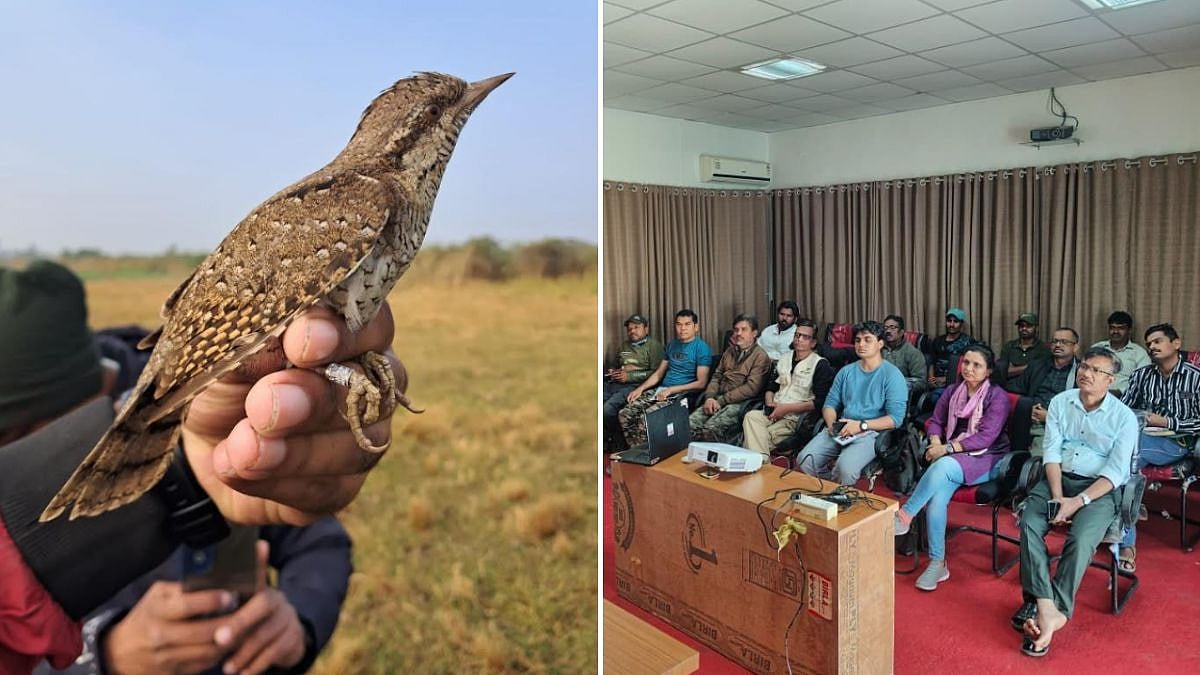
Maharashtra: BNHS Conducts Ornithology Course At Nandur-Madhmeshwar Sanctuary To Promote Bird Conservation | Maharashtra Tourism Development Corporation
Mumbai: The Bombay Natural History Society (BNHS) conducted a three-day basic ornithology course at the Nandur-Madhmeshwar Wildlife Sanctuary in Nashik district last week.
Aim Of The Programme
The programme aimed to educate participants on the importance of birds, bird-counting techniques, and bird ringing, while providing hands-on field experience at one of Maharashtra’s most important wetland sites.
A total of 15 participants registered, 13 of whom attended, including birdwatchers, students, naturalists, and nature enthusiasts with a strong interest in wildlife conservation. The course serves as a platform for building scientific understanding and fostering a strong conservation mindset among nature lovers.
ALSO READ
The inaugural session was hosted by Hiralal Chaudhari, the Range Forest Officer of Nandur-Madhmeshwar Wildlife Sanctuary. He highlighted the ecological importance of the sanctuary, a Ramsar site located near Niphad. Known for hosting a wide variety of migratory birds during winter, the sanctuary provided an ideal setting for the course.
The Convention on Wetlands of International Importance, especially as Waterfowl Habitat (also referred to as the Ramsar Convention), is an international agreement promoting the conservation and wise use of wetlands. The treaty was adopted on 2 February 1971 in the Iranian city of Ramsar. Wetland sites of ecological zones are listed under the convention.
Participants were introduced to scientific methods of bird counting, migration studies, and bird ringing through classroom sessions and extensive fieldwork. Eleven birds were ringed during the programme, including an Eurasian Wryneck (Jynx torquilla).
ALSO READ
Birding sessions recorded notable sightings such as the Eurasian Curlew (Numenius arquata), large numbers of Common Cranes (Grus grus) observed across all three days, and roosting sites of Harriers along the sanctuary fringes. A breeding colony of Painted Storks (Mycteria leucocephala) and Grey Herons (Ardea cinerea) was also documented. Adding to the excitement, some participants sighted a Leopard (Panthera pardus) on 17 January, the BNHS said in a statement.
The importance of the Asian Waterbird Census was discussed in detail, and participants were given the opportunity to take part in the census. A dedicated session highlighted the role of bird vocalisation in ornithological studies, sharing extensive field experience with the group. Discussions also focused on the importance of bird ringing in both wetlands and urban landscapes, along with exchanging ideas for conservation.
To get details on exclusive and budget-friendly property deals in Mumbai & surrounding regions, do visit: https://budgetproperties.in/
RECENT STORIES
-
-
-
-
-