FPJ Dialogue: MMRC's Chief Director (Planning) R Ramana On Designing Mumbai's First Fully Underground Metro Aqua Line 3
R Ramana, chief director (planning) at MMRC, recounts the planning and execution of Mumbai’s first fully underground Metro Aqua Line 3. He discusses funding shifts, complex tunnelling under heritage areas, Aarey depot concerns, ridership expectations, and the ongoing standoff with telecom operators delaying mobile network services inside the metro.

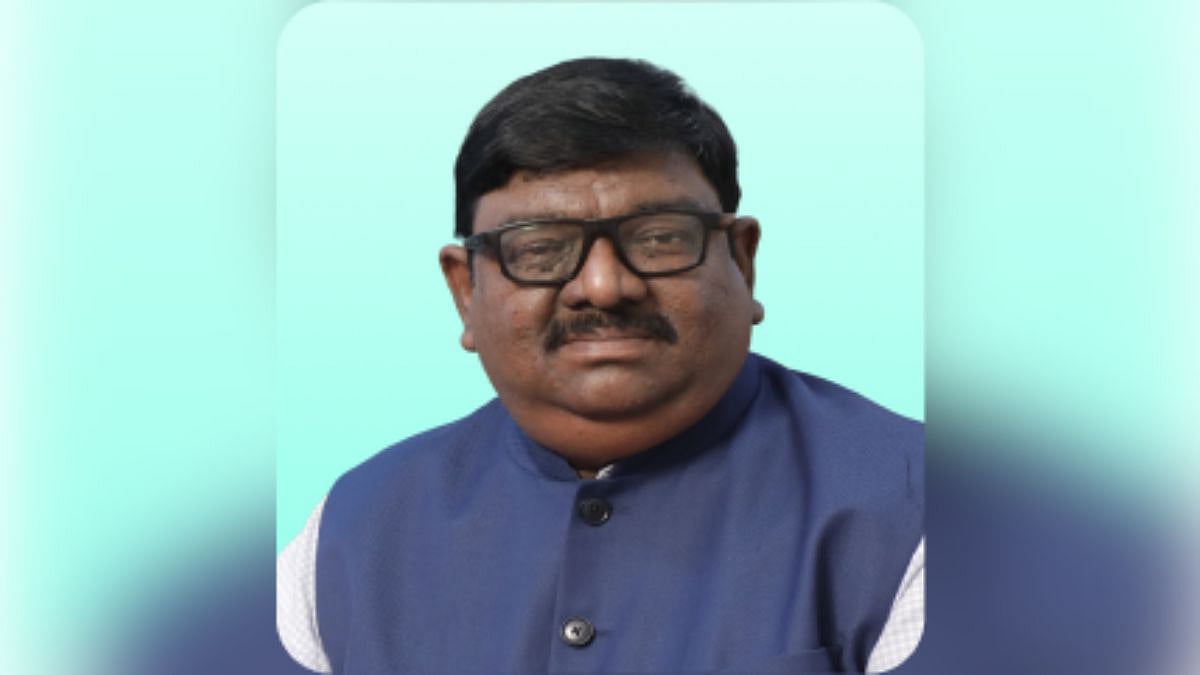
MMRC's Chief Director (Planning) R Ramana | MMRC's Website
With over three decades of experience in urban planning, transportation engineering and infrastructure financing, R Ramana has played a central role in shaping Mumbai’s public transport network. A civil engineer with a postgraduate degree in transportation engineering, Ramana is currently chief director (planning) at the Mumbai Metro Rail Corporation (MMRC), a position he has held since June 2023, following his earlier tenure as executive director (planning).
At MMRC, Ramana has been closely involved in the planning, financing and execution of Aqua line 3, the city’s first fully underground metro. His responsibilities spanned land acquisition, rehabilitation and resettlement, environmental approvals, social impact management, development control along the alignment and inter-modal integration.
Prior to MMRC, Ramana was with the MMRDA, contributing to the financing and delivery of several major transport and urban infrastructure projects. In an interview with the FPJ's Sweety Bhagwat, Ramana discusses the challenges involved in executing the Aqua Line and the lessons learnt from delivering Mumbai’s most complex metro project to date.
Excerpts:
How did the Aqua line 3 project take shape?
I was given this project around 2010 and initially, we had planned to execute it on a public-private partnership (PPP) or build-operate-transfer (BOT) model. However, it became clear early on that these approaches would not work and they were also rejected by the Centre. We converted it into a fully government-funded project. Mumbai did not have many precedents for fully government-funded metro projects till then.
How was the alignment decided?
Around 2009 to 2010, with airport privatisation, operators began insisting on “city-side connectivity”. As part of the concession agreement, the state government was required to ensure proper cityside access to the airport. There was pressure to ensure direct connectivity to south Mumbai as a large share of airport users come from that area.
There was controversy around the Aarey land chosen for the depot.
It was never a forest land and earlier used for cattle grazing. After grazing stopped and the land remained undisturbed for several years, vegetation grew rapidly, giving it the appearance of a dense green cover.
Why was tunnel alignment particularly complex in south Mumbai?
The island city has large, bricklined British-era sewer lines that cannot be disturbed. Even minor changes could cause flooding. The most precarious sections were under DN Road and in Kalbadevi. Many heritage buildings there rest on timber pile foundations, a fact that was not widely documented earlier. We conducted detailed investigations, vibration resistance tests and fixed strict limits on TBM operating speeds to ensure buildings were not affected.
What is the passenger traffic and capacity of Metro 3?
Currently, the daily ridership is around 1.85 lakh, while the system has been developed to handle between 12 lakh and 30 lakh passengers per day. The Metro systems are planned with a long-term horizon of nearly 100 years. As the city’s population increases and travel demand grows, ridership is expected to rise steadily over time.
Why are mobile networks not yet available inside the metro or in station areas?
From the very beginning, it was known that signals would not naturally be available inside underground or fullyenclosed metro infrastructure. Underground metro infrastructure is enclosed from all sides, so surface-level signals simply cannot penetrate. Even inside cars or buildings, mobile signals often drop because of physical obstructions. In underground metro systems, the challenge is much greater due to continuous concrete and soil cover.
Has any step been taken to address the issue?
Under the policy and technology framework in place prior to 2023, tenders were invited and an agency was appointed to install special infrastructure to carry mobile signals inside the metro system. This agency also pays a fee, which goes to the metro corporation and is used to support operating costs and subsidise fares.
What is the current issue with telecos?
Telecos are seeking free access to the metro infrastructure, arguing that the metro is a public premise. Allowing free Right of Way to telcos means commuters would have to pay higher fares and also there will be more frequent fare revisions. The metro authority believes that either the existing tendered arrangement should continue, with operators paying applicable charges, or a clear policy direction should be given to cancel the existing contract and allow free access. Currently, there is uncertainty.
What do telecos require for services to begin?
Each station has a dedicated telecom room. Operators only need to plug their equipment into these rooms for the network to become available. Telecos are holding back because they want written assurance of zero charges before proceeding. The metro authority has asked them to start services first and discuss commercial terms later, but they have not agreed.
Will this affect the metro financially?
Giving services entirely free without a policy-backed decision is financially difficult. Higher-level discussions are underway and a decision is expected soon, possibly within the next month, after which mobile network services inside the metro should become available.
To get details on exclusive and budget-friendly property deals in Mumbai & surrounding regions, do visit: https://budgetproperties.in/
RECENT STORIES
-
-
-
-
-