Bihar Strengthens Disaster Preparedness, Early Warning Systems As Climate Risks Intensify
At a UNICEF-Bihar workshop on child and gender-responsive disaster reporting, Bihar officials highlighted strengthened early warning systems, preparedness and coordination to tackle climate-related emergencies. Speakers stressed ethical reporting, protection of children’s identities, and the disproportionate impact of disasters on women and children.

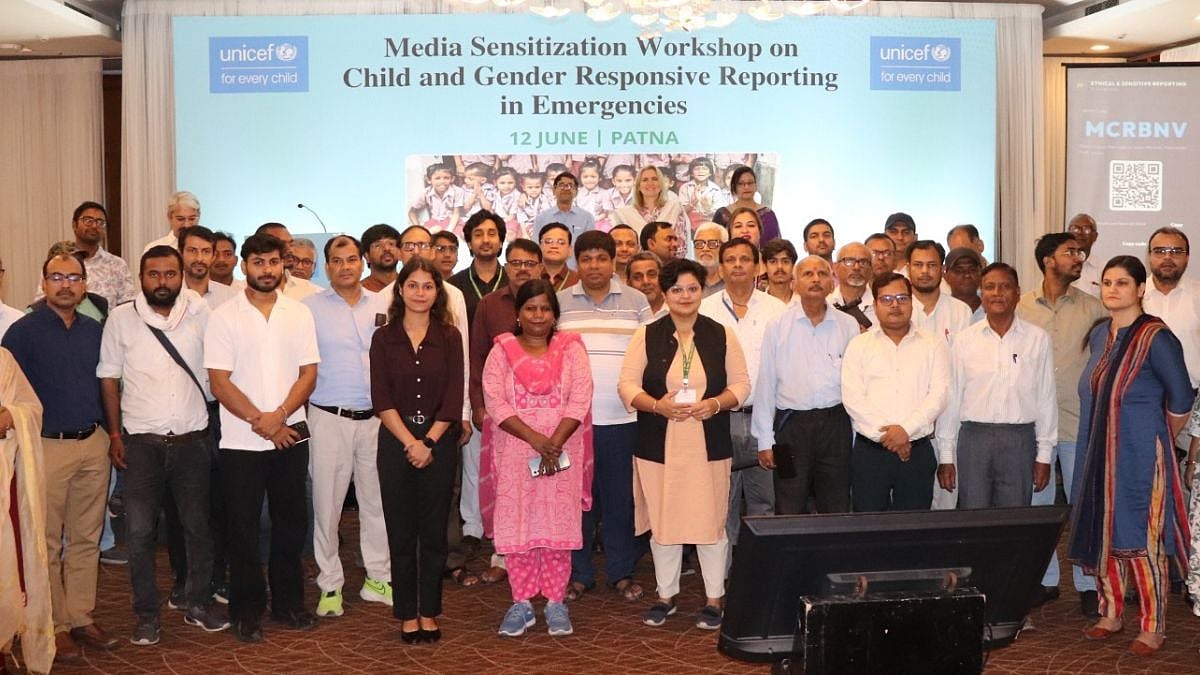
Bihar Strengthens Disaster Preparedness, Early Warning Systems As Climate Risks Intensify |
Patna: Bihar disaster management department's joint secretary, Md Nadeemul Ghaffar Siddiqui, asserted on Friday that the state government had intensified its efforts to strengthen early warning systems, preparedness, planning and inter-departmental coordination to respond to the full spectrum of emergencies—from floods to heatwaves and other climate-related hazards.
Siddiqui was speaking at a media sensitisation workshop on child and gender responsive reporting during emergencies, organised by UNICEF with the Bihar government.
Outlining the state’s disaster preparedness, he highlighted that the department had undertaken concerted and coordinated efforts to ensure disaster resilience at the block, district, and state levels. He also urged the media to report fact-checked information and highlight the efforts of frontline rescue workers.
Addressing the gathering, chief of field office, UNICEF Bihar, Dr Monika Nielsen reminded participants that behind every disaster statistic was a child whose story deserved to be told with care. She said, “Children and women are at the centre of every climate story, if we look carefully enough. Yet their particular realities—the girl at risk of leaving school permanently, the expectant mother far from a functioning health facility, the toddler whose immunisation is delayed for months—too rarely make it into the frame, and today's workshop is planned to offer practical tools for exactly this.”
In the technical session, media and communication expert Minnati Chaklanavis highlighted the ethics of crisis reporting—informed consent, protecting the identity of children, and resisting the pull of sensationalism. In any emergency, the dignity of the affected must never become collateral damage in the race to break news, she added.
WASH Specialist, UNICEF, Sudhakar Reddy spoke at length on the science of climate change and its disproportionate toll on children, women and marginalised communities—from contaminated water sources to disrupted schooling, health, and nutrition.
From floods and droughts to heatwaves, climate-induced emergencies are striking with growing frequency and intensity — and children and women bear the heaviest burden. Recognising that how these crises are reported can protect or harm the most vulnerable, we organised the workshop, stated a UNICEF official.
Besides journalists from print, television and digital platforms, social media influencers, officers from the State Information and Public Relations Department (IPRD) and public relations officers from other government departments participated in the workshop.
RECENT STORIES
-
-
-
-
-